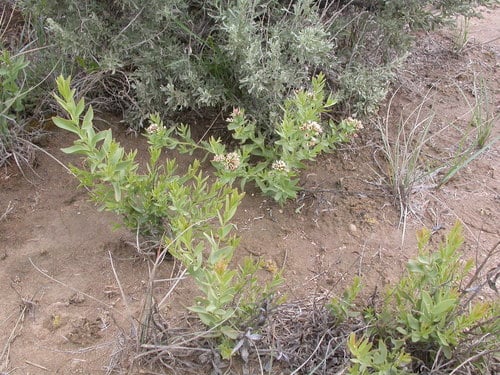
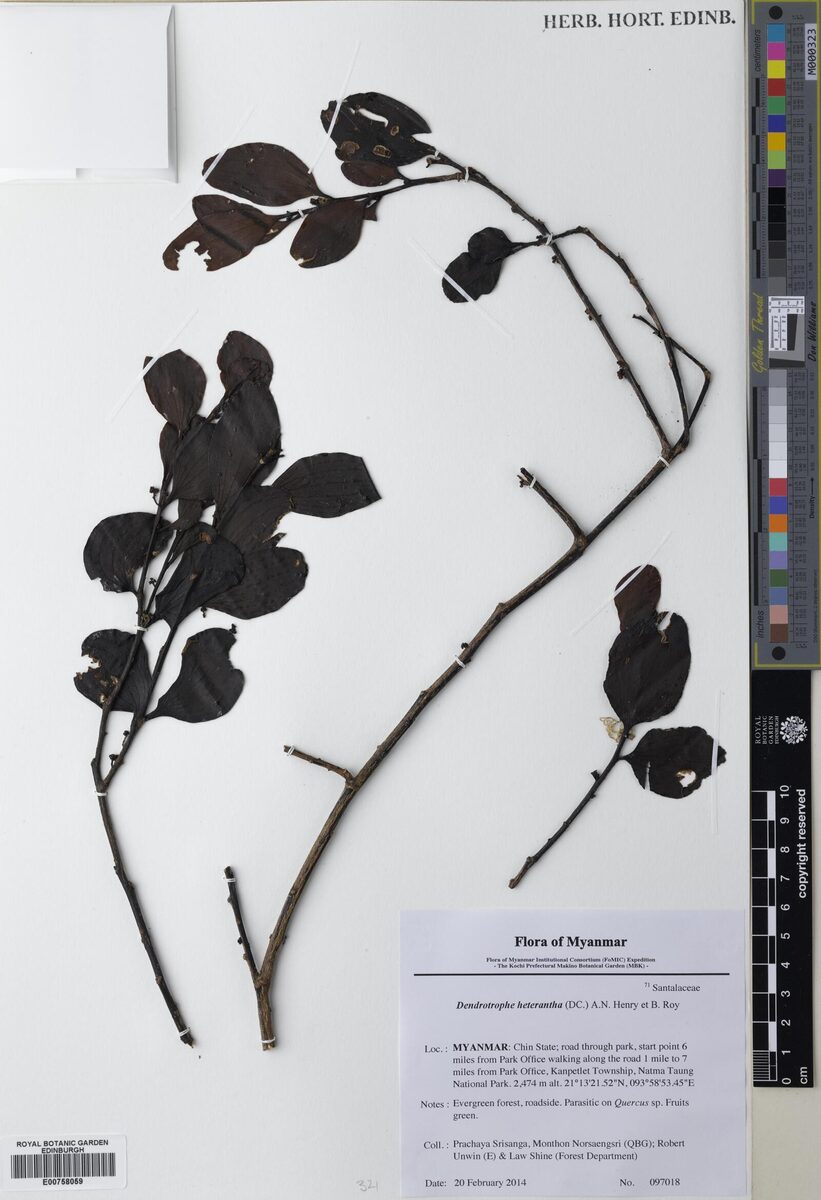
Santalum spicatum
(R. Br.) DC.
Sandalwood, Fragrant Sandalwood, Australian sandalwood
iNaturalist· cc-by-nc
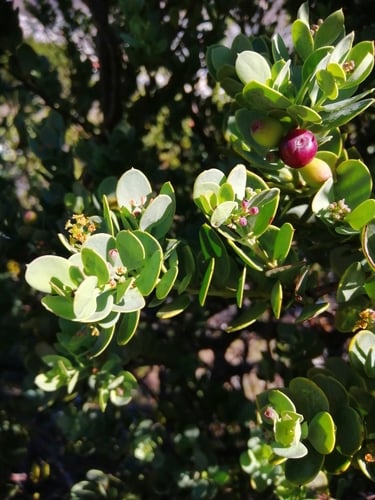
(c) Loxley Fedec, some rights reserved (CC BY-NC), uploaded by Loxley Fedec
iNaturalist· cc-by-nc
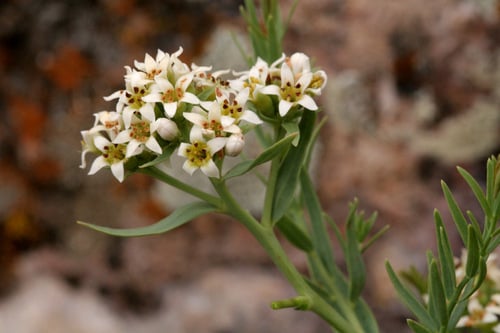
(c) David Spencer Muirhead, some rights reserved (CC BY-NC)
iNaturalist· cc-by-nc
(c) David Spencer Muirhead, some rights reserved (CC BY-NC)
Summary
Source: WikipediaSantalum spicatum, the Australian sandalwood, also Waang and other names (Noongar) and Dutjahn (Martu), is a tree native to semi-arid areas at the edge of Southwest Australia, in the state of Western Australia. It is also found in South Australia, where it is protected and listed as a vulnerable species. It is traded as sandalwood, and its sandalwood oil has been used as an aromatic and a food source over history. S. spicatum is one of four Santalum species occurring in Australia.
Description
A crooked tree. It grows about 8 m high. The bark is rough. The flowers are small and in panicles. They are red and green. They have a scent. The fruit are green but turn brown. They are 2 cm across. It grows attached to other plants
Edible Uses
The fruits and pods are gathered from the wild and eaten. The seed kernels in particular have formed a valuable part of the traditional Aboriginal Australian diet. The kernels contain 45–55% oil, characterised by a high proportion of unusual acetylenic fatty acids.
Traditional Uses
The seeds are roasted and eaten.
This uses section is brief — help expand it
Medicinal Uses
The essential oil obtained from the wood is used medicinally, particularly as a urinary tract disinfectant. The oil contains several medically active compounds including fusanols, santalol, and sesquiterpene alcohols.
Distribution
It is a Mediterranean climate or warm temperate plant. It grows in the drier areas in South Australia. It grows attached to other plants
Where It Grows
Australia*,
Cultivation
A plant of drier, lowland areas in the tropics and subtropics, where it is found at elevations from sea level to 500 metres. It grows best in areas where annual daytime temperatures are within the range 32 - 38°c, but can tolerate 7 - 45°c. When dormant, the plant can survive temperatures down to about -4°c, but young growth can be severely damaged at 0°c. It prefers a mean annual rainfall in the range 200 - 400mm, but tolerates 150 - 500mm. Prefers a sunny position, but can tolerate some shade. Succeeds on a variety of soils from calcareous red earths to red earthy sands in Western Australia to solonized brown soils and shallow calcareous loamy soils in South Australia. Tolerates soil salinity. Prefers a pH in the range 5.5 - 6.5, tolerating 5 - 7. Requires a well drained soil. Established plants are drought tolerant. The plant is partially parasitic and relies on host plants for only water and soil nutrients, not for sugars, which is why such it has green leaves and photosynthesizes. Sandalwood trees are a root parasite on many species. Some common recognized hosts are Eucalyptus salubris, Eucalyptus loxophleba, Casuarina cristata subsp. Pauper, Acacia aneura, Atriplex vesicaria, Pittosporum phillyreoides, Acacia acuminata, Senna siamea and Pongamia pinnata. It normally has more than one host at a time. Flowering is sporadic because of the irregular rainfall in most areas where the plant grows. Flowers are carrion-scented and nectariferous, attracting a wide range of insect pollinators. Plants do not usually survive fires in the wild. The estimated maturation time for the sandalwood in Kalgoorlie District, Australia is 50 - 100 years. Sandalwood is harvested by uprooting trees from the ground. The roots, stems and large branches are all utilized down to 2.5 cm diameter, dead sandalwood stems are also used.
Propagation
Mechanical scarification improves germination. In the wild, seed germinates following extremes of temperature and rainfall, with field germination rates of only 1–5%. In reserves and protected plantation areas the rate is higher but still below 20%. For operational or plantation establishment, sow 4 seeds per spot in well-drained soil, 50–70 mm deep, in a small depression at the drip line on the south side of a suitable host plant, and mulch the area. Seedlings that fail to attach their roots to a suitable host tend to die, apparently due to an inability to obtain nutrients the host provides. Can also be propagated by cuttings.
Other Uses
The seed contains 45–55% oil, composed of approximately 49% oleic acid and about 40% ximenynic acid. An essential oil — known as West Australian sandalwood oil — is obtained by water or steam distillation of the wood. It is a pale yellow, viscous liquid with a soft, woody, somewhat balsamic sweetness; its top note is dry-bitter and slightly resinous, with santalol as its main constituent. The oil is valuable in perfumery in the same way as East Indian sandalwood oil. The wood is used in China as temple incense. The dark brown heartwood, surrounded by pale sapwood, was once extensively cut and exported as sandalwood and can be used for wood carving, incense making, and essential oil extraction, though it is now only harvested in small quantities. The wood is an excellent fuel and has been used for firing brick kilns. The ground beneath the tree's canopy is typically littered with seeds and leaves that replenish soil nutrients as they decay. The tree's deep rooting habit means it can provide shade and support with minimal competition for surface resources, though its parasitic nature warrants some caution when planting alongside crops.
Nutrition
| Part | Moisture | kJ | kcal | Protein | Vit A | Vit C | Iron | Zinc |
|---|---|---|---|---|---|---|---|---|
| Kernel | 2.7 | — | — | 16.8 | — | — | — | — |
Synonyms
Also Known As
Putaty
References (20)
- Alice, L. & O'Quinn, T., Australian Bush Superfoods. Explore Australia p 150
- Bindon, P., 1996, Useful Bush Plants. Western Australian Museum. p 222
- Bodkin, F., 1991, Encyclopedia Botanica. Cornstalk publishing, p 908
- Bonney, N., 1997, Economic Native Trees and Shrubs for South Australia. Greening Australia (SA) inc. Campbelltown SA 5074 p 160
- Bonney, N., 2012, Edible Wild Native Plants for Southern Australia. p 69
Show all 20 references Hide references
- Boomsma, C.D., 1972, Native Tree of South Australia. Woods & Forests Department South Australia, Bulletin No.19. p 217
- Burkill, I. H., 1966,
- Cherikoff V. & Isaacs, J., The Bush Food Handbook. How to gather, grow, process and cook Australian Wild Foods. Ti Tree Press, Australia p 190
- Facciola, S., 1998, Cornucopia 2: a Source Book of Edible Plants. Kampong Publications, p 223 (As Eucarya spicata)
- Holliday, I., 1989, A Field Guide to Australian Trees. Hamlyn. p 292
- Lazarides, M. & Hince, B., 1993, Handbook of Economic Plants of Australia, CSIRO. p 211
- Lord, E.E., & Willis, J.H., 1999, Shrubs and Trees for Australian gardens. Lothian. p 20
- Miers, G., 2004, Cultivation and sustainable wild harvest of Bushfoods by Aboriginal Communities in Central Australia. RIRDC report W03/124 p 20
- Menninger, E.A., 1977, Edible Nuts of the World. Horticultural Books. Florida p 67
- Paczkowska, G . & Chapman, A.R., 2000, The Western Australian Flora. A Descriptive Calatogue. Western Australian Herbarium. p 527
- PROSEA No. 19
- Recher, P, 2001, Fruit Spirit Botanical Gardens Plant Index. www.nrg.com.au/~recher/ seedlist.html p 7
- Rolsh, 1994, Wildflowers of the Western State, Rolsh Productions Albany WA. p 28
- Wickens, G.E., 1995, Edible Nuts. FAO Non-wood forest products. FAO, Rome. p149
- www.worldagroforestrycentre.org/treedb/