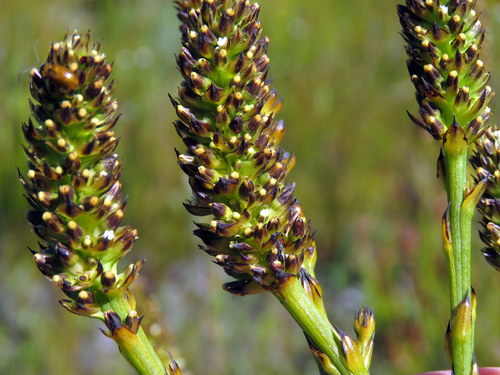
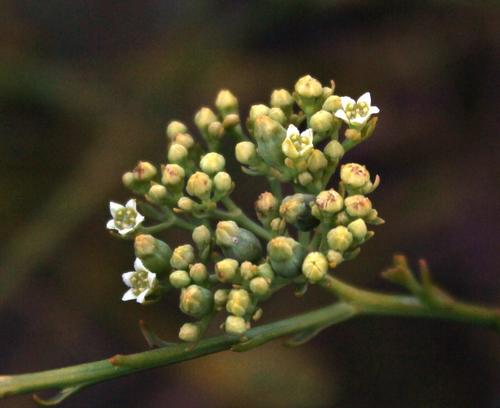
Comandra umbellata
(L.) Nutt.
Bastard toadflax
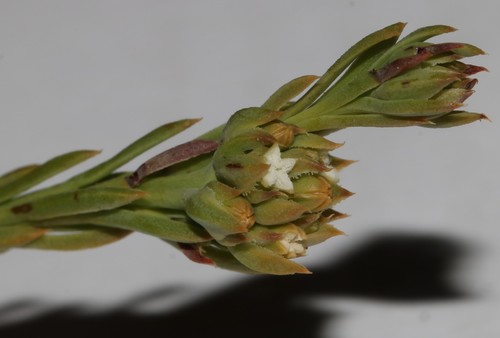
iNaturalist· cc-by-nc-nd
(c) Patrick Alexander, some rights reserved (CC BY-NC-ND)
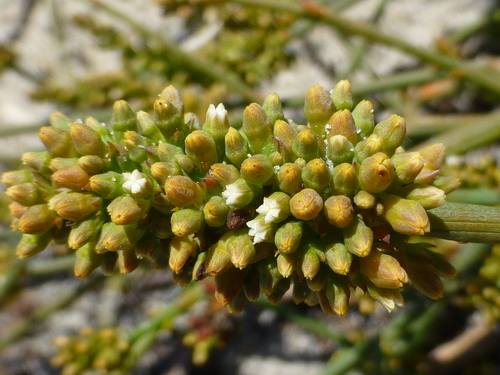
iNaturalist· cc-by-nc
(c) Ian Bryson, some rights reserved (CC BY-NC)
Summary
Source: WikipediaA low-growing perennial reaching 0.3 m tall with flowers from April to June. Grows in light sandy, medium loamy, and heavy clay soils with good drainage. Prefers mildly acid to very acid soils and requires full sun. Tolerates both dry and moist conditions. Hermaphroditic.
Description
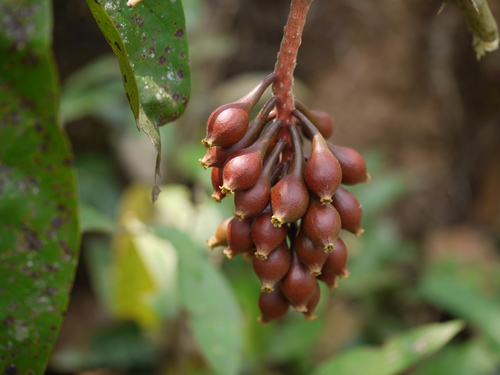
A small erect herb. It grows 10-40 cm tall. It loses its leaves during the year. The leaves are alternate, sword shaped and thick. Theya re 2-5 cm long by 5-10 mm wide. The fruit is urn shaped and fleshy.
Edible Uses
The fruit can be eaten raw and has a sweet flavour. Children also suck the flowers for their sweet nectar.
Traditional Uses
The nectar is sucked from the flowers. The fruit are occasionally eaten. They are sweet when young. They can be used for jam.
This uses section is brief — help expand it
Medicinal Uses
An infusion of the leaves has been used to treat lung pains and laboured breathing caused by a cold or other illness. The juice of the plant has been applied externally to treat cuts and sores.
Known Hazards
A decoction of the plant parts was made by the Navajo people for narcotic and other medicinal usage. In times of food shortage, the berries were used by Native Americans as a food source, and though small, they have a sweet taste. The fruit may contain toxic selenium if grown in soil rich in the element.
Distribution
It is a temperate plant.
Where It Grows
Canada, Europe, North America, USA,
Propagation
Seed — stratify for 3 months at 5°C, then sow in the greenhouse in a pot with a suitable host plant. Plant out when well established, close to a mature host plant.
Other Uses
None known
Other Information
The nectar is sucked especially by children.
Synonyms
Also Known As
Comandra
References (5)
- Fisk, J. R. & Hoover, E., 2015, Wild Fruits of Minnesota. A Filed Guide. University of Minnesota p 12
- Gen. N. Amer. pl. 1:157. 181
- Kermath, B. M., et al, 2014, Food Plants in the Americas: A survey of the domesticated, cultivated and wild plants used for Human food in North, Central and South America and the Caribbean. On line draft. p 255
- Plants for a Future database, The Field, Penpol, Lostwithiel, Cornwall, PL22 0NG, UK. http://www.scs.leeds.ac.uk/pfaf/ (Also as Comandra richardsiana)
- Turner, N., 1997, Food Plants of Interior First Peoples. Royal BC Museum Handbook p 169