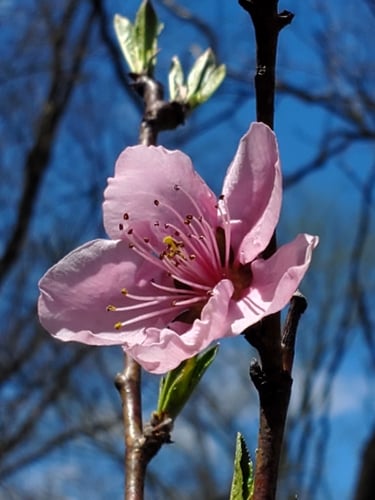
Crataegus mexicana
Moc. & Sesse, ex DC.
Manzanilla, Mexican hawthorn
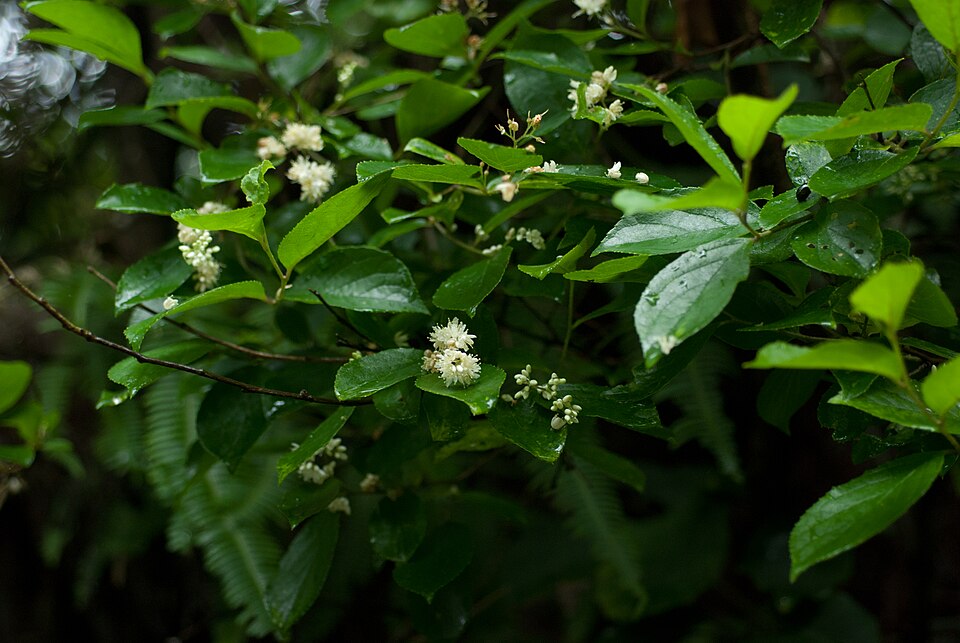
iNaturalist· cc-by-nc
(c) Alfonso Gutiérrez Aldana, some rights reserved (CC BY-NC), uploaded by Alfonso Gutiérrez Aldana
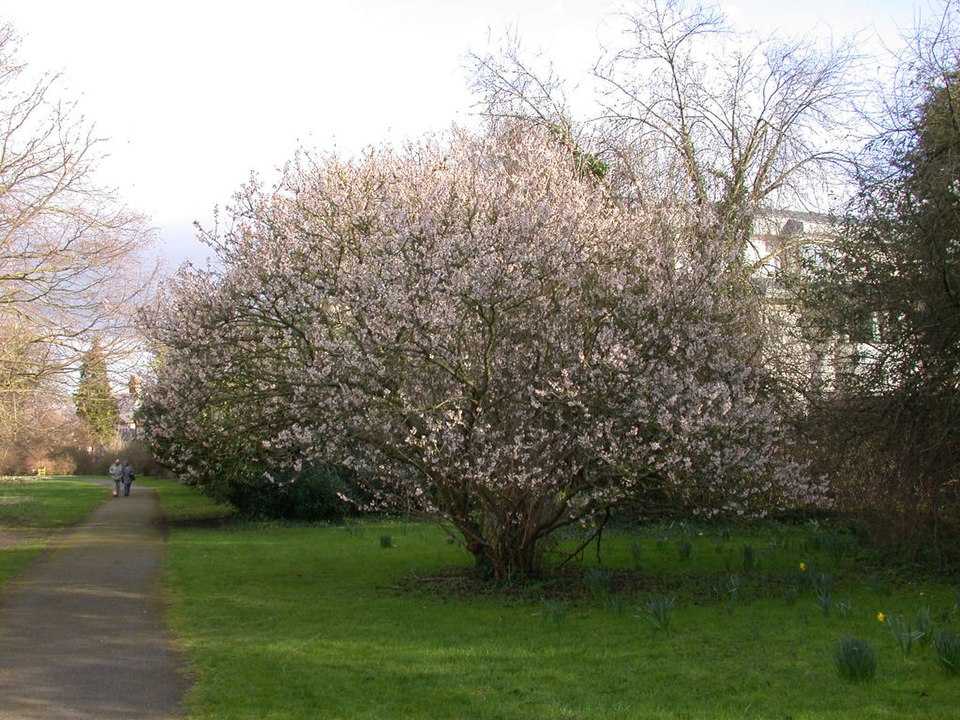
iNaturalist· cc-by-nc
(c) Bodo Nuñez Oberg, some rights reserved (CC BY-NC)
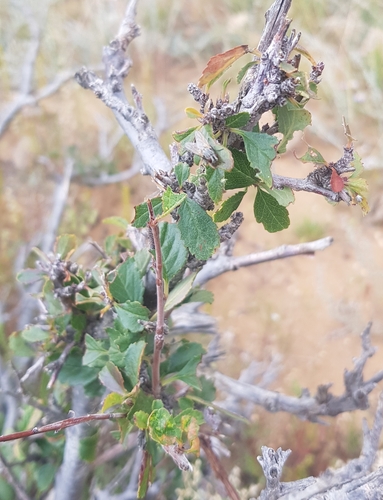
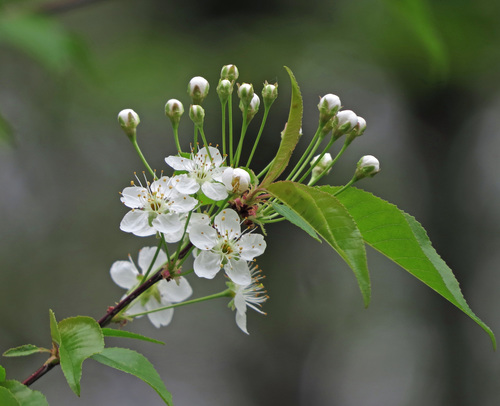
iNaturalist· cc-by-nc
(c) Bodo Nuñez Oberg, some rights reserved (CC BY-NC)
Summary
Source: WikipediaCrataegus mexicana is a species of hawthorn known by the common names tejocote, manzanita, tejocotera and Mexican hawthorn. It is native to the mountains of Mexico and parts of Guatemala, and has been introduced in the Andes. The fruit of this species is one of the most useful among hawthorns. Crataegus pubescens Steud. is a nomenclaturally illegitimate name (for Crataegus gracilior J.B.Phipps) that is commonly misapplied to this species.
Description
A tropical shrub or small tree in the rose family (Rosaceae) growing 4–6 m tall, found in mixed and cloud forests.
This description is brief — help expand it
Edible Uses
Fruit - raw or cooked. The yellow fruit can be up to 20mm in diameter, it is mealy and juicy with a slightly apple-like flavour. It is used in jellies, jams and preserves etc and can be dried for later use. The raw fruit is not very appetizing, although of moderately agreeable flavour; it is cooked in various ways but is used principally in preparing an intensely sweet preserve that is one of the commonest desserts of Guatemala. The syrup is employed for flavouring some of the popular aguas gaseosas, similar to soda pop. For stewing, the fruits are first boiled with wood ashes to remove the skin, then boiled in hot syrup with red colouring for a short time and hung on nails stuck into poles, much like candied apples. There are up to five fairly large seeds in the centre of the fruit, these often stick together and so the effect is of eating a cherry-like fruit with a single seed.
Medicinal Uses
The fruit is eaten in Mexico cooked, raw, or canned. It resembles a crabapple, but it has three or sometimes more brown hard stones in the center. It is a main ingredient used in ponche, the traditional Mexican hot fruit punch that is served at Christmas time and on New Year's Eve. On Day of the Dead tejocote fruit as well as candy prepared from them are used as offerings to the dead, and rosaries made of the fruit are part of altar decorations. A mixture of tejocote paste, sugar, and chili powder produces a popular Mexican candy called rielitos, because it resembles a tiny train rail. Due to its high pectin content, the fruit is processed to extract pectin for food, cosmetic, pharmaceutical and textile uses. Other uses include food for livestock (for which the leaves and fruits are used) and traditional medicinal uses; a Mexican hawthorn root infusion is used as a diuretic and as a remedy for diarrhea, and fruit-based preparations are a remedy for coughing and several heart conditions. The Mexican hawthorn tree's wood is hard and compact, it is useful for making tool handles as well as for firewood.
Distribution
A tropical plant. It can be in mixed forests and cloud forests.
Where It Grows
Central America, Costa Rica, Ecuador, El Salvador, Guatemala*, Mexico*, North America, Peru, South America,
Cultivation
Plants can be grown from seed. The seed need cold treatment. Plants can also be grafted.
Propagation
Seed - this is best sown as soon as it is ripe in the autumn in a cold frame, some of the seed will germinate in the spring, though most will probably take another year. Stored seed can be very slow and erratic to germinate, it should be warm stratified for 3 months at 15°c and then cold stratified for another 3 months at 4°c. It may still take another 18 months to germinate. Scarifying the seed before stratifying it might reduce this time. Fermenting the seed for a few days in its own pulp may also speed up the germination process. Another possibility is to harvest the seed 'green' (as soon as the embryo has fully developed but before the seedcoat hardens) and sow it immediately in a cold frame. If timed well, it can germinate in the spring. If you are only growing small quantities of plants, it is best to pot up the seedlings as soon as they are large enough to handle and grow them on in individual pots for their first year, planting them out in late spring into nursery beds or their final positions. When growing larger quantities, it might be best to sow them directly outdoors in a seedbed, but with protection from mice and other seed-eating creatures. Grow them on in the seedbed until large enough to plant out, but undercut the roots if they are to be left undisturbed for more than two years.
Other Uses
The plant is sometimes used in Guatemala as a stock on which to graft pears and apples. Strung on cords, the rather handsome fruits are used as decorations for Christmas and other holidays. Wood - heavy, hard, tough, close-grained. Useful for making tool handles, mallets and other small items.
Notes
There are 200 or more Crataegus species.
Synonyms
Also Known As
Tejocote
References (14)
- Casas, A., et al, 2016, Evolutionary Ethnobotanical Studies of Incipient Domestication of Plants in Mesoamerica. In Lira, R., et al, (eds.) Ethnobotany of Mexico, Ethnobiology. Springer p 266
- Cruz, I. M., et al, 2015, Edible fruits and seeds in the State of Mexico. Revista Mexicana de Ciencias Agricolas. Vol. 6. Num. 2 pp 331-346
- Farfan, B., et al, 2007, Mazahua Ethnobotany and Subsistence in the Monarch Butterfly Biosphere Reserve, Mexico. Economic Botany 61(2) 2007, pp 173-191
- Gonzalez-Espinosa, M. et al, 2011, The Red List of Mexican Cloud Forest Trees. Flora and Fauna International, Cambridge. p 115
- GRIN
Show all 14 references Hide references
- John, L., & Stevenson, V., 1979, The Complete Book of Fruit. Angus & Robertson p 288 (As Crataegus stipulosa)
- Macmillan, H.F. (Revised Barlow, H.S., et al) 1991, Tropical Planting and Gardening. Sixth edition. Malayan Nature Society. Kuala Lumpur. p 314 (As Crataegus stipulosa)
- Nomencl. bot. ed. 2, 1:434. 1840 (As Crataegus stipulosa)
- Piedra-Malagón, E. M., et al, 2022, Edible native plants of the Gulf of Mexico Province. Biodiversity Data Journal 10: e80565 p 28
- Plants for a Future database, The Field, Penpol, Lostwithiel, Cornwall, PL22 0NG, UK. http://www.scs.leeds.ac.uk/pfaf/ (As Crataegus stipulosa)
- Rangel-Landa, S., et al, 2017, Sociocultural and ecological factors influencing management of edible and non-edible plants: the case of Ixcatlan, Mexico. Journal of Ethnobiology and Ethnomedicine. 13:59
- Segura, S., et al, 2018, The edible fruit species in Mexico. Genet Resour Crop Evol (2018) 65:1767–1793
- Wiersema, J. H. & Leon, B., 2013, World Economic Plants. A Standard Reference CRC Press. 2nd Ed. p 208
- World Checklist of Useful Plant Species 2020. Royal Botanic Gardens, Kew