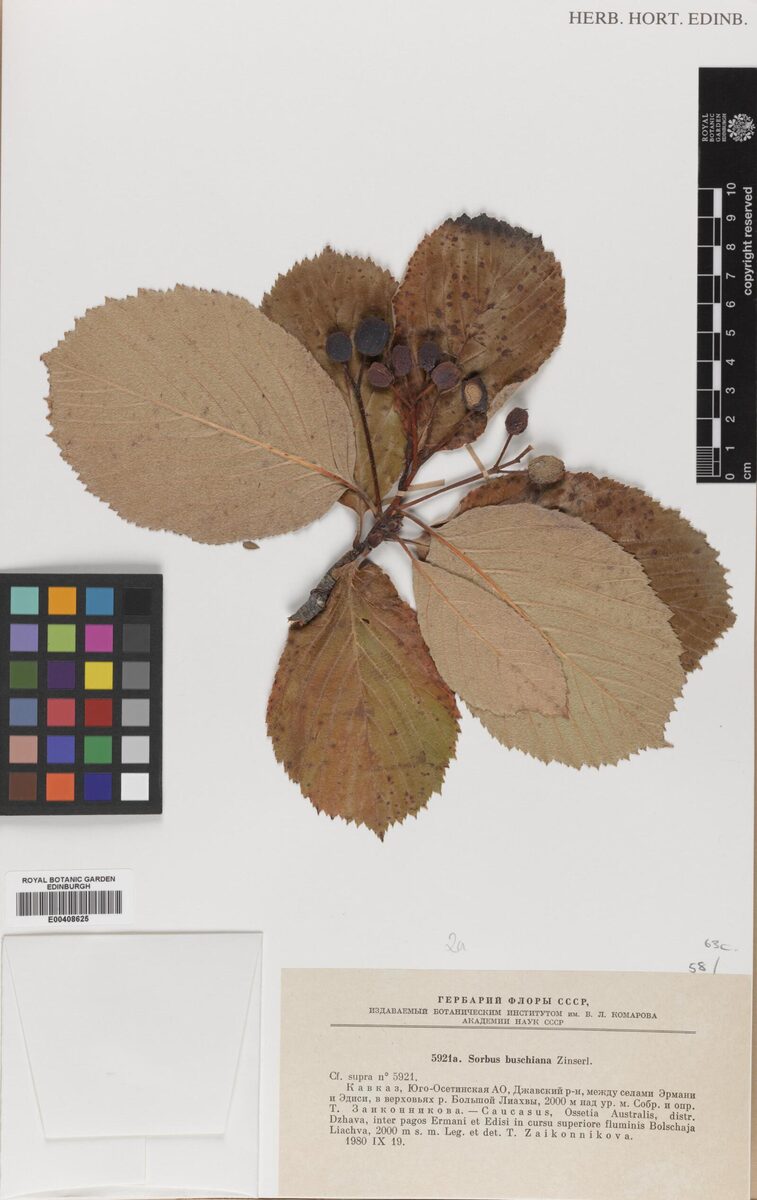
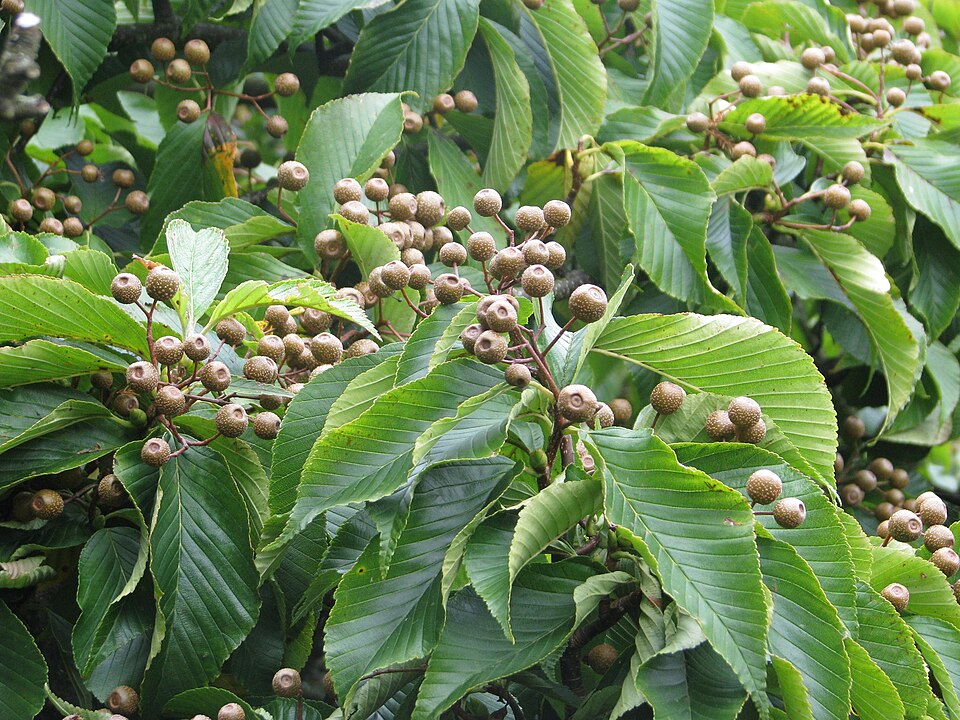
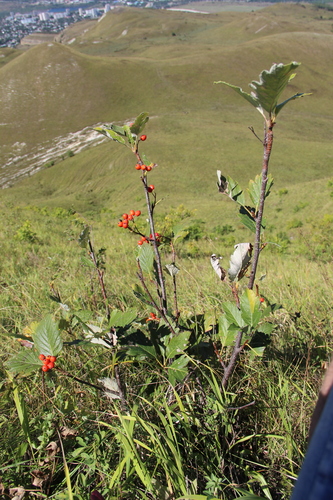
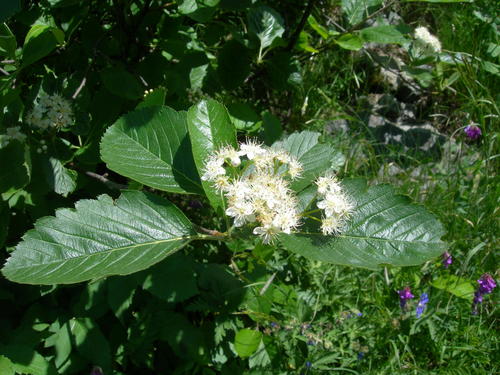
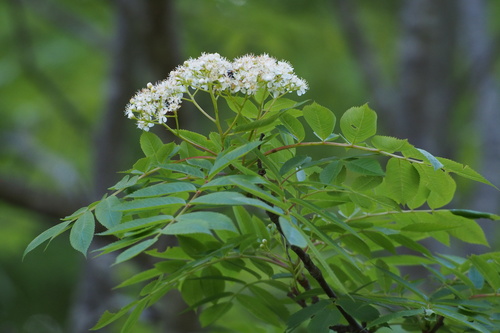
Rubus pinnatus var. afrotropicus
Willd., (Engl.) CE Gust
South African Blackberry
gbif· cc-by-nc-sa
MBG
gbif· cc-by-nc-sa
MBG
gbif· cc-by-nc-sa
MBG
Description
A straggling bush. It can grow 5 m high. The leaves are opposite. There are prickles on the stem. The fruit are red and sweet.
This description is brief — help expand it
Edible Uses
The fruit are eaten raw.
Traditional Uses
The fruit are eaten raw.
This uses section is brief — help expand it
Distribution
A tropical plant. It grows in forest clearings beside streams and swamps in West Africa. It is usually at higher altitudes.
Where It Grows
Africa, Angola, Cameroon, Central Africa, Central African Republic, CAR, Congo DR, Equatorial-Guinea, Guinea, Guinée, South Africa, West Africa, Zimbabwe,
Production
In Congo fruit are available from July to October.
Notes
There are about 250 Rubus species.
Dangerous Lookalikes
This plant can be confused with the following toxic species. Always verify identification carefully before consuming any wild plant.
Red Baneberry
Actaea rubra
Walter Siegmund (talk)
South African Blackberry
Rubus pinnatus var. afrotropicus
MBG
Red Baneberry: Short herbaceous plant (no thorns), berries on thick red stems, each berry has a single seed, compound sharply-toothed leaves.
South African Blackberry: Thorny woody canes (brambles), aggregate berry made of many drupelets, berries pull easily from receptacle.
Nutrition
| Part | Moisture | kJ | kcal | Protein | Vit A | Vit C | Iron | Zinc |
|---|---|---|---|---|---|---|---|---|
| Fruit | 84.4 | 395 | 94 | 8.7 | — | — | — | — |
Also Known As
Mangeela, Mugangafwe, Mushenge, Uangubegube
References (7)
- Burkill, H. M., 1985, The useful plants of west tropical Africa, Vol. 4. Kew.
- http://aflora.africa.kyoto-u.ac.jp
- Jardin, C., 1970, List of Foods Used In Africa, FAO Nutrition Information Document Series No 2.p 159
- JSTOR Global Plants edible
- Terashima, H., & Ichikawa, M., 2003, A comparative ethnobotany of the Mbuti and Efe hunter-gatherers in the Ituri Forest, Democratic Republic of Congo. African Study Monographs, 24 (1, 2): 1-168, March 2003
Show all 7 references Hide references
- Terashima, H., et al, 1991, Ethnobotany of the Lega in the tropical rainforest of eastern Zaire: part 1, Zone de Mwenga. African Study Monographs. Suppl. 15:1-61
- Yamada, T., 1999, A report of the Ethnobotany of the Nyindu in the Eastern part of the former Zaire. African Study Monographs 20(1):1-72