Rubus phoenicolasius
Maximowicz
Japanese wineberry, Wineberry, Wine raspberry
iNaturalist· cc-by-sa
(c) Douglas Goldman, some rights reserved (CC BY-SA), uploaded by Douglas Goldman
iNaturalist· cc-by-sa
(c) Douglas Goldman, some rights reserved (CC BY-SA), uploaded by Douglas Goldman
iNaturalist· cc-by-nc
(c) Erik Erbes, some rights reserved (CC BY-NC), uploaded by Erik Erbes
Summary
Source: WikipediaRubus phoenicolasius (Japanese wineberry, wine raspberry, wineberry or dewberry) is an Asian species of raspberry (Rubus subgenus Idaeobatus) in the rose family, native to China, Japan, and Korea. The species was introduced to Europe and North America as an ornamental plant and for its potential in breeding hybrid raspberries. It has subsequently escaped from cultivation and become naturalized in parts of Europe and North America.
Description
A shrub or climbing vine. It grows 1-3 m tall. It can spread 3 m wide. The branches are upright at first and scrambling later. They are densely hairy. They do not have thorns. The leaves have 3 leaflets and are broadly egg shaped. They have coarse teeth along the edge and are white and like felt underneath. The flowers are pink. The fruit are small round orange coloured berries. They are 1 cm across. The fruit are edible.
Edible Uses
The fruit is sweet and juicy and can be eaten raw or cooked. Raspberry-like in character, it is smaller than a raspberry, contains quite a lot of seeds, and is somewhat less flavourful, but still makes very pleasant eating. Notably, after flowering the fruit remains enclosed within its calyx until just before ripening, which helps prevent maggots and similar pests from getting in. The fruit measures about 20mm in diameter.
Traditional Uses
The fruit are eaten raw when fully ripe. They are also made into jams and jellies or brewed into wine. They can be dried and used in muffins and in breakfast cereals.
Medicinal Uses
None known
Distribution
It is a temperate plant. It is a hardy plant. It is often along the edges of rivers and lakes. It suits hardiness zones 5-9. In Sichuan.
Where It Grows
Asia, Australia, Austria, Britain, China, Europe, Germany, Japan, Korea, North America, Russia, Slovenia, Tasmania, USA,
Cultivation
Easily grown in a good well-drained loamy soil in sun or semi-shade, preferring light shade. Plants are not too happy when grown in windy situations. Hardy to about -18°c. Some damage may be caused at this temperature but plants usually recover well. A very ornamental plant, its red stems adding colour to the winter garden, it is sometimes cultivated for its edible fruit. There is at least one named variety, 'Bella di Tokyo' has small tasty red fruits. This species is a raspberry with biennial stems, it produces a number of new stems each year from the perennial rootstock, these stems fruit in their second year and then die. Plants in this genus are notably susceptible to honey fungus. In garden design, as well as the above-ground architecture of a plant, root structure considerations help in choosing plants that work together for their optimal soil requirements including nutrients and water.
Propagation
Seed requires stratification and is best sown in early autumn in a cold frame. Stored seed should be sown as early in the year as possible and stratified for one month at 3°c if sowing later than February. Prick out seedlings once large enough to handle and grow on in a cold frame before planting into permanent positions in late spring of the following year. Tip layer in July and plant out in autumn. Division can be done in early spring.
Other Uses
A purple to dull blue dye is obtained from the fruit.
Other Information
It is a cultivated food plant.
Notes
There are about 250 Rubus species.
Dangerous Lookalikes
This plant can be confused with the following toxic species. Always verify identification carefully before consuming any wild plant.
Red Baneberry
Actaea rubra
Walter Siegmund (talk)
Japanese wineberry
Rubus phoenicolasius
(c) Douglas Goldman, some rights reserved (CC BY-SA), uploaded by Douglas Goldman
Red Baneberry: Short herbaceous plant (no thorns), berries on thick red stems, each berry has a single seed, compound sharply-toothed leaves.
Japanese wineberry: Thorny woody canes (brambles), aggregate berry made of many drupelets, berries pull easily from receptacle.
Also Known As
Duo xian xuan gou zi, Gomuttalgi, Hairy bramble, Purple-leaf blackberry, Rdečeščetinava robida, Santtalgi, Strawberry-raspberry
References (27)
- Arora, R. K., 2014, Diversity in Underutilized Plant Species - An Asia-Pacific Perspective. Bioversity International. p 85
- Bull. Acad. Imp. Sci. Saint-Petersbourg 17:160. 1872 (Diagn. pl. nov. jap.)
- Cundall, P., (ed.), 2004, Gardening Australia: flora: the gardener's bible. ABC Books. p 1285
- Elias, T.S. & Dykeman P.A., 1990, Edible Wild Plants. A North American Field guide. Sterling, New York p 180
- Esperanca, M. J., 1988. Surviving in the wild. A glance at the wild plants and their uses. Vol. 2. p 350
Show all 27 references Hide references
- Facciola, S., 1998, Cornucopia 2: a Source Book of Edible Plants. Kampong Publications, p 210
- Flora of China @ efloras.org Volume 9
- Hedrick, U.P., 1919, (Ed.), Sturtevant's edible plants of the world. p 580
- Hibbert, M., 2002, The Aussie Plant Finder 2002, Florilegium. p 282
- http://www.botanic-gardens-ljubljana.com/en/plants
- Hu, Shiu-ying, 2005, Food Plants of China. The Chinese University Press. p 460
- Hwang, HS, et al, 2014, Distribution characteristics of plant in the Ungseokbong Mountain, Gyeongsangnam-do, Korea. Journal of Asia-Pacific Biodiversity. 7(2014) e164-e178
- John, L., & Stevenson, V., 1979, The Complete Book of Fruit. Angus & Robertson p 280
- Kermath, B. M., et al, 2014, Food Plants in the Americas: A survey of the domesticated, cultivated and wild plants used for Human food in North, Central and South America and the Caribbean. On line draft. p 764
- Kiple, K.F. & Ornelas, K.C., (eds), 2000, The Cambridge World History of Food. CUP p 1792
- Lazarides, M. & Hince, B., 1993, Handbook of Economic Plants of Australia, CSIRO. p 208
- Mansfield's Encyclopedia of Agricultural and Horticultural Crops
- Ong, H. G., et al, 2015, Ethnobotany of the wild edible plants gathered in Ulleung Island, South Korea. Genet Resourc Crop Evol. Springer
- Plants for a Future database, The Field, Penpol, Lostwithiel, Cornwall, PL22 0NG, UK. http://www.scs.leeds.ac.uk/pfaf/
- Ryan, S., 2008, Dicksonia. Rare Plants Manual. Hyland House. p 50
- Tanaka,
- USDA, ARS, National Genetic Resources Program. Germplasm Resources Information Network - (GRIN). [Online Database] National Germplasm Resources Laboratory, Beltsville, Maryland. Available: www.ars-grin.gov/cgi-bin/npgs/html/econ.pl (10 April 2000)
- van Wyk, B., 2005, Food Plants of the World. An illustrated guide. Timber press. p 330
- Wiersema, J. H. & Leon, B., 2013, World Economic Plants. A Standard Reference CRC Press. 2nd Ed. p 599
- Williams, D., 2017, Ainu Ethnobiology. Contributions in Ethnobiology. Society of Ethnobiology. p 140
- World Checklist of Useful Plant Species 2020. Royal Botanic Gardens, Kew
- Zeven, A. C. & de West, J. M. J., 1982, Dictionary of cultivated plants and their regions of diversity. Wageningen. p 41
More from Rosaceae
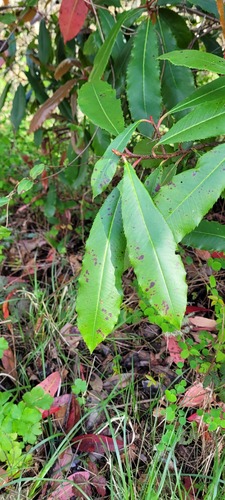
Photinia serrulata
Photinia
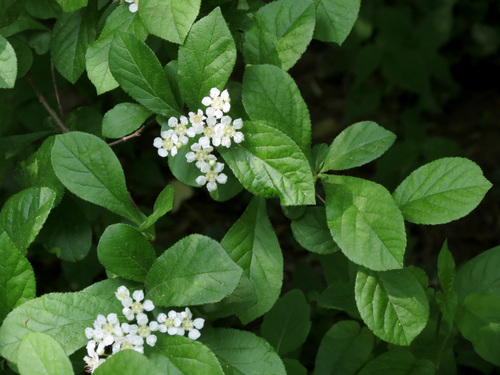
Photinia villosa
Oriental Photinia
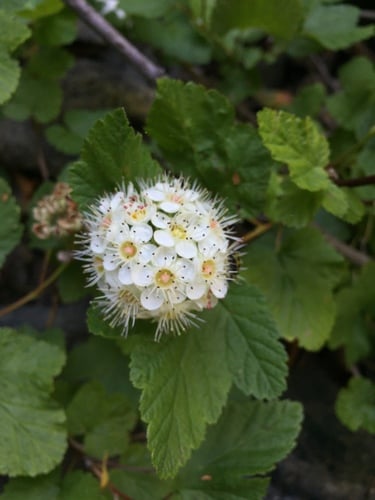
Physocarpus capitatus
Pacific ninebark
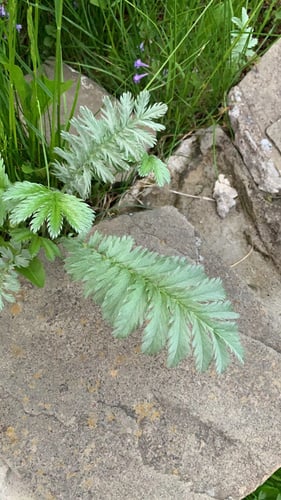
Potentilla anserina
Silverweed, Goose grass, Goose tansy, Shrubby cinquefoil, Argentine, Tibetan sweet potato
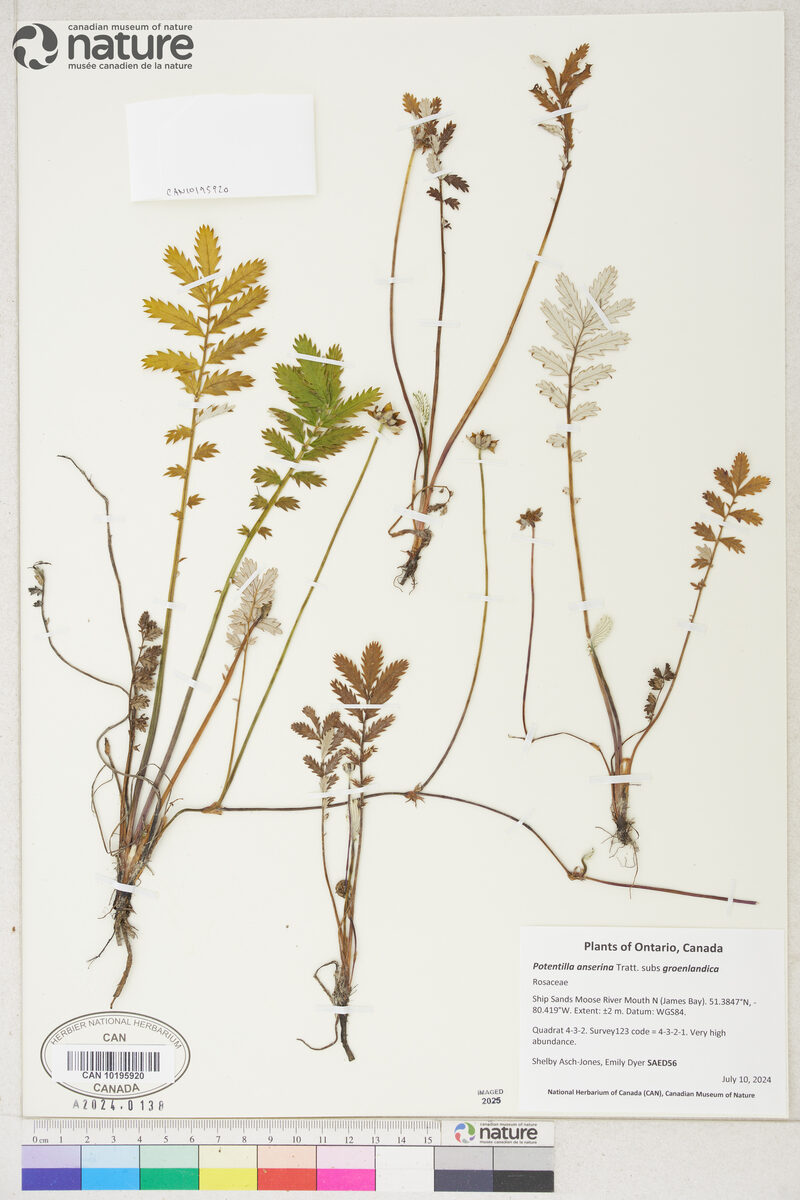
Potentilla anserina subsp. groenlandica
Pacific silverweed, Eged's pacific silverweed
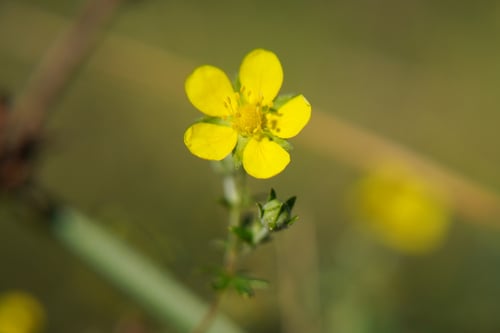
Potentilla argentea