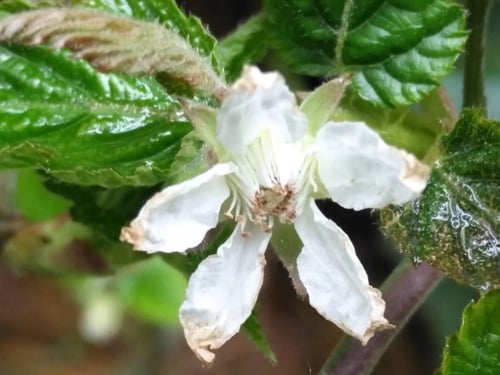
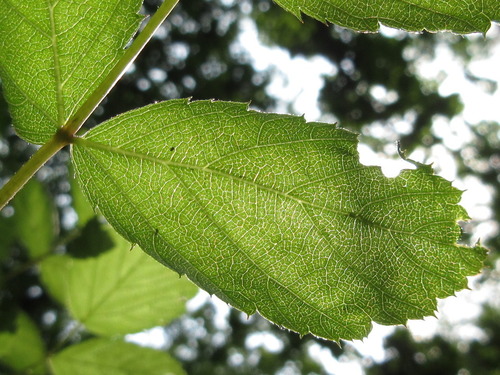
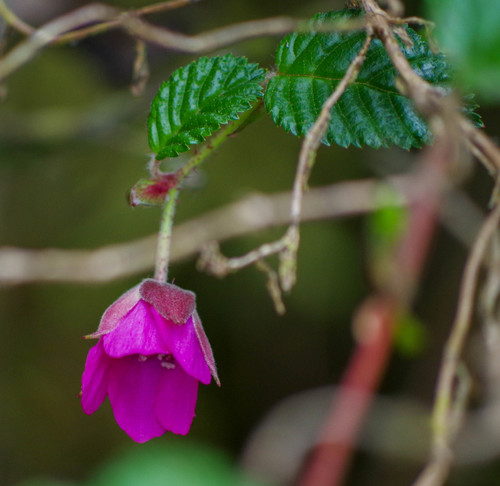
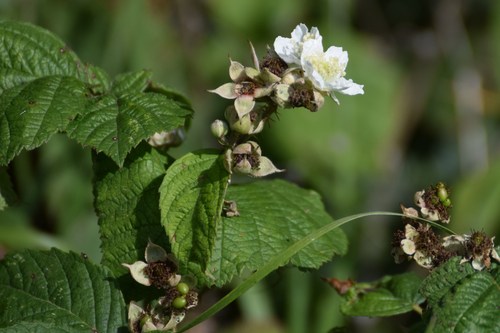
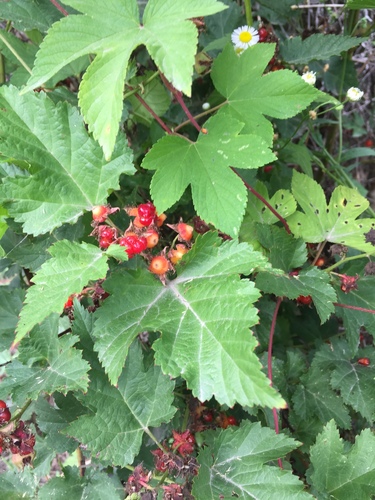
Rubus linkianus
Ser.
Link's Blackberry
wikimedia· cc-by-sa
Bernie (via Wikimedia Commons)
Summary
Source: WikipediaRubus linkianus is a European species of brambles in the rose family. It is cultivated for its fruits and as an ornamental. It is occasionally naturalized in scattered locations in the United States. The genetics of Rubus is extremely complex, so that it is difficult to decide on which groups should be recognized as species. There are many rare species with limited ranges such as this. Further study is suggested to clarify the taxonomy.
Description
A deciduous shrub hardy to UK zone 6. Hermaphroditic flowers are insect-pollinated. Accommodates light sandy, medium loamy, and heavy clay soils with good drainage. Tolerates mildly acid, neutral, and basic soils. Thrives in semi-shade (light woodland) or full sun and prefers moist soil.
Edible Uses
The fruit is possibly edible — it is certainly not poisonous — and can be eaten raw or cooked.
Medicinal Uses
None known
Distribution
It is a temperate plant.
Where It Grows
Europe,
Cultivation
Easily grown in a good well-drained loamy soil in sun or semi-shade. This species is unknown in the wild. It is possibly of hybrid origin, the flowers are always double. Plants in this genus are notably susceptible to honey fungus.
Propagation
Seed requires stratification and is best sown in early autumn in a cold frame. Stored seed requires one month stratification at about 3°c and should be sown as early in the year as possible. Prick out seedlings when large enough to handle and grow on in a cold frame, then plant out into permanent positions in late spring of the following year. Cuttings of half-ripe wood can be taken in July/August in a frame. Tip layering in July, planting out in autumn. Division can be done in early spring or just before leaf-fall in autumn.
Other Uses
A purple to dull blue dye is obtained from the fruit.
Notes
There are about 250 Rubus species.
Dangerous Lookalikes
This plant can be confused with the following toxic species. Always verify identification carefully before consuming any wild plant.
Red Baneberry
Actaea rubra
Walter Siegmund (talk)
Link's Blackberry
Rubus linkianus
Bernie (via Wikimedia Commons)
Red Baneberry: Short herbaceous plant (no thorns), berries on thick red stems, each berry has a single seed, compound sharply-toothed leaves.
Link's Blackberry: Thorny woody canes (brambles), aggregate berry made of many drupelets, berries pull easily from receptacle.
References (2)
- A. P. de Candolle, Prodr. 2:560. 1825
- Plants for a Future database, The Field, Penpol, Lostwithiel, Cornwall, PL22 0NG, UK. http://www.scs.leeds.ac.uk/pfaf/