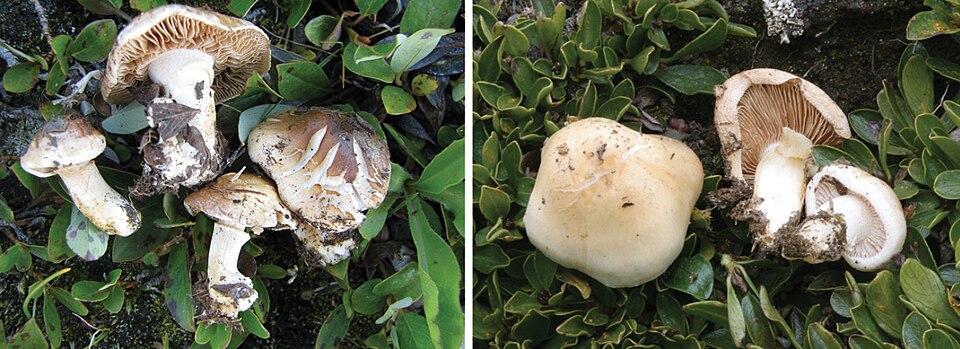
Rozites caperatus
(Pers.) P. Karst.
Gypsy mushroom, Wrinkled rozites
Cortinariaceae Edible: Mushroom, Fungus
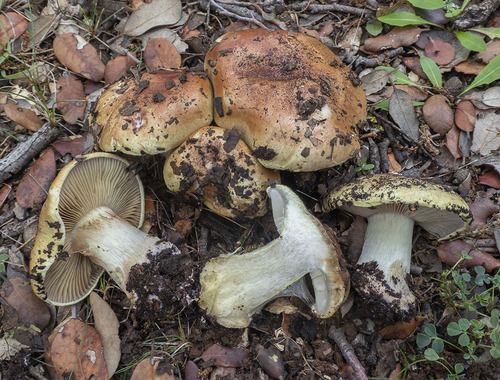
iNaturalist· cc-by
(c) Christine Young, some rights reserved (CC BY)
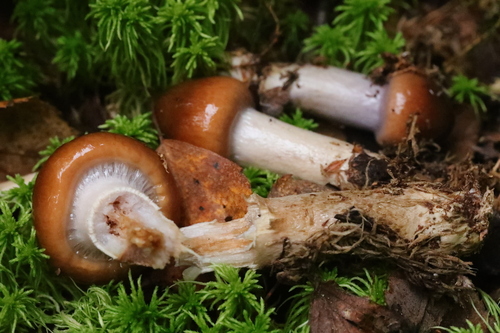
iNaturalist· cc-by
(c) Christine Young, some rights reserved (CC BY)
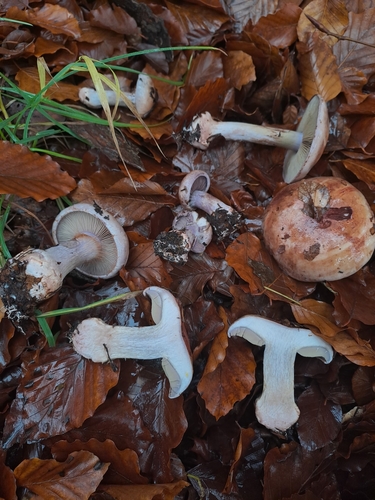
iNaturalist· cc-by
(c) Christine Young, some rights reserved (CC BY)
Description
A temperate mushroom in the Cortinariaceae family, commonly known as the gypsy mushroom or wrinkled rozites.
This description is brief — help expand it
Edible Uses
The mushroom fruiting body is edible.
Distribution
It is a temperate plant.
Where It Grows
Alaska, Asia, Balkans, Bulgaria, Bhutan, China, Europe, Finland, Italy, Japan, Mediterranean, Mexico, North America, Poland, Russia, Scandinavia, Sweden, USA,
Synonyms
Pholiota
Also Known As
Dhungshing shamong, Zhougai luolinsan
References (10)
- Boa, E. R., 2004, Wild edible fungi and their importance to people. FAO Non Wood Forest Products Booklet 17
- Cocchi, L. et al, 2006, Heavy metals in edible mushrooms in Italy. Food Chemistry 98: 277-284
- Guild, B., 1979, The Alaskan Mushroom Hunter's Guide. Alaska Northwest Publishing Company. p 158
- Hall, I. R., et al, 2003, Edible and Poisonous Mushrooms of the World. Timber Press. p 317
- Imai, S., 1938, Studies on the Agaricaceae of Hokkaido. 2. Jour. Facul. Agr., Hokkaido Imp. Univ., Sapporo, Vol. XLIII, Pt. 2, August, 1938
Show all 10 references Hide references
- Kaufmann, B. et al, 1999, The Great Encyclopedia of Mushrooms. Konemann. p 138
- Kaye, G.C., 1986, Wild and Exotic Mushroom Cultivation in North America
- Pelkonen, R., et al, 2008, Element Concentrations in Wild Edible Mushrooms in Finland. The Finnish Environment 25
- Penjor, D. et al, 2014, Wild mushrooms and their contribution to livelihoods and diet in Bhutan. in Promotion of Underutilized Indigenous Food Resources for Food Security and Nutrition in Asia and Pacific. FAO. Bangkok p 70
- Pace, G., 1998, Mushrooms of the world. Firefly books. p 62