Rosa pisocarpa
A. Gray
Cluster rose
iNaturalist· cc-by-nc
(c) Michael Stein, some rights reserved (CC BY-NC), uploaded by Michael Stein
iNaturalist· cc-by-nc
(c) Lynette Schimming, some rights reserved (CC BY-NC)
iNaturalist· cc-by-nc
(c) Michael Stein, some rights reserved (CC BY-NC), uploaded by Michael Stein
Summary
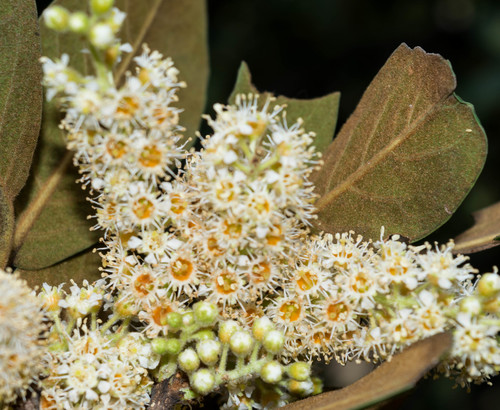
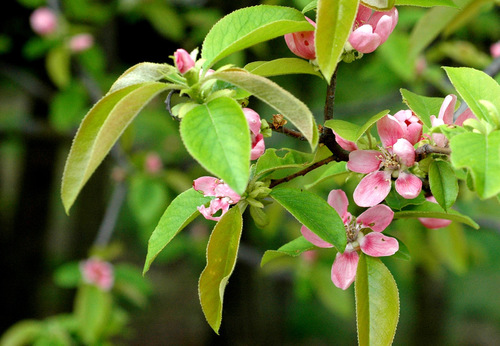
Source: WikipediaRosa pisocarpa is a species of rose known by the common name cluster rose or swamp rose. It is native to western North America from British Columbia to northern California, where it generally grows in moist habitats. It is a shrub sometimes forming a thicket, and growing up to 2.5 meters tall. The stems can be dark red or blackish and are often studded with straight, paired prickles at nodes. The leaves are each made up of several toothed oval leaflets, the terminal leaflet up to 4 centimeters long. The inflorescence is a cyme of up to 10 flowers with pink petals each up to 2 centimeters in length. The fruit is a rose hip about a centimeter wide. The hips are pear- or egg-shaped and borne in clusters, and are decorative in fall and early winter, when they are red or reddish-purple and contrast with yellow foliage. Fall foliage can be yellow or dark red.
Description
A shrub. It grows 0.9-2 m high and spreads 1.2 m wide. It loses its leaves during the year. The stems arch over. The leaves are small and they have bristles at the base. The flowers are small and single. They are rose pink. The fruit are small red, shiny hips.
Edible Uses
The fruit can be eaten raw or cooked and works well for making jams and jellies, as well as a pleasant fruity-flavoured tea. Each hip is about 13mm in diameter, though only a thin layer of flesh surrounds the many seeds. Care should be taken when eating the fruit — see known hazards. The seeds are a good source of vitamin E and can be ground into a powder and mixed with flour or added to food as a supplement; always remove the seed hairs first. The shoots can also be used to make a tea-like beverage. Young tender shoots are peeled and eaten in spring.
Traditional Uses
The fruit are eaten and also made into tea.
This uses section is brief — help expand it
Medicinal Uses
A decoction of the roots has been used to treat sore throats and syphilis. An infusion of the bark has been taken by mothers immediately after childbirth. A decoction of the branches, combined with chokecherry (Prunus virginiana) and red willow (Salix bonplandiana), has been used to treat various women's complaints, diarrhoea, and vomiting. The leaves have been placed in shoes as protection against athlete's foot. The fruit is a very rich source of vitamins and minerals, particularly vitamins A, C, and E, flavonoids, and other bio-active compounds, and is a fairly good source of essential fatty acids, which is unusual for a fruit. It is being investigated for its potential to reduce the incidence of cancer and to halt or reverse cancer growth.
Known Hazards
There is a layer of hairs around the seeds just beneath the flesh of the fruit. These hairs can cause irritation to the mouth and digestive tract if ingested.
Distribution
It is a temperate plant. It suits hardiness zones 6-10. Melbourne Botanical gardens.
Where It Grows
Australia, Canada, North America, USA,
Cultivation
Succeeds in most soils, preferring a circumneutral soil and a sunny position. Grows well in heavy clay soils. Dislikes water-logged soils. Grows well with alliums, parsley, mignonette and lupins. Garlic planted nearby can help protect the plant from disease and insect predation. Grows badly with boxwood. Hybridizes freely with other members of this genus. Plants in this genus are notably susceptible to honey fungus.
Propagation
Rose seed often takes two years to germinate, as it may require a warm period following a cold spell to mature the embryo and reduce the seedcoat. One approach to shorten this is to scarify the seed and place it in damp peat at 27–32°c for 2–3 weeks until it has imbibed, then keep it at 3°c for four months until germination begins. Seed harvested green — fully developed but not yet dried on the plant — and sown immediately may germinate in late winter, though this method had not been fully tested as of 1988. Seed sown fresh in a cold frame sometimes germinates in spring but may take 18 months. Stored seed should be sown as early in the year as possible and stratified for 6 weeks at 5°c; it may still take 2 years to germinate. Prick out seedlings into individual pots when large enough to handle. Plant out in summer if plants exceed 25cm, otherwise overwinter in a cold frame and plant out in late spring. Half-ripe heel cuttings taken in July in a shaded frame, overwintered and planted out in late spring, give a high success rate. Mature cuttings of pencil-thick current-season shoots, 20–25cm long, taken in early autumn and planted in a sheltered spot or cold frame, can take 12 months to establish but normally succeed at a high rate. Suckers can be divided in the dormant season and planted directly into permanent positions. Layering takes 12 months.
Other Uses
None known.
Notes
There are about 150 Rosa species and many cultivated varieties.
References (7)
- Cundall, P., (ed.), 2004, Gardening Australia: flora: the gardener's bible. ABC Books. p 1217
- Hibbert, M., 2002, The Aussie Plant Finder 2002, Florilegium. p 273
- Kermath, B. M., et al, 2014, Food Plants in the Americas: A survey of the domesticated, cultivated and wild plants used for Human food in North, Central and South America and the Caribbean. On line draft. p 755
- Moerman, D. F., 2010, Native American Ethnobotany. Timber Press. p 485
- Plants for a Future database, The Field, Penpol, Lostwithiel, Cornwall, PL22 0NG, UK. http://www.scs.leeds.ac.uk/pfaf/
Show all 7 references Hide references
- Proc. Amer. Acad. Arts 8:382. 1872
- Turner, N., 1995, Food Plants of Coastal First Peoples. Royal BC Museum Handbook p 119