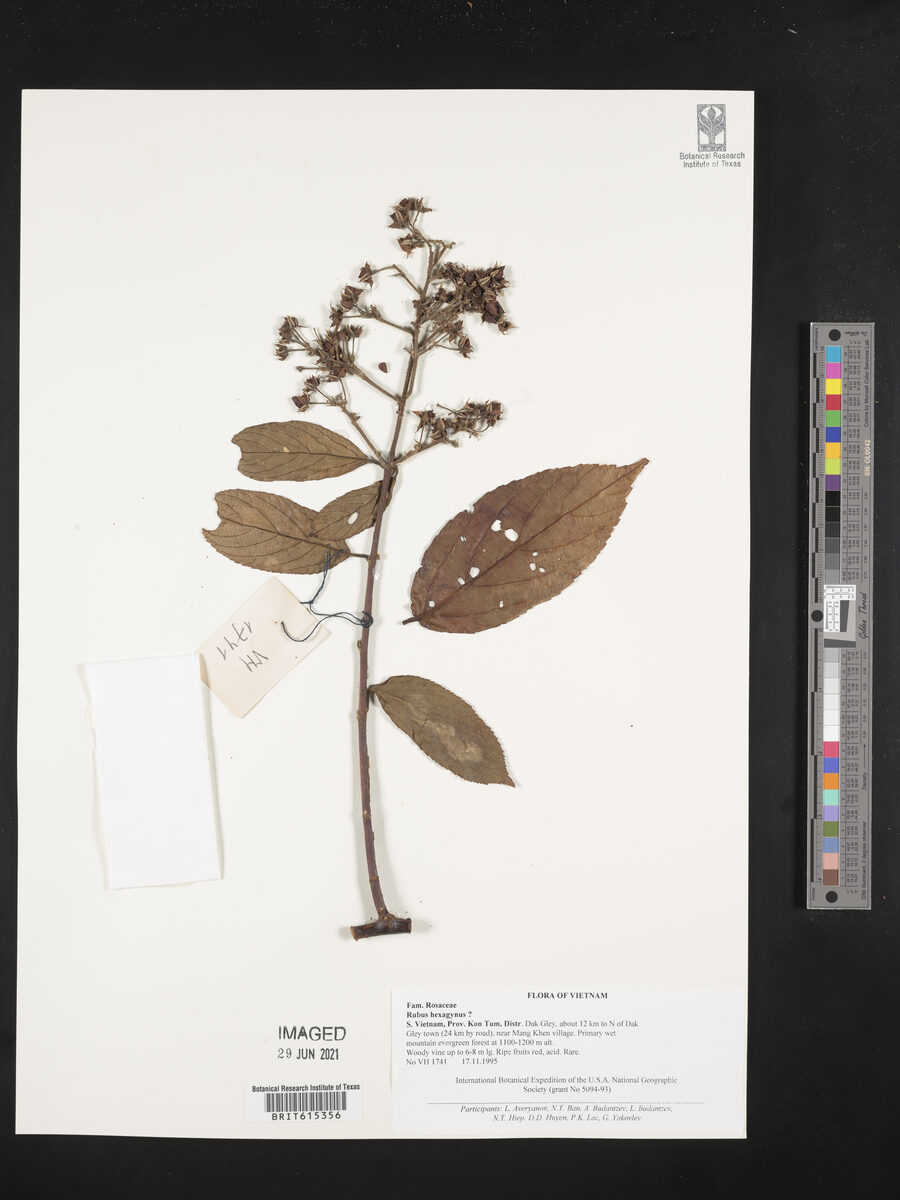
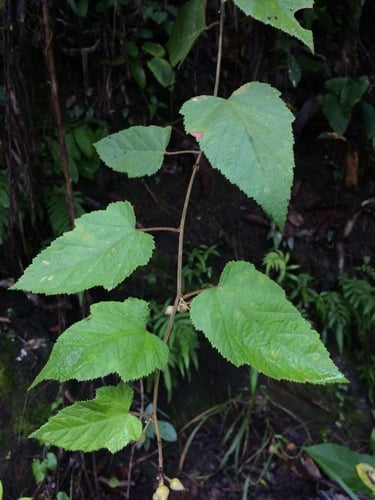
Rosa banksiae
W. T. Aiton
Bank's rose, Banksia rose, Muxianghua, Woody Perfumed flower
iNaturalist· cc-by-nc
(c) jpbrunetti, some rights reserved (CC BY-NC)
iNaturalist· cc-by-nc
(c) Jesse Holifield, some rights reserved (CC BY-NC), uploaded by Jesse Holifield
iNaturalist· cc-by-nc
(c) Richie Southerton, some rights reserved (CC BY-NC), uploaded by Richie Southerton
Summary
Source: WikipediaRosa banksiae, common names Lady Banks' rose, or just Banks' rose, is a species of flowering plant in the rose family, native to central and western China, in the provinces of Gansu, Guizhou, Henan, Hubei, Jiangsu, Sichuan and Yunnan, at altitudes of 500–2,200 m (1,600–7,200 ft). The rose is named for Dorothea Lady Banks, the wife of botanist Sir Joseph Banks.
Description
A vigorous climber. It grows 9 m high and spreads 9 m wide. It usually does not have thorns. The leaves have 3-5 leaflets. The flowers are small and white or yellow. They occur in large sprays.
Edible Uses
The fruit can be eaten raw or cooked. It is about 7mm in diameter but has only a thin layer of flesh surrounding the many seeds — care should be taken when eating it (see known hazards). The seeds are a good source of vitamin E and can be ground and mixed with flour or added to foods as a supplement; be sure to remove the seed hairs first.
Medicinal Uses
The plant is rich in tannins and used as an astringent. The root is anthelmintic, astringent, bitter, and tonic. The leaves are said to be a good vulnerary. The fruit is a very rich source of vitamins A, C, and E, flavonoids, and other bio-active compounds, and is also a fairly good source of essential fatty acids, which is unusual for a fruit. It is being investigated for its potential to reduce the incidence of cancer and to halt or reverse cancer growth.
Known Hazards
Care required when eating fruit due to seeds and seed structure.
Distribution
It is native to China. In China it grows between 500-2,200 m above sea level. It suits hardiness zones 7-10. In Sichuan and Yunnan.
Where It Grows
Asia, Australia, Austria, China, Europe, Germany, India, Korea,
Cultivation
Succeeds in most soils, preferring a circumneutral soil. Grows well in heavy clay soils. Dislikes water-logged soils. Requires a very sunny position if it s to flower well. This species does not thrive in the cooler moister parts of Britain, growing best in the south-east of the country. It is best given a position on a sunny sheltered wall. A very ornamental plant. After planting out, it takes a few years to settle down and commence flowering. Flowers are produced mainly on wood that is 2 - 3 years old. The flowers have a violet-like perfume. Grows well with alliums, parsley, mignonette and lupins. Garlic planted nearby can help protect the plant from disease and insect predation. Grows badly with boxwood. Hybridizes freely with other members of this genus. Plants in this genus are notably susceptible to honey fungus.
Propagation
Rose seed often takes two years to germinate, as it may need a warm period following a cold one to mature the embryo and soften the seedcoat. To speed this up, scarify the seed and place it in damp peat at 27–32°c for 2–3 weeks until imbibed, then hold at 3°c for four months, by which time germination should begin. Alternatively, seed harvested green — fully developed but not yet dried on the plant — and sown immediately may germinate in late winter, though this method had not been fully tested as of 1988. Seed sown as soon as ripe in a cold frame sometimes germinates in spring, but may take 18 months. Stored seed should be sown as early as possible and stratified for 6 weeks at 5°c; germination may still take 2 years. Prick seedlings into individual pots when large enough to handle. Plant out in summer if over 25cm tall; otherwise overwinter in a cold frame and plant out in late spring. Half-ripe cuttings with a heel taken in July in a shaded frame, overwintered and planted out in late spring, give a high success rate. Hardwood cuttings of pencil-thick shoots, 20–25cm long, taken in early autumn and planted in a sheltered spot outdoors or in a cold frame, take up to 12 months to establish but normally succeed at a high rate. Suckers can be divided and replanted directly in their permanent positions during the dormant season. Layering takes 12 months.
Other Uses
Tannin extracted from the root bark is used as a brown dye for rope and also to preserve and strengthen rope intended for use in water.
Notes
There are about 150 Rosa species and many cultivated varieties.
References (8)
- Ambasta S.P. (Ed.), 2000, The Useful Plants of India. CSIR India. p 528
- Cundall, P., (ed.), 2004, Gardening Australia: flora: the gardener's bible. ABC Books. p 1213
- Flora of China @ efloras.org Volume 9
- Hibbert, M., 2002, The Aussie Plant Finder 2002, Florilegium. p 254
- Hortus kew. ed. 2, 3:256. 1811
Show all 8 references Hide references
- Liu, Yi-tao, & Long, Chun-Lin, 2002, Studies on Edible Flowers Consumed by Ethnic Groups in Yunnan. Acta Botanica Yunnanica. 24(1):41-56
- Plants for a Future database, The Field, Penpol, Lostwithiel, Cornwall, PL22 0NG, UK. http://www.scs.leeds.ac.uk/pfaf/
- Valder, P., 1999, The Garden Plants of China. Florilegium. p 217