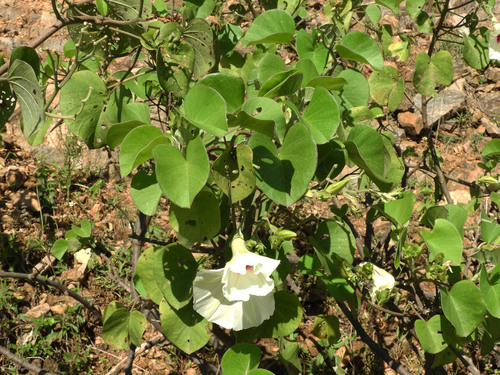
Rivea ornata
Choisy
iNaturalist· cc0
no rights reserved, uploaded by S.MORE
gbif· cc-by-nc
Shiwalee Samant
iNaturalist· cc-by-nc
(c) Moss Natthaphong, some rights reserved (CC BY-NC), uploaded by Moss Natthaphong
Description
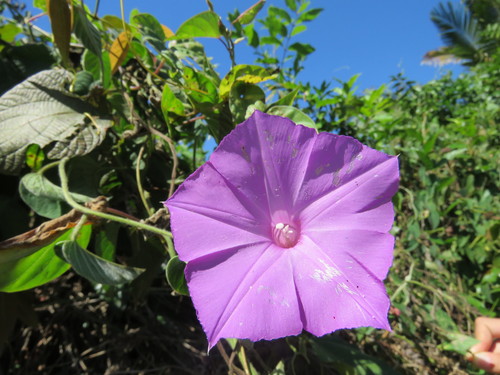
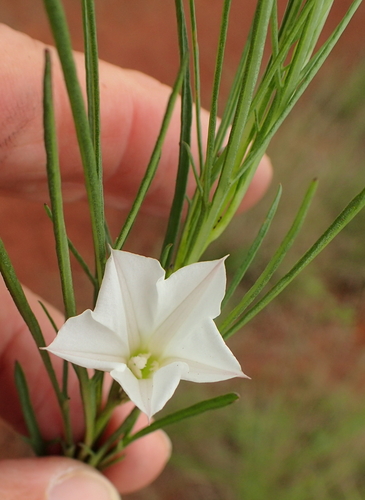
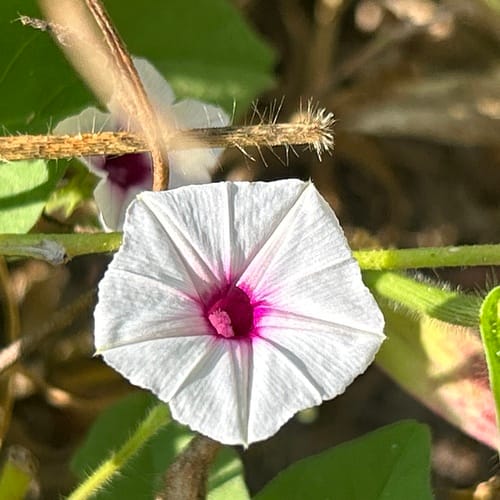
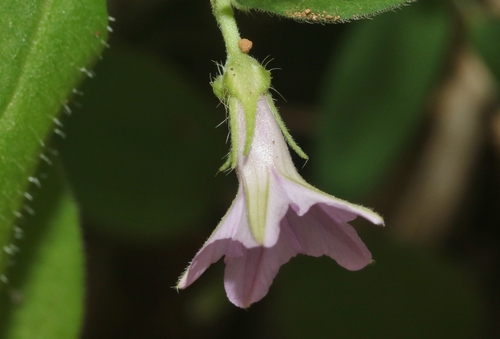
A slightly climbing herb. The leaves are rounded and flat. They are deeply heart shaped at the base. They have a white coating underneath. The flowers are in groups of 1-3 in the axils of leaves. They are tube shaped and 6 cm long. The fruit is a yellow berry.
Edible Uses
The leaves and young shoots are eaten as a vegetable, and the flowers are eaten.
Traditional Uses
The leaves and young shoots are eaten as a vegetable. The flowers are eaten.
This uses section is brief — help expand it
Distribution
A tropical plant. In Nepal it grows between 250-460 m above sea level.
Where It Grows
Asia, Himalayas, India, Myanmar, Nepal, SE Asia, Sri Lanka,
Nutrition
| Part | Moisture | kJ | kcal | Protein | Vit A | Vit C | Iron | Zinc |
|---|---|---|---|---|---|---|---|---|
| Shoots | — | — | 11.6 | — | — | — | — | — |
Synonyms
Also Known As
Boddi kura, Bodditige, Muchuddai, Phand, Phanji nijat, Phanji
References (5)
- Ambasta S.P. (Ed.), 2000, The Useful Plants of India. CSIR India. p 527
- Macmillan, H.F. (Revised Barlow, H.S., et al), 1991, Tropical Planting and Gardening. Sixth edition. Malayan Nature Society. Kuala Lumpur. p 356
- Martin, F.W. & Ruberte, R.M., 1979, Edible Leaves of the Tropics. Antillian College Press, Mayaguez, Puerto Rico. p 187
- Nilegaonkar, S., et al, 1985, Nutritional Evaluation of some wild food plants from the Pune and Nieghbouring districts, Maharashtra state: Part 1. J. Econ. Tax. Bot. Vol. 6 No. 3 pp 629-635
- Reddy, K. N. et al, 2007, Traditional knowledge on wild food plants in Andhra Pradesh. Indian Journal of Traditional Knowledge. Vol. 6(1): 223-229