Ribes x culverwellii
Macfarl.
Jostaberry
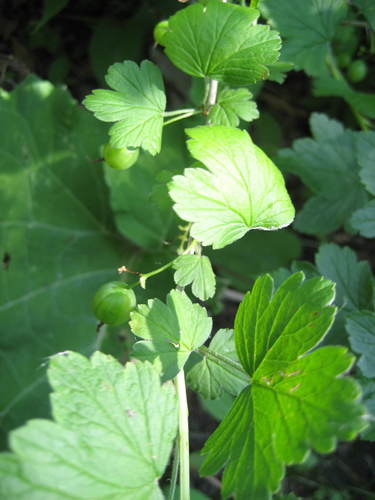
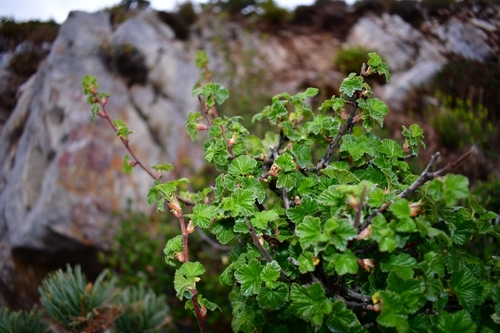
iNaturalist· cc-by-nc
(c) mankarama, some rights reserved (CC BY-NC)
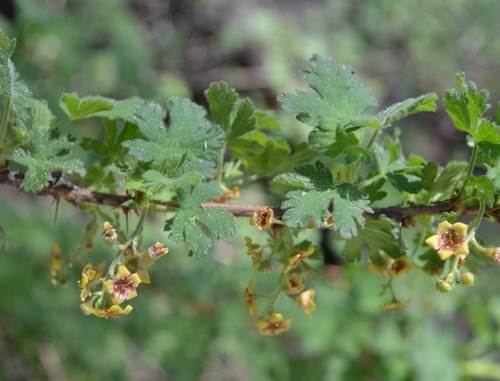
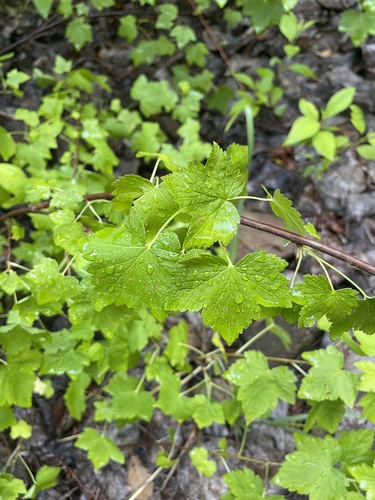
iNaturalist· cc-by-nc
(c) Aleksandr_Levon, some rights reserved (CC BY-NC)
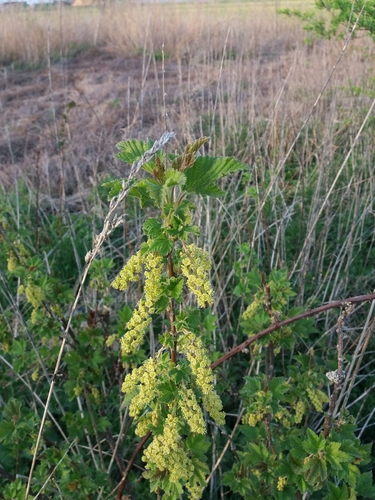
iNaturalist· cc-by-nc
(c) Aleksandr_Levon, some rights reserved (CC BY-NC)
Summary
A deciduous shrub reaching 1.8 m, with hermaphrodite flowers pollinated by bees and self-fertile. Blooms April to May with seeds ripening August to September. Leaves present April to October. Hardy to UK zone 6. Grows in light sandy, medium loamy, or heavy clay soils with good drainage. Tolerates mildly acidic to basic soil pH. Can thrive in semi-shade or full sun and prefers moist soil.
Description
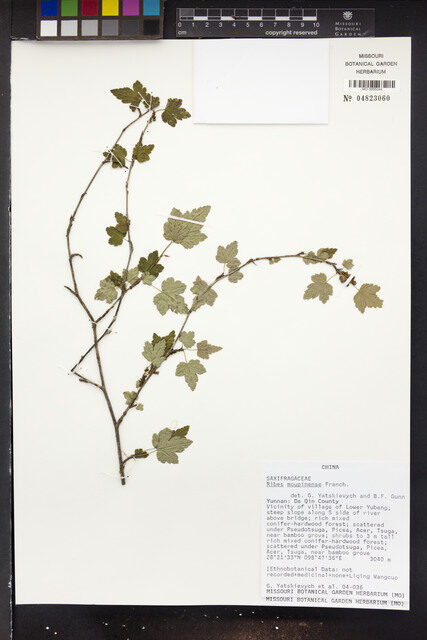
A shrub. It grows 1.5 m high and spreads 1.5 m wide. The leaves are hairy and have 3-5 lobes. The fruit are downy and in clusters. They are red-black and seedless.
Edible Uses
The fruit can be eaten raw or cooked in pies, jams, and similar preparations. It is intermediate in size and flavour between gooseberries and blackcurrants, tasting more like a gooseberry when underripe and shifting toward a blackcurrant flavour as it fully ripens. The fruit is rich in vitamin C.
Traditional Uses
The fruit are used for jam, juice, preserves, syrups and cordial.
This uses section is brief — help expand it
Medicinal Uses
The fruit is rich in vitamin C.
Distribution
It is a temperate plant. It suits hardiness zones 6-9.
Where It Grows
Australia, Europe, Lithuania, North America, USA,
Cultivation
Easily grown in a moisture retentive but well-drained loamy soil of at least moderate quality. Best grown on a deep sandy loam. Dislikes very heavy clay, chalky soils and thin dry soils, but it can succeed on most soil types if plenty of organic matter is incorporated. Quite tolerant of shade though not fruiting so well in such a position. A group of cultivars of hybrid origin, basically a cross between blackcurrants and gooseberries. Very vigorous plants, producing prolific crops of fruit. They are being grown increasingly in gardens. In general they resist American gooseberry mildew, blackcurrant leaf spot and gall mite. Plants in this genus are notably susceptible to honey fungus.
Propagation
Seed is best sown as soon as it is ripe in autumn in a cold frame. Stored seed requires 3 months of cold stratification at 0–5°C and should be sown as early in the year as possible. Under normal storage conditions seed remains viable for 17 years or more. Prick out seedlings into individual pots when large enough to handle, grow on in a cold frame through their first winter, and plant out in late spring the following year. Note that this is a cultivar and will not breed true from seed. Take cuttings of half-ripe wood, 10–15cm with a heel, in July or August in a frame. Cuttings of mature wood from the current year's growth, preferably with a heel of the previous year's growth, can be taken from November to February in a cold frame or sheltered outdoor bed.
Other Uses
None known.
Notes
There are about 150 Ribes species.
Synonyms
References (6)
- Cundall, P., (ed.), 2004, Gardening Australia: flora: the gardener's bible. ABC Books. p 1206
- Facciola, S., 1998, Cornucopia 2: a Source Book of Edible Plants. Kampong Publications, p 120
- Heywood, V.H., Brummitt, R.K., Culham, A., and Seberg, O. 2007, Flowering Plant Families of the World. Royal Botanical Gardens, Kew. p 160
- Jackes, D. A., 2007, Edible Forest Gardens
- Plants for a Future database, The Field, Penpol, Lostwithiel, Cornwall, PL22 0NG, UK. http://www.scs.leeds.ac.uk/pfaf/
Show all 6 references Hide references
- Trans. Roy. Soc. Edinburgh 37:203. 1892