Ribes sanguineum
Pursh
Pink-Flowering Currant, North American Red currant
iNaturalist· cc-by-nc
(c) Minette Layne, some rights reserved (CC BY-NC)
iNaturalist· cc-by-nc
(c) ciarankennedy1, some rights reserved (CC BY-NC)
iNaturalist· cc-by-nc
(c) samhatch88, some rights reserved (CC BY-NC)
Summary
Source: WikipediaRibes sanguineum, the flowering currant, redflower currant, red-flowering currant, or red currant is a North American species of flowering plant in the family Grossulariaceae. It is native to the western United States and Canada.
Description
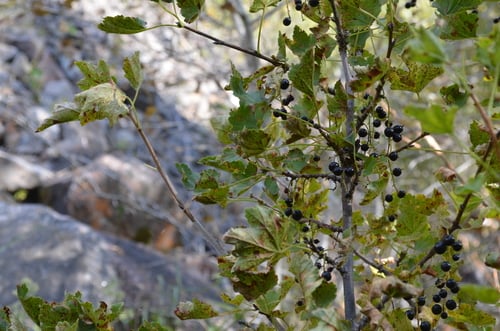
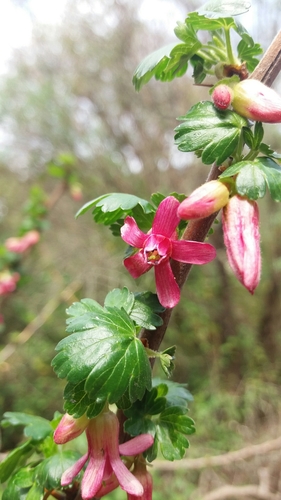
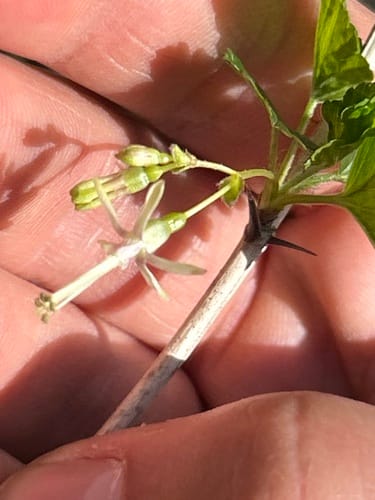
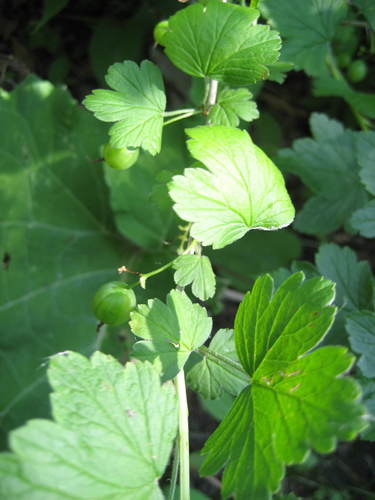
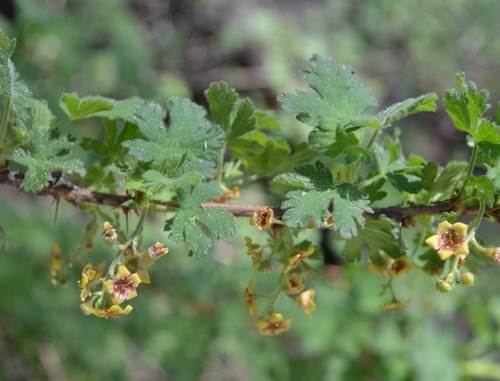
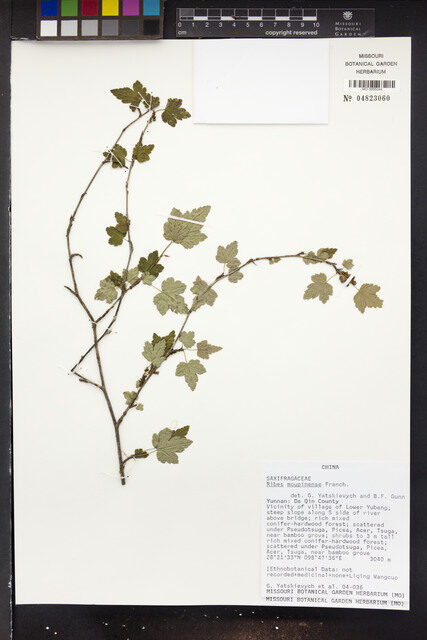
A deciduous shrub. It grows 2-3 m high and 2-3 m wide. The branches are red-brown. The leaves are dark green and have 3-5 lobes. They are downy underneath. The flowers are pink or bright red and occur in sprays. These hang down. The fruit are small and black. They have a white covering over them.
Edible Uses
The fruit can be eaten raw or cooked, though the flavour is not outstanding — merely tolerable raw. Berries can be picked when still firm in August and, if stored carefully, will keep until November, by which time the flavour has improved slightly. Each fruit is about 10mm in diameter.
Traditional Uses
The fruit are usually eaten fresh. They are also stewed. They are also canned and stored for later use. They are sometimes dried and use to flavour soups.
Medicinal Uses
None known
Distribution
It is a temperate plant. It will grow in most soils. The soils need to be moist and it requires an open sunny position. It is resistant to frost but sensitive to drought. It suits hardiness zones 6-10. Tasmania Herbarium. Arboretum Tasmania.
Where It Grows
Australia, Britain, Canada, Europe, North America*, Slovenia, Tasmania, USA,
Cultivation
Easily grown in a moisture retentive but well-drained loamy soil of at least moderate quality. Grows well in heavy clay soils. Succeeds in full sun, it is also quite tolerant of shade though it does not fruit so well in such a position. Tolerates maritime exposure. Hardy to about -25°c. A very ornamental plant, there are a number of named varieties. A plant labelled R. sanguineum carneum (which is probably the cultivar 'Carneum Grandiflorum') was seen at Kew with a very good crop of unripe fruit in July 1994. A disease-resistant plant, the species is being used in blackcurrant breeding programmes. Plants can harbour a stage of white pine blister rust, so should not be grown in the vicinity of pine trees. Plants in this genus are notably susceptible to honey fungus. Heat zone: 8-6. Most Ribes species, including black, red, and white currants, are self-fertile, meaning they can produce fruit without needing cross-pollination. However, cross-pollination with another Ribes plant can improve fruiting. Currants are usually harvested in mid to late summer, from June to August (Northern Hemisphere), depending on the species and local climate. Ribes species generally flower in spring, around April to June (Northern Hemisphere) , with flowering occurring before or as the leaves emerge. Currant plants are relatively fast-growing, reaching maturity in about 2 to 3 years. They typically grow to a height of 1 to 2 meters (3 to 6 feet) and can be quite productive.
Propagation
Seed is best sown as soon as it is ripe in autumn in a cold frame. Stored seed requires 3 months of cold stratification at between 0 and 5°c and should be sown as early in the year as possible. Under normal storage conditions seed can remain viable for 17 years or more. Prick out seedlings into individual pots when large enough to handle and grow on in a cold frame for their first winter, planting out in late spring the following year. Take cuttings of half-ripe wood, 10–15cm with a heel, in July or August in a frame. Cuttings of mature wood of the current year's growth, preferably with a heel of the previous year's growth, can be taken November to February in a cold frame or sheltered bed outdoors.
Other Uses
The shrub can be used in agroforestry systems as part of the shrub layer in mixed-species plantings. It tolerates maritime exposure and can be grown as an informal hedge, providing reasonable shelter when in leaf, though it is rather bare and offers little wind protection in winter. The flowers are rich in nectar and pollen, attracting bees and other beneficial insects. The berries are eaten by birds and small mammals, the dense growth provides cover and nesting sites for wildlife, and the leaf litter and dense structure offer overwintering habitat for invertebrates. It also works well as a groundcover shrub for dry shade when planted alongside shorter groundcovers.
Other Information
It is a minor fruit.
Notes
There are about 150 Ribes species.
Synonyms
Also Known As
Krvavordeče grozdičje
References (17)
- Beckstrom-Sternberg, Stephen M., and James A. Duke. "The Foodplant Database." http://probe.nalusda.gov:8300/cgi-bin/browse/foodplantdb.(ACEDB version 4.0 - data version July 1994)
- Brickell, C. (Ed.), 1999, The Royal Horticultural Society A-Z Encyclopedia of Garden Plants. Convent Garden Books. p 884
- Cundall, P., (ed.), 2004, Gardening Australia: flora: the gardener's bible. ABC Books. p 1207
- Fl. Amer. sept. 1:164. 1813-1814
- Heywood, V.H., Brummitt, R.K., Culham, A., and Seberg, O. 2007, Flowering Plant Families of the World. Royal Botanical Gardens, Kew. p 160
Show all 17 references Hide references
- Hibbert, M., 2002, The Aussie Plant Finder 2002, Florilegium. p 252
- http://www.botanic-gardens-ljubljana.com/en/plants
- Joyce, D., 1998, The Garden Plant Selector. Ryland, Peters and Small. p 157
- Kiple, K.F. & Ornelas, K.C., (eds), 2000, The Cambridge World History of Food. CUP p 1766
- Lord, E.E., & Willis, J.H., 1999, Shrubs and Trees for Australian gardens. Lothian. p 259
- MacKinnon, A., et al, 2009, Edible & Medicinal Plants of Canada. Lone Pine. p 104
- Moerman, D. F., 2010, Native American Ethnobotany. Timber Press. p 480
- Morley, B. & Everard, B., 1970, Wild Flowers of the World. Ebury press. Plate 151
- Plants for a Future database, The Field, Penpol, Lostwithiel, Cornwall, PL22 0NG, UK. http://www.scs.leeds.ac.uk/pfaf/
- Ryan, S., 2008, Dicksonia. Rare Plants Manual. Hyland House. p 50
- Tasmanian Herbarium Vascular Plants list p 34
- Turner, N., 1995, Food Plants of Coastal First Peoples. Royal BC Museum Handbook p 103