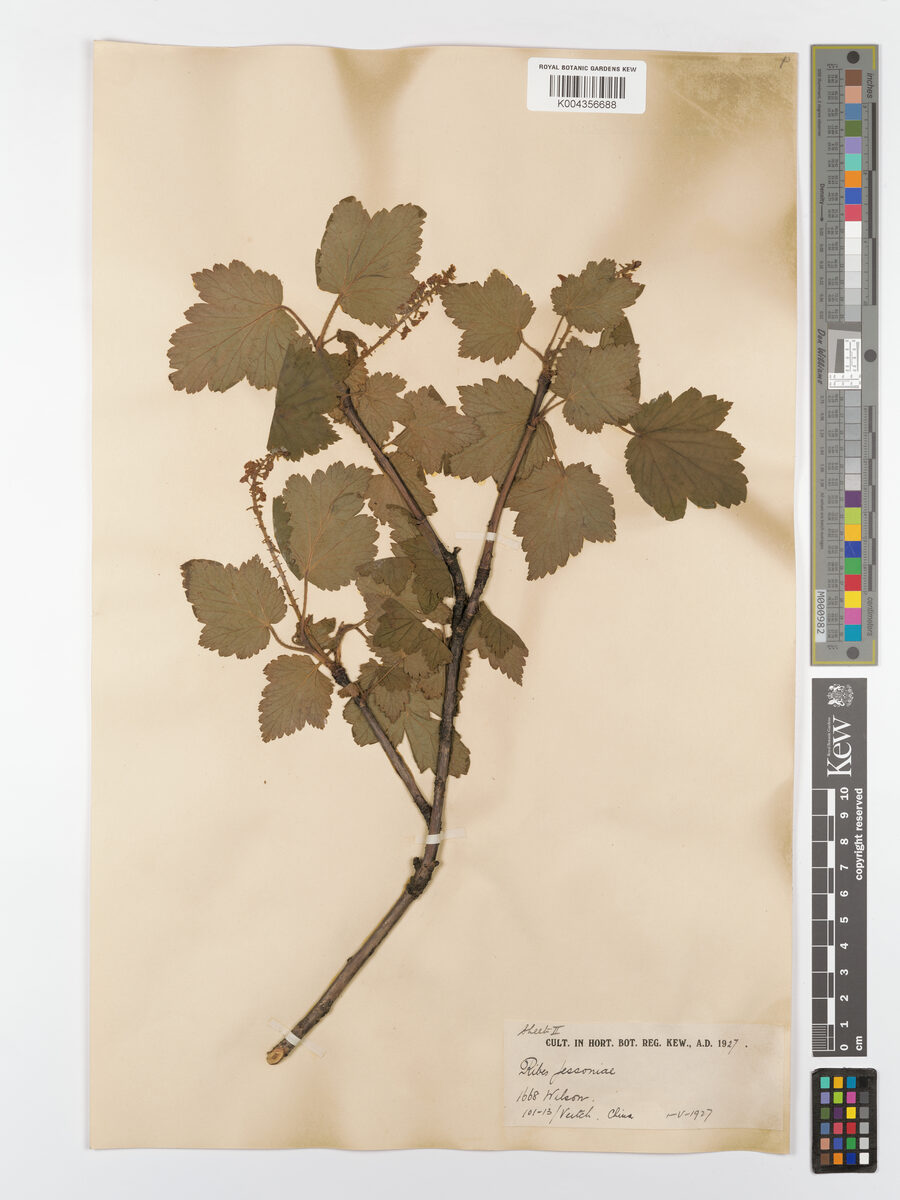
Ribes bracteosum
Douglas ex Hook.
Californian black currant, Stink currant
iNaturalist· cc-by-nc
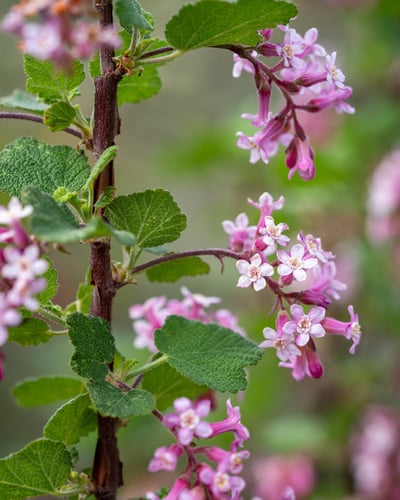
(c) Dee Warenycia, some rights reserved (CC BY-NC), uploaded by Dee Warenycia
iNaturalist· cc-by-nc-sa
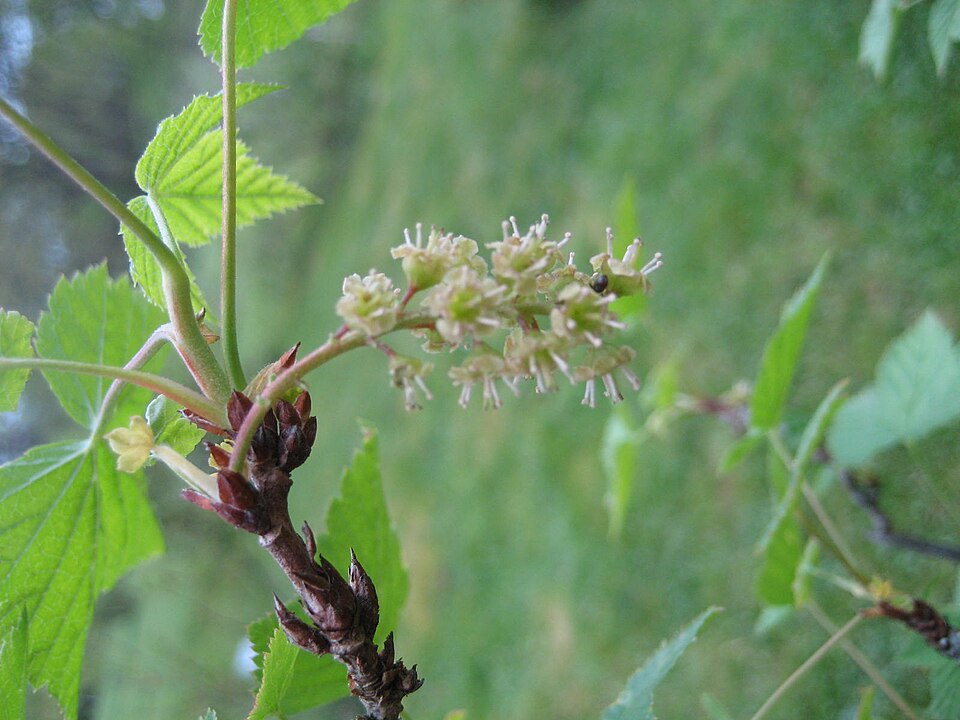
(c) loreross, some rights reserved (CC BY-NC-SA)
iNaturalist· cc-by-nc-sa
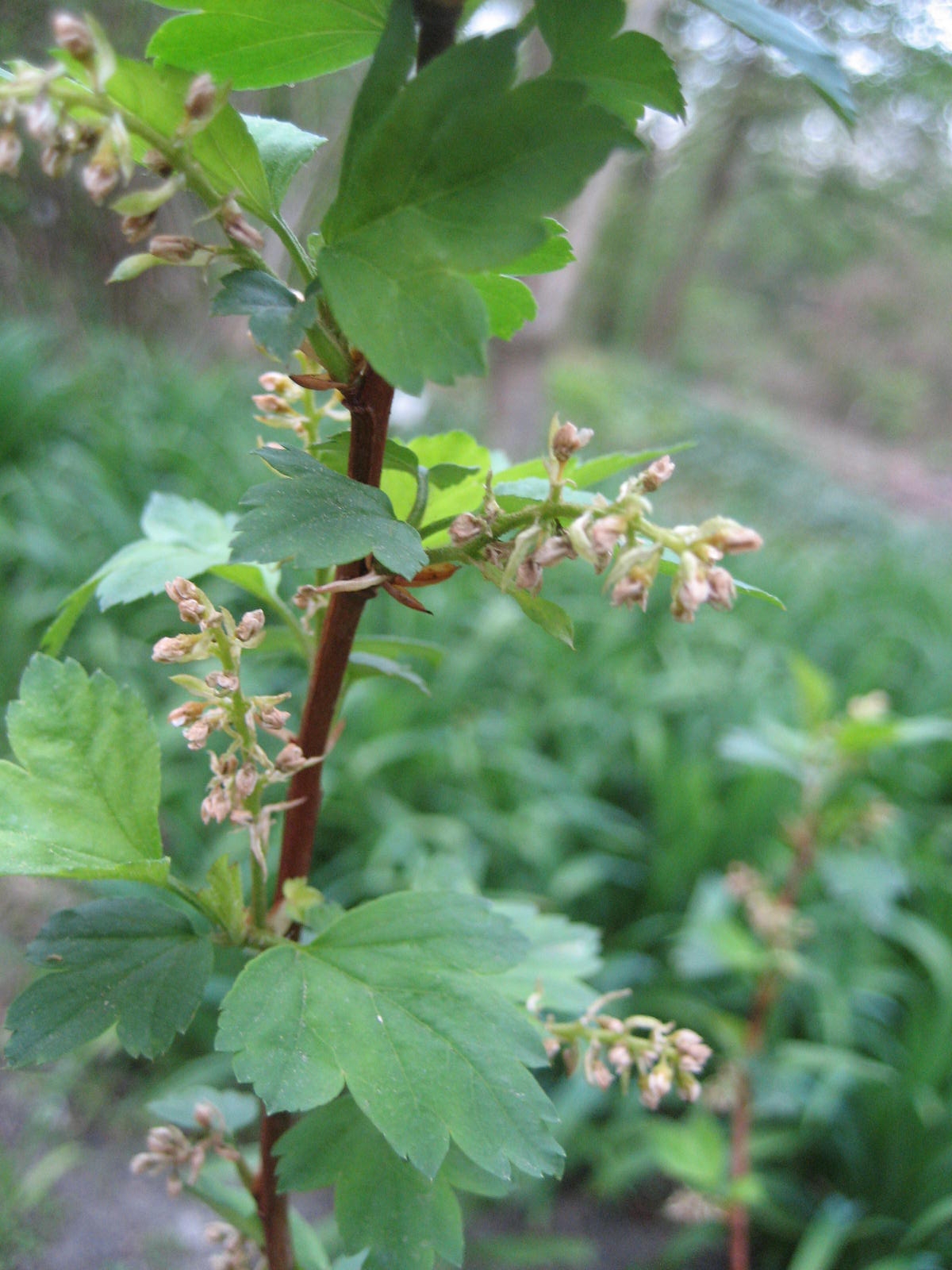
(c) loreross, some rights reserved (CC BY-NC-SA)
Summary
Source: WikipediaRibes bracteosum, the stink currant, is a species of currant native to western coastal North America. R. bracteosum is a deciduous shrub, without thorns, growing to 3 metres (10 feet) tall. The leaves are 5–20 centimetres (2–8 inches) across, palmately lobed with 5 or 7 lobes. The flowers are produced in spring after the leaves emerge, on racemes 15–30 cm (6–12 in) long containing 20–40 flowers; each flower is 5–10 millimetres (3⁄16–3⁄8 inch) in diameter, with five white or greenish-tinged petals. The fruit, born in clusters, is dark blue with a whitish bloom.
Description
An erect, scraggly shrub. It grow 2-3 m tall. The bark is grey and dotted with yellow glands. The leaves are large. They have 5-7 lobes. There are teeth around the edge. The plant has a musky odour. The flowers are small and white to green. They are in long erect clusters. The berries are round and blue. They have a waxy coat. The fruit are edible but the taste varies.
Edible Uses
The fruit, about 5mm in diameter, can be eaten raw or cooked, though it is not very palatable and can cause stomach upsets if eaten in large quantities. It has a mild blackcurrant flavour, a mealy texture, and a slight bitterness, and is less juicy than a true blackcurrant. It ripens in September and is acceptable in small amounts raw; it also works well in pies and preserves, and makes an excellent jam. The fruit can be dried and stored for winter use. Native North American Indians considered it constipating and would eat it with oil. It is produced on long racemes, making it considerably easier to harvest than most currants.
Traditional Uses
The fruit are eaten raw. They are also boiled with salmon roe, dried and stored for later use. The fruit can be eaten with milk and sugar or made into jams.
Medicinal Uses
The fruits can be eaten in quantity to act as a laxative. An infusion of the stems has been given to children as a treatment for colds.
Known Hazards
Fruit may cause stomach upset if eaten in large quantities.
Distribution
It is a warm temperate to Mediterranean climate plant. It grows along shaded stream banks.
Where It Grows
Alaska, Canada, North America, USA,
Cultivation
Easily grown in a moisture retentive but well-drained loamy soil of at least moderate quality. Requires a sunny position. Hardy to about -20°c. Plants can harbour a stage of 'white pine blister rust', so they should not be grown in the vicinity of pine trees. Plants in this genus are notably susceptible to honey fungus. The fruit is produced on long sprigs and is therefore easier to harvest. It is being used in modern breeding programmes for blackcurrants.
Propagation
Seed is best sown as soon as it is ripe in autumn in a cold frame. Stored seed requires 3 months of cold stratification at 2–5°c and should be sown as early in the year as possible. Under normal storage conditions seed can remain viable for 17 years or more. Prick out seedlings into individual pots when large enough to handle and grow on in a cold frame for their first winter, planting out in late spring the following year. Cuttings of half-ripe wood, 10–15cm with a heel, can be taken in July/August in a frame. Cuttings of mature wood of the current year's growth, preferably with a heel of the previous year's growth, can be taken November to February in a cold frame or sheltered bed outdoors.
Other Uses
None known.
Notes
There are about 150 Ribes species.
Nutrition
| Part | Moisture | kJ | kcal | Protein | Vit A | Vit C | Iron | Zinc |
|---|---|---|---|---|---|---|---|---|
| Fruit | 83 | 293 | 70 | 0.8 | — | 27.5 | 0.8 | 0.8 |
Also Known As
Greyberry, Skunk currant
References (13)
- Beckstrom-Sternberg, Stephen M., and James A. Duke. "The Foodplant Database." http://probe.nalusda.gov:8300/cgi-bin/browse/foodplantdb.(ACEDB version 4.0 - data version July 1994)
- Facciola, S., 1998, Cornucopia 2: a Source Book of Edible Plants. Kampong Publications, p 120
- Fl. bor.-amer. 1:233. 1832
- Hedrick, U.P., 1919, (Ed.), Sturtevant's edible plants of the world. p 562
- Heller, C. A., 1962, Wild Edible and Poisonous Plants of Alaska. Univ. of Alaska Extension Service. p 42
Show all 13 references Hide references
- Keep, E., 1979, Currants, in Simmonds N.W.,(ed), Crop Plant Evolution. Longmans. London. p 145
- Kermath, B. M., et al, 2014, Food Plants in the Americas: A survey of the domesticated, cultivated and wild plants used for Human food in North, Central and South America and the Caribbean. On line draft. p 746
- Kuhnlein, H. V., et al, 2009, Indigenous Peoples' food systems. FAO Rome p 32
- MacKinnon, A., et al, 2009, Edible & Medicinal Plants of Canada. Lone Pine. p 104
- Moerman, D. F., 2010, Native American Ethnobotany. Timber Press. p 476
- Plants for a Future database, The Field, Penpol, Lostwithiel, Cornwall, PL22 0NG, UK. http://www.scs.leeds.ac.uk/pfaf/
- Turner, N., 1995, Food Plants of Coastal First Peoples. Royal BC Museum Handbook p 98
- van Wyk, B., 2005, Food Plants of the World. An illustrated guide. Timber press. p 321