Ribes mandshuricum
(Maximowicz) Komarov
Mountain hemp
wikimedia· cc-by-sa
Wikimedia Commons - Christian Hummert (Ixitixel)
wikimedia· cc-by-sa
Wikimedia Commons - Salicyna
iNaturalist· cc-by-nc
(c) Thayne Tuason, some rights reserved (CC BY-NC)
Description
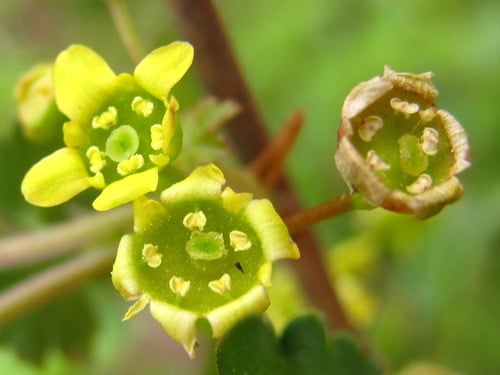
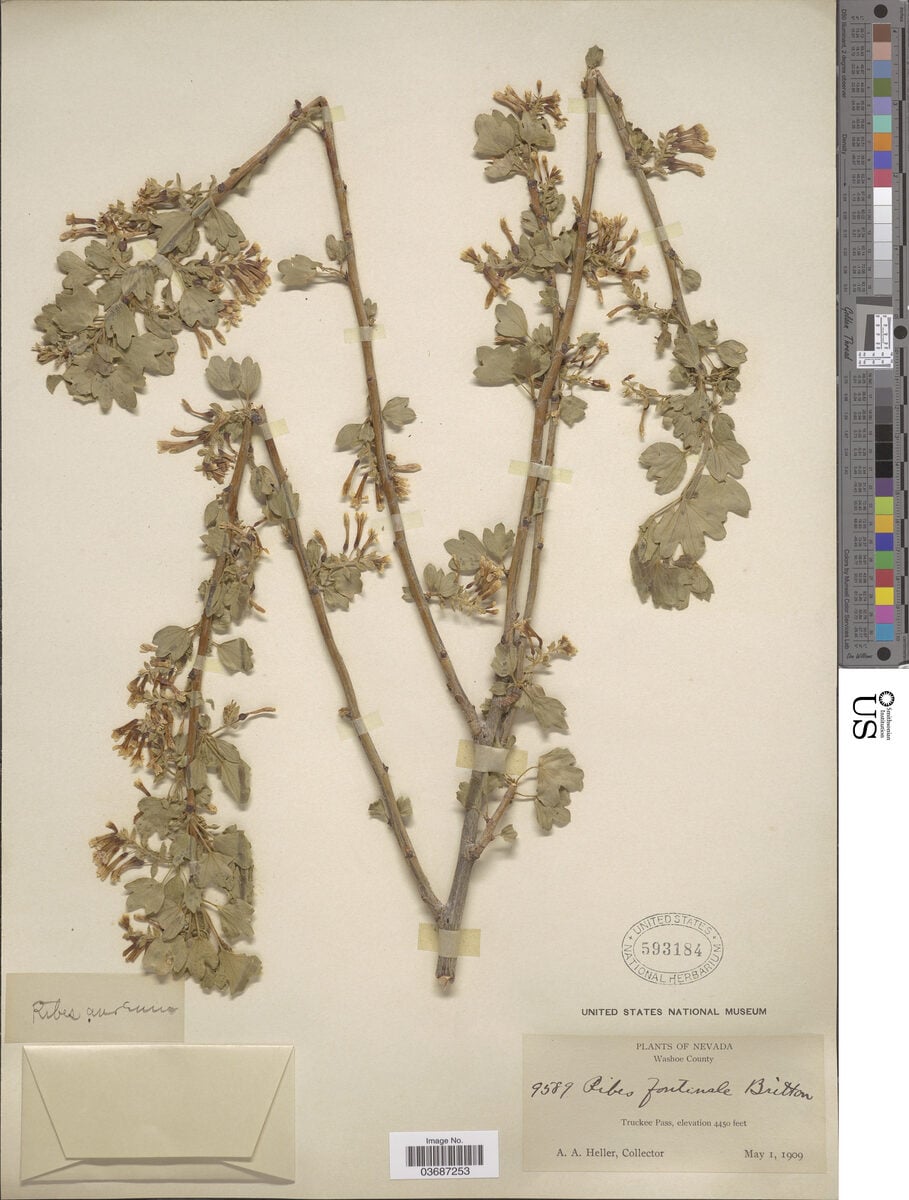
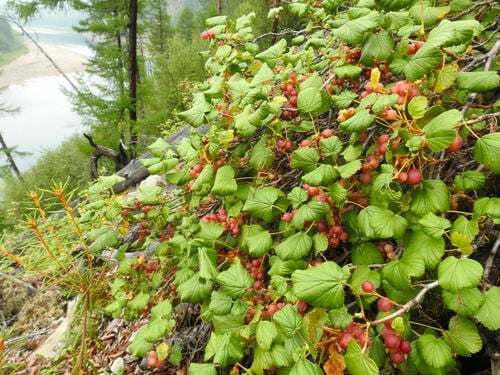
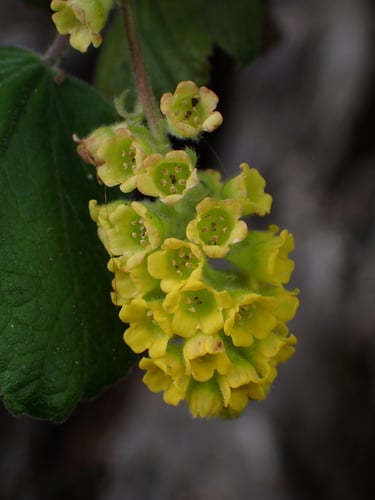
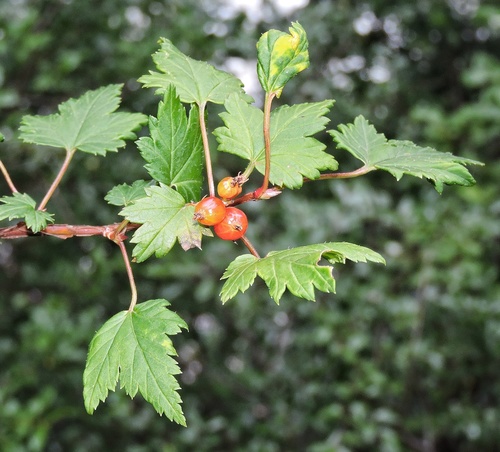
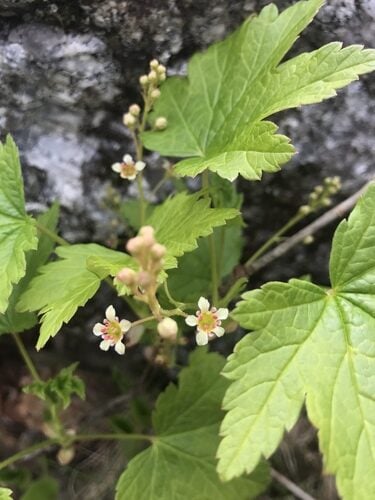
A shrub. It loses its leaves during the year. The young branches are grey-brown. The bark peels off. The leaves are kidney shaped. They are 4-10 cm long by 4-9 cm wide. There are 3 triangle shaped lobes. There are teeth along the edge. The flowers are greenish-yellow. They are in groups up to 9 cm long. The fruit are round red berries. They are 7-9 mm across.
Edible Uses
The red fruit, about 9mm in diameter, can be eaten raw or cooked. Plants observed at Kew in July 1994 produced high overall yields, though the fruits were very small and not fully ripe specimens had a slightly bitter flavour.
Traditional Uses
The fruit are used for jam.
This uses section is brief — help expand it
Medicinal Uses
None known.
Distribution
It is a cold temperate plant. In northern China it grows between 300-1,900 m above sea level.
Where It Grows
Asia, China, Korea, Manchuria, North Korea, Russia, Siberia,
Propagation
Seed is best sown as soon as it is ripe in autumn in a cold frame. Stored seed requires 3 months of cold stratification at 0–5°C and should be sown as early in the year as possible. Under normal storage conditions, seed can remain viable for 17 years or more. Prick out seedlings into individual pots when large enough to handle, grow on in a cold frame for their first winter, then plant out in late spring the following year. Take cuttings of half-ripe wood, 10–15cm with a heel, in July/August in a frame. Cuttings of mature wood of the current year's growth, preferably with a heel of the previous year's growth, can be taken November to February in a cold frame or sheltered bed outdoors.
Other Uses
None known.
Other Information
It grows wild and is cultivated.
Notes
There are about 150 Ribes species.
References (5)
- Fan, L., et al, The Use of Edible Wild Plants and Fungi in Korean-Chinese Villages. Journal of Environmental Information Science 44-5 p 71-79
- Hu, Shiu-ying, 2005, Food Plants of China. The Chinese University Press. p 427
- Plants for a Future database, The Field, Penpol, Lostwithiel, Cornwall, PL22 0NG, UK. http://www.scs.leeds.ac.uk/pfaf/
- Reis, S. V. and Lipp, F. L., 1982, New Plant Sources for Drugs and Foods from the New York Botanical Garden herbarium. Harvard. p 95
- Trudy Imp. S.-Peterburgsk. Bot. Sada 22:437. 1904