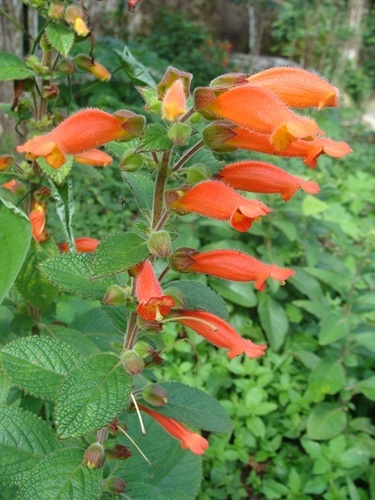
Rhynchotechum ellipticum
(Wall. ex D. Dietrich) A. DC.
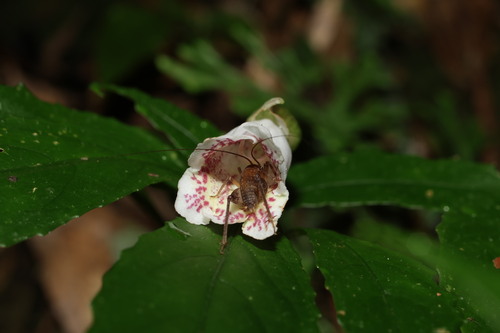
iNaturalist· cc-by-nc
(c) Leung Pak keung, some rights reserved (CC BY-NC), uploaded by Leung Pak keung
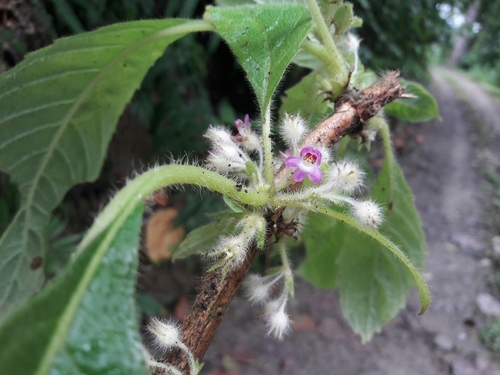
iNaturalist· cc-by-nc
(c) 郭伯川, some rights reserved (CC BY-NC)
Description
A small shrub. The stems are 0.7-2 m long. There are rusty brown hairs near the tip. The leaves are opposite. The leaf stalk is 0.8-5 cm long. The leaf blade is oval and 9.5-32 cm long by 3-10 cm wide. It is woolly. They are red-brown. There are teeth along the edge. In a flower cluster there are 15-70 flowers. The flower stalk is 0.9-4 cm long. Flowers are white or tinged pink. The fruit is a white berry 2-6 mm across.
Edible Uses
The leaves are cooked and eaten as a vegetable, often prepared with meat or fish, and are sold in local markets. The ripe fruit are eaten raw.
Traditional Uses
The leaves are cooked and eaten as a vegetable. They are cooked with meat or fish. The ripe fruit are eaten raw.
This uses section is brief — help expand it
Distribution
A tropical plant. In China it grows in shaded places near streams between 100-1800 m altitude in southern regions.
Where It Grows
Asia, Bhutan, Cambodia, China, Himalayas, India, Indochina, Laos, Malaysia, Myanmar, Nepal, Northeastern India, SE Asia, Thailand, Vietnam,
Other Information
Leaves are sold in local markets.
Notes
There are 13 Rhynchotechum species.
Synonyms
Also Known As
Chenkup, Endroigi, Ja-kharia, Japang esing, Jongku, Jooke, Kosabio, Mebitchi, Mehek, Mimalai, Re-gong, Telhlep, Theshuvi, Tiarep, Xian zhu ju tai
References (23)
- Ambasta S.P. (Ed.), 2000, The Useful Plants of India. CSIR India. p 526
- Ethnobotany of Karbis. Chapter 4 in p 100
- Kar, A., et al, 2013, Wild Edible Plant Resources used by the Mizos of Mizoram, India. Kathmandu University Journal of Science, Engineering and Technology. Vol. 9, No. 1, July, 2013, 106-126
- Luo, B., et al, 2019, Wild edible plants collected by Hani from terraced rice paddy agroecosystem in Honghe Prefecture, Yunnan, China. Journal of Ethnobiology and Ethnomedicine 15:56 (As Rhynchotechum obovatum)
- Maikhuri, R, K, and Gangwar, A. K., 1993, Ethnobiological Notes on the Khasi and Garo Tribes of Meghalaya, Northeast India, Economic Botany, Vol. 47, No. 4, pp. 345-357
Show all 23 references Hide references
- Medhi, P. & Borthakur, S. K., 2012, Phytoresources from North Cachur Hills of Assam -3: Edible plants sold at Hflong market. Indian Journal or Natural Products and Resources. 3(1) pp 84-109
- Medhi, P. & Borthakur, S. K., 2013, Wild edible plants sold by the Zeme Nagas at the makeshift market of Mahur, Dima Hasao district of Assam. Pleione 7(1): 84 - 93. 2013
- Medhi, P., Sarma, A and Borthakur, S. K., 2014, Wild edible plants from the Dima Hasao district of Assam, India. Pleione 8(1): 133-148
- Murtem, G. & Chaudhrey, P., 2016, An ethnobotanical note on wild edible plants of Upper Eastern Himalaya, India. Brazilian Journal of Biological Sciences, 2016, v. 3, no. 5, p. 63-81
- Neogi, B., Prasad, M. N. V. and Rao, R. R., 1989, Ethnobotany of Some Weeds of Khasi and Garo Hills, Meghalaya, Northeastern India. Economic Botany 43(4): 471-479
- Patiri, B. & Borah, A., 2007, Wild Edible Plants of Assam. Geethaki Publishers. p 93
- Pfoze, N. L., et al, 2012, Assessment of Local Dependency on Selected Wild Edible Plants and fruits from Senapati district, Manipur, Northeast India. Ethnobotany Research & Applications 10:357-367
- Pfoze, N. L., et al, 2012, Survey and assessment of floral diversity on wild edible plants from Senapati district of Manipur, Northeast India. Journal or Biodiversity and Environmental Sciences. 1(6):50-52
- Phangchopi, U., et al, 2015, Diversity of wild edible plants in Marat Longri Wildlife Sanctuary, Assam. Indian Journal of Natural Products and Resources Vol. 6(4), December 2015 pp. 305-313
- Sangma, A. j. T., 2018, Non-timber forest products (NTFPs) used by Garo tribe of Rongram block in West Garo Hills, Meghalaya. Indian Journal of Traditional Knowledge Vol 18 (1), pp 151-161
- Salvi, J. et al, 2016, A review: Underutilized wild edible plants as a potential source of alternative nutrition. International Journal of Botany Studies. Volume 1; Issue 4; May 2016; Page No. 32-36
- Sarma, H., et al, 2010, Updated Estimates of Wild Edible and Threatened Plants of Assam: A Meta-analysis. International Journal of Botany 6(4): 414-423
- Sawian, J. T., et al, 2007, Wild edible plants of Meghalaya, North-east India. Natural Product Radiance Vol. 6(5): p 421
- Singh, H.B., Arora R.K.,1978, Wild edible Plants of India. Indian Council of Agricultural Research, New Delhi. p 34
- Taram, M., et al, 2018, Wild Food Plant Resources of Komkar Adi Tribe of Upper Siang District in Arunachal Pradesh, India. Bulletin of Arunachal Forest Research, Vol. 33(2), 27-35
- Terangpi, R., et al, 2013, Utilization of less known plants, Gnetum gnemon L. and Rhynchotechum ellipticum (Dietr.)A. DC. among the Karbis, Northeast India. Journal of Scientific and Innovative Research 2013; 2 (5): 943-949
- Teron, R. & Borthakur, S. K., 2016, Edible Medicines: An Exploration of Medicinal Plants in Dietary Practices of Karbi Tribal Population of Assam, Northeast India. In Mondal, N. & Sen, J.(Ed.) Nutrition and Health among tribal populations of India. p 152
- Wang Wentsai, Pan Kaiyu, Li Zhenyu, Weitzmann, A.L., Skog, L.E., Gesneraceae. Flora of China p