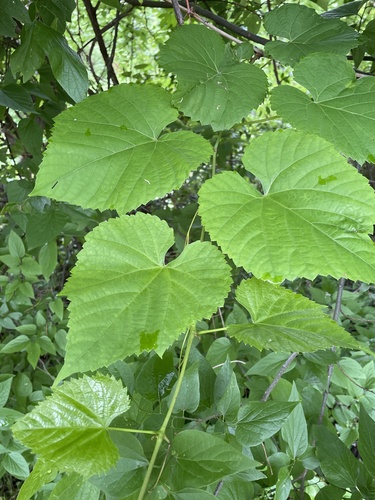
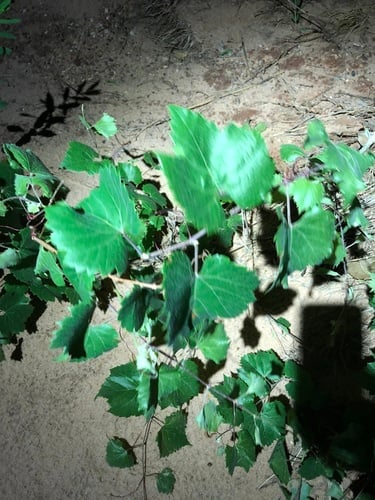
Rhoicissus rhomboidea
(E. Meyer ex Harvey) Planchon
Rope-wood grape, Glossy forest grape
iNaturalist· cc-by-nc
(c) Ricky Taylor, some rights reserved (CC BY-NC), uploaded by Ricky Taylor
iNaturalist· cc-by-nc-sa
(c) Marco Schmidt, some rights reserved (CC BY-NC-SA), uploaded by Marco Schmidt
iNaturalist· cc-by-nc-sa
(c) Marco Schmidt, some rights reserved (CC BY-NC-SA), uploaded by Marco Schmidt
Summary
Source: WikipediaRhoicissus rhomboidea, also known as the glossy forest grape, glossy wild grape, ropewood, bastard forest grape and grape ivy, is an evergreen climbing plant in the family Vitaceae that is native to the eastern forests of southern Africa.
Description
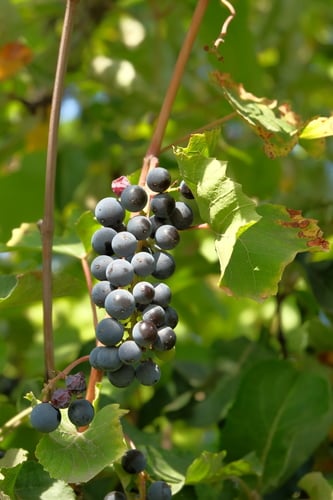
A vigorous climber. It can sometimes be a small tree which grows 3-6 m high. The stem if much branched. It climbs by means of thick rough tendrils. All young parts are covered with rusty hairs. The leaves have 3 leaflets. The side leaflets are unequal at the sides. The leaves are leathery and glossy and dark green above. Underneath there are often rusty hairs. The edges of the leaves have about 6 large teeth like structures tipped with a sharp point. The leaf stalk is 2.3 cm long. The flowers are small and greenish-yellow. They occur in lax heads in the axils of leaves. They are on stalks about 10 mm long. This stalk has long red hairs. The fruit is like a grape. It is almost round and 10 mm across. They occur in clusters and become dark wine-red. They are edible
Edible Uses
The dark wine-red fruits are edible and eaten as dessert fruit or made into jam, especially by children.
Traditional Uses
The fruit are eaten as dessert fruit. They are also used for jam.
This uses section is brief — help expand it
Medicinal Uses
In folk medicine, the plant's roots have been used to assist delivery for pregnant women. The plant showed the highest inhibition of prostaglandin synthesis with 56% inhibition, compared to 89% inhibition by the indomethacin standard, implying its potential to be used as an anti-inflammatory agent. The plant exhibited some level of antimicrobial activity, with its roots illustrating the highest repressive activity against various microorganisms. Its stem extract and the standards chloramphenicol and tetracycline all signaled an inhibition zone diameter against Salmonella sp. Aqueous and methanol extracts of the plant were inspected to ascertain its therapeutic potentials as anticancer agents – In vitro, the antiproliferative activity against HepG2 cells, a human liver cancer cell line, was determined. The plant contains compounds (polyphenols) with powerful radical-scavenging and antiradical-generating effects. Its extracts revealed more than 50% antioxidant activity compared with values acquired for the commercial antioxidants which were used as standards. The plant also inhibited the 1, 1-Diphenyl-2-picrylhydrazyl free radical with about 98% radical scavenging activity. Xanthine oxidase was inhibited by 88.20% by its root extract.
Distribution
A tropical plant. It occurs at the edges of evergreen forest. It can grow in arid places.
Where It Grows
Africa, East Africa, Eswatini, Mozambique, Slovenia, South Africa, Southern Africa, Swaziland, Zimbabwe,
Other Information
The grapes are especially eaten by children.
Synonyms
Also Known As
Bastard forest grape, Isinwati, Mudzambiringa, Mufukamhunze, Mufukazviyo, Mugodzonga, Mukwidzi, Musikavakadzi, Rombolistna vita
References (11)
- Fox, F. W. & Young, M. E. N., 1982, Food from the Veld. Delta Books. p 366
- Jardin, C., 1970, List of Foods Used In Africa, FAO Nutrition Information Document Series No 2.p 158
- Palgrave, K.C., 1996, Trees of Southern Africa. Struik Publishers. p 562
- Royal Botanic Gardens, Kew (1999). Survey of Economic Plants for Arid and Semi-Arid Lands (SEPASAL) database. Published on the Internet; http://www.rbgkew.org.uk/ceb/sepasal/internet [Accessed 13th June 2011]
- Ruiters-Welcome, A. K., 2019, Food plants of southern Africa. Ph.D. thesis. Univ. of Johannesburg p 108
Show all 11 references Hide references
- http://www.botanic-gardens-ljubljana.com/en/plants
- Swaziland's Flora Database http://www.sntc.org.sz/flora
- Tredgold, M.H., 1986, Food Plants of Zimbabwe. Mambo Press. p 13
- Welcome, A. K. & Van Wyk, B.-E., 2019, An inventory and analysis of the food plants of southern Africa. South African Journal of Botany 122 (2019) 136–179
- World Checklist of Useful Plant Species 2020. Royal Botanic Gardens, Kew
- www.zimbabweflora.co.zw 2011