Rhamnus napalensis
(Wall.) M. A. Lawson
iNaturalist· cc-by-nc
(c) 小铖/Smalltown, some rights reserved (CC BY-NC), uploaded by 小铖/Smalltown
iNaturalist· cc-by
(c) Thomas Mesaglio, some rights reserved (CC BY)
Description
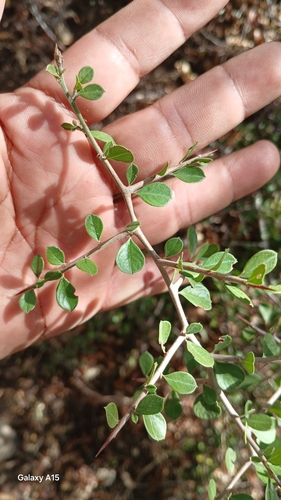
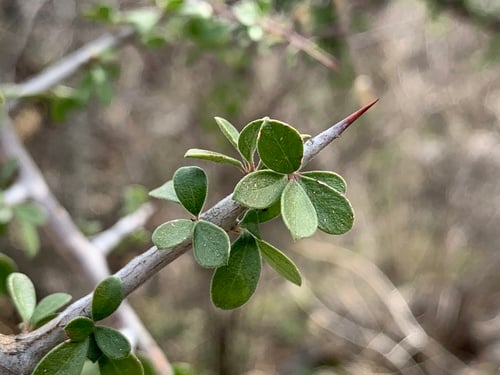
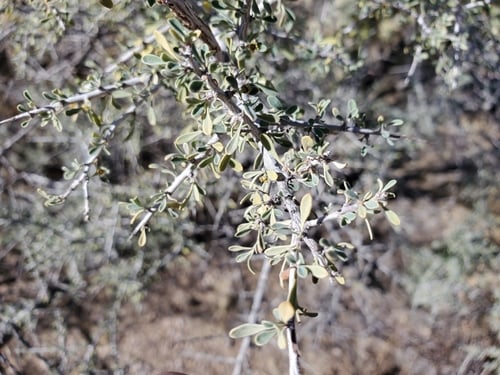
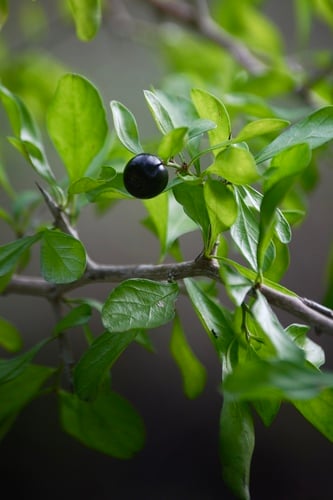
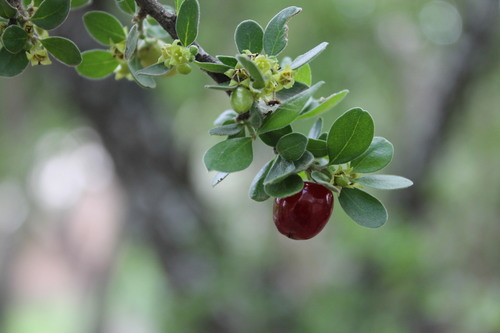
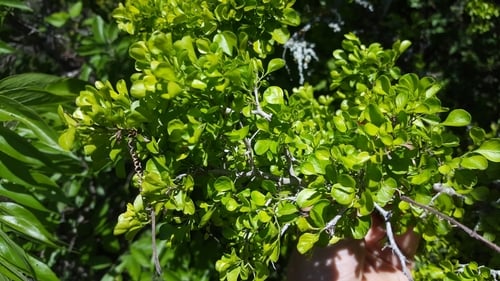
A shrub or scrambling vine. The twigs are reddish brown. The twigs zigzag from leaf to leaf. The leaves are simple and alternate or opposite. They are 3-13 cm long by 1-5 cm wide. The leaves have small hairs underneath. The flowers can be single or in groups. They are in the axils of leaves. The flowers are 3-4 mm across. There are 4-5 white or cream petals. These are 1 mm long. The fruit is fleshy and purple or black. It is 6-7 mm long. There are 2 or 3 seeds.
Edible Uses
Fruit. The purplish black, obovoid-globose drupe is 5 - 6mm in diameter, containing 3 seeds. Some caution is advised, see the notes above on toxicity.
Traditional Uses
The fruit are eaten raw or dry.
This uses section is brief — help expand it
Medicinal Uses
The plant is used in traditional medicine.
Known Hazards
Species in this genus contain hydroxyanthracene derivatives which have a stimulant laxative effect upon the body, and many species are used traditionally as laxatives. In small doses, and for short periods, these can be safe and effective, but used over long periods they can weaken the body's natural ability to defecate and can have a range of long-lasting negative effects upon the body, including anaemia, malabsorption, haematuria and weight loss. Large single doses can cause severe purging.
Distribution
It is a tropical plant. It grows in the rainforest. It grows between 450-900 m altitude in tropical Queensland. In Northeastern India it grows between 1,600-1,800 m above sea level. In Yunnan.
Where It Grows
Asia, Australia, Bhutan, China, Himalayas, India, Indochina, Laos, Malaysia, Myanmar, Nepal, Northeastern India, Papua New Guinea, PNG, SE Asia, Thailand, Tibet,
Cultivation
Rhamnus napalensis is found from the warm temperate regions of southern China through India and southeast Asia to New Guinea and northern Australia Succeeds in any reasonably good soil. The species in this genus are notably resistant to honey fungus.
Other Uses
The leaves are often used for dyeing tissues. All the species of Rhamnus contain a mixture of compounds (mainly rhamnetin, quercitin and rhamnazin) that make a range of good quality dyes. The colour and its intensity depend upon what part of the plant is used as dyeing material (leaves, fruits and bark are most commonly used), at what period of growth it is collected and in what state it is used. With the use of the corresponding mordants (alum, copper and iron vitriols, tin dioxide, chromium, etc.) it is possible to obtain virtually the entire spectrum of colours from lemon-yellow to purple and dark cinnamon-brown, from olive-green to intensive blue and violet. The dye extracts obtained from the bark, leaves and fruits are suitable for dyeing cottons, silks, woollens, leather, paper and wood. These dyes are often exceptional for their fastness. Although we have seen no specific information for this species, the seeds of Rhamnus species are generally rich in fatty oil and several of them are extracted for use as lubricating oils etc. The plant is used for making paper. The heartwood is a dark reddish-brownish; the sapwood yellow or ochre. The wood is moderately hard. The flowers are a good source of nectar for bees.
Other Information
The fruit are especially eaten by children.
Notes
There are over 100 Rhamnus species. It is used in medicine.
References (12)
- Altschul, S.V.R., 1973, Drugs and Foods from Little-known Plants. Notes in Harvard University Herbaria. Harvard Univ. Press. Massachusetts. no. 2634
- Ambasta S.P. (Ed.), 2000, The Useful Plants of India. CSIR India. p 518
- Cooper, W. and Cooper, W., 2004, Fruits of the Australian Tropical Rainforest. Nokomis Editions, Victoria, Australia. p 425
- Ethnobotany of Karbis. Chapter 4 in p 105
- J. D. Hooker, Fl. Brit. India 1:640. 1875 "nipalensis"
Show all 12 references Hide references
- Li, S., et al, 2020, Monpa, memory, and change: an ethnobotanical study of plant use in Mêdog County, South-east Tibet, China. Journal of Ethnobiology and Ethnomedicine. (2020) 16:5 p 22
- Medhi, P., Sarma, A and Borthakur, S. K., 2014, Wild edible plants from the Dima Hasao district of Assam, India. Pleione 8(1): 133-148
- Meitei, L. R., et al, 2022, An ethnobotanical study on the wild edible plants used by forest dwellers in Yangoupokpi Lokchao Wildlife Sanctuary, Manipur, India. Ethnobotany Research and Application 23:15
- Murtem, G. & Chaudhrey, P., 2016, An ethnobotanical note on wild edible plants of Upper Eastern Himalaya, India. Brazilian Journal of Biological Sciences, 2016, v. 3, no. 5, p. 63-81.
- Plants for a Future database, The Field, Penpol, Lostwithiel, Cornwall, PL22 0NG, UK. http://www.scs.leeds.ac.uk/pfaf/
- Teron, R. & Borthakur, S. K., 2016, Edible Medicines: An Exploration of Medicinal Plants in Dietary Practices of Karbi Tribal Population of Assam, Northeast India. In Mondal, N. & Sen, J.(Ed.) Nutrition and Health among tribal populations of India. p 154
- Tsering, J., et al, 2017, Ethnobotanical appraisal on wild edible plants used by the Monpa community of Arunchal Pradesh. Indian Journal of Traditional Knowledge. Vol 16(4), October 2017, pp 626-637