Clematis pubescens
Huegel ex Endl.
Western Clematis, Upright Virgin’s Bower
iNaturalist· cc-by
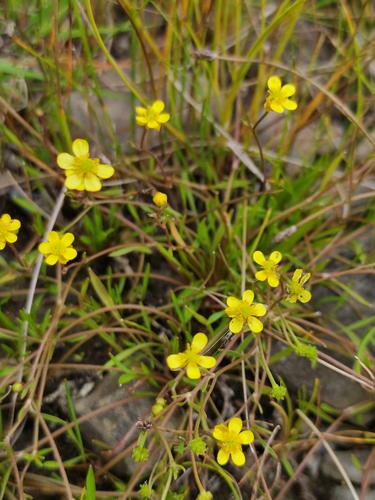
(c) Ann Bentley, some rights reserved (CC BY), uploaded by Ann Bentley
iNaturalist· cc-by-nc
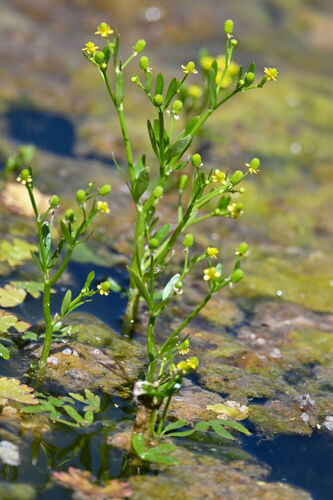
(c) alexandra1968, some rights reserved (CC BY-NC)
iNaturalist· cc-by-nc
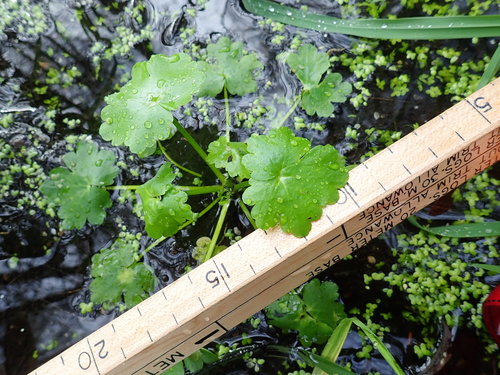
(c) FreckLes, some rights reserved (CC BY-NC), uploaded by FreckLes
Summary
Source: WikipediaClematis pubescens, known locally as common clematis, is a climbing shrub of the family Ranunculaceae with white blooms, found in coastal regions of southern Western Australia.
Description
A twining, rambling climber. It grows 5-10 m high. The young stems are very hairy. The leaves are broad and divided into 3 leaflets. The leaflets are 3-6 cm long by 1-1.5 cm wide. They are oval. The leaves are hairy. They have teeth along the edge. The flowers are large and white. They are 2-4 cm across and star like. The seed heads are fluffy.
Edible Uses
The tubers and roots are edible portions.
Traditional Uses
CAUTION: Most Clematis contain an irritant poison.
This uses section is brief — help expand it
Known Hazards
Most Clematis contain an irritant poison.
Distribution
It grows in temperate and subtropical places. It grows in Western Australia. It needs well drained soil. It can grow in full sun or light shade. It can stand light frost.
Where It Grows
Australia*,
Cultivation
It can be grown from seed or cuttings.
Notes
There are about 250 Clematis species.
References (9)
- Bindon, P., 1996, Useful Bush Plants. Western Australian Museum. p 83.
- Bodkin, F., 1991, Encyclopedia Botanica. Cornstalk publishing, p 264
- Elliot, W.R., & Jones, D.L., 1984, Encyclopedia of Australian Plants suitable for cultivation. Vol 3. Lothian. p 47
- Hibbert, M., 2002, The Aussie Plant Finder 2002, Florilegium. p 70
- Jones, D.L. & Gray, B., 1977, Australian Climbing Plants. Reed. p 92
Show all 9 references Hide references
- Lazarides, M. & Hince, B., 1993, Handbook of Economic Plants of Australia, CSIRO. p 61
- Molyneux, B & Forrester, S., 1997, The Austraflora A-Z of Australian Plants. Reed. p 67
- Paczkowska, G . & Chapman, A.R., 2000, The Western Australian Flora. A Descriptive Catalogue. Western Australian Herbarium. p 506
- Pl. hartw. 5. 1839 (As Benth.)