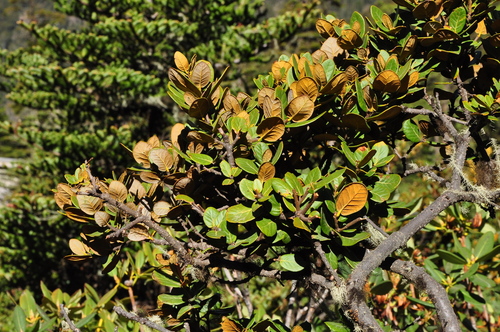
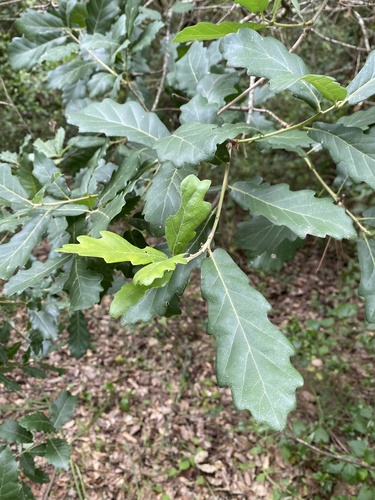
Quercus x sp. 1
Ooti oak
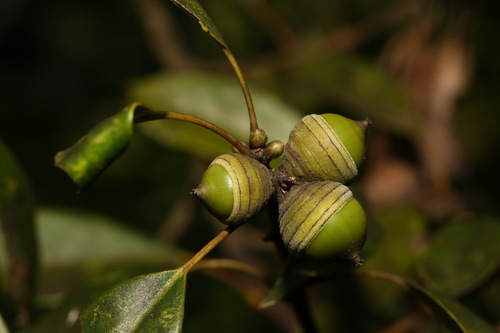
iNaturalist· cc-by-sa
(c) Douglas Goldman, some rights reserved (CC BY-SA)
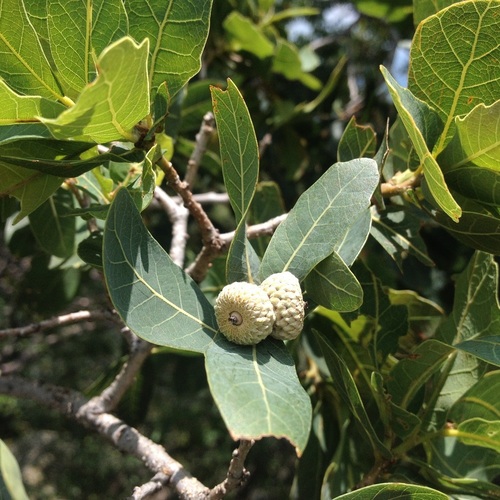
iNaturalist· cc-by-sa
(c) Douglas Goldman, some rights reserved (CC BY-SA)
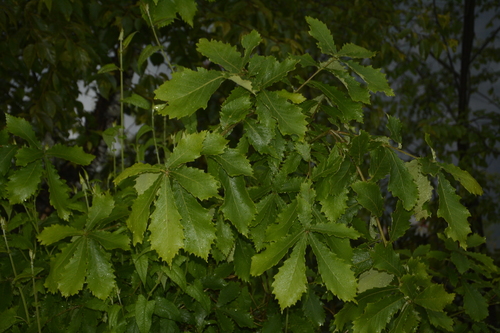
iNaturalist· cc-by-sa
(c) Douglas Goldman, some rights reserved (CC BY-SA)
Description
A temperate oak tree in the Fagaceae family, commonly called Ooti oak.
This description is brief — help expand it
Edible Uses
The northern red oak is one of the most important oaks for timber production in North America. Quality red oak is of high value as lumber and veneer, while defective logs are used as firewood. Other related oaks are also cut and marketed as red oak, although their wood is not always of as high a quality. These include eastern black oak, scarlet oak, pin oak, Shumard oak, southern red oak and other species in the red oak group. Construction uses include flooring, veneer, interior trim, and furniture. It is also used for lumber, railroad ties, and fence posts. Red oak wood grain is so open that smoke can be blown through it from end-grain to end-grain on a flat-sawn board. For this reason, it is subject to moisture infiltration and is unsuitable for outdoor uses such as boatbuilding or exterior trim. The acorns can be collected in autumn, shelled, tied up in a cloth, and leached to remove bitterness. They can then be eaten whole or ground into meal.
Distribution
It is a temperate plant.
Where It Grows
North America, USA,
Notes
There are about 600 Quercus species.
Synonyms
References (3)
- Beckstrom-Sternberg, Stephen M., and James A. Duke. "The Foodplant Database." http://probe.nalusda.gov:8300/cgi-bin/browse/foodplantdb.(ACEDB version 4.0 - data version July 1994)
- Facciola, S., 1998, Cornucopia 2: a Source Book of Edible Plants. Kampong Publications, p 116
- Plants for a Future database, The Field, Penpol, Lostwithiel, Cornwall, PL22 0NG, UK. http://www.scs.leeds.ac.uk/pfaf/