Pyrus balsanae
Decne.
No photos yet for Pyrus balsanae
Sign in to contribute a photoSummary
A deciduous tree reaching 15 meters tall, hardy to UK zone 6 and not frost tender. Hermaphroditic flowers are insect-pollinated. Tolerates light sandy, medium loamy, and heavy clay soils with good drainage, though clay soils are acceptable. Grows in mildly acid, neutral, or basic pH conditions. Adapts to semi-shade or full sun, prefers moist soil but tolerates drought and atmospheric pollution.
Description
A deciduous tree reaching 15 meters tall, hardy to UK zone 6 and not frost tender. Hermaphroditic flowers are insect-pollinated. Tolerates light sandy, medium loamy, and heavy clay soils with good drainage, though clay soils are acceptable. Grows in mildly acid, neutral, or basic pH conditions. Adapts to semi-shade or full sun, prefers moist soil but tolerates drought and atmospheric pollution.
Edible Uses
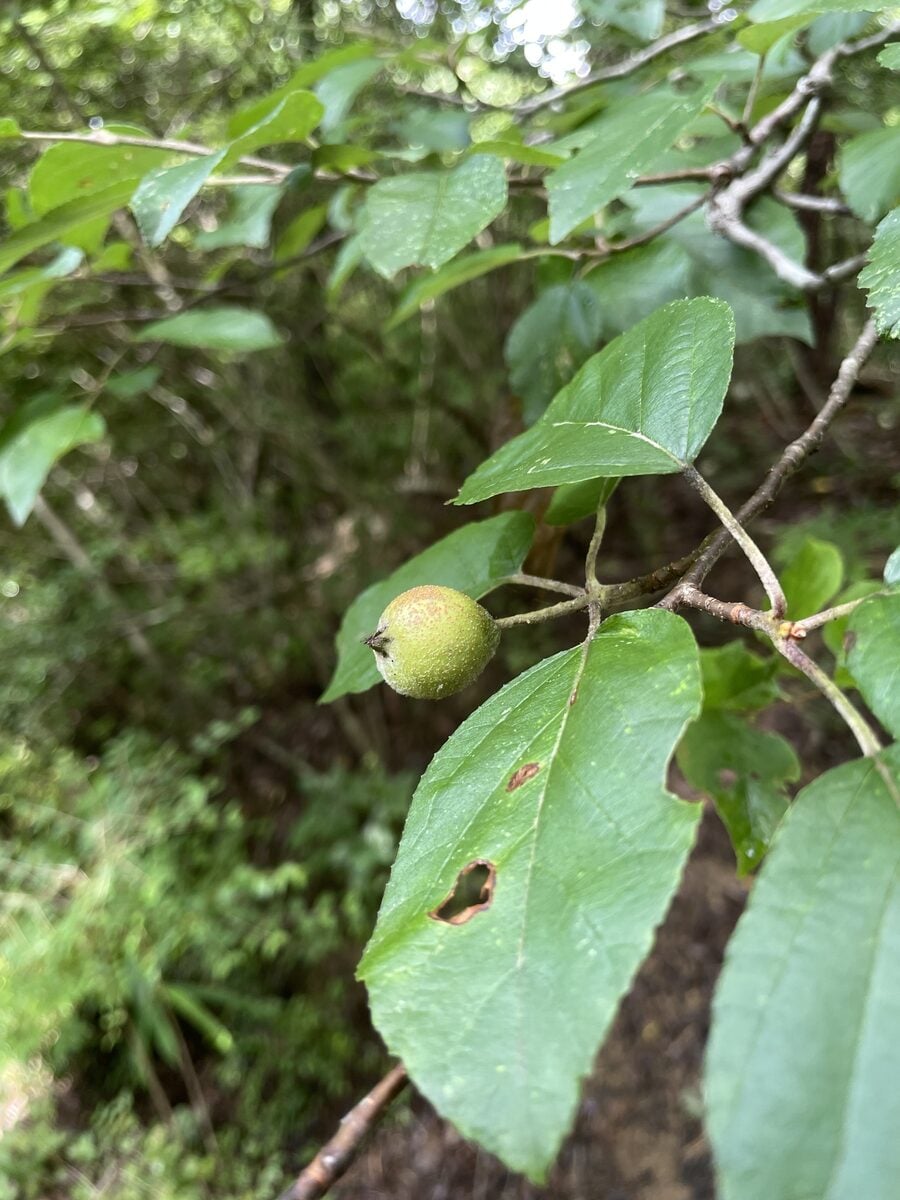
The fruit can be eaten raw or cooked and is a reasonable size, reaching up to 2.5cm. The flesh is hard and harsh when fresh but becomes soft and sweet after bletting, at which point it makes a very good dessert fruit.
Medicinal Uses
None known
Known Hazards
None known
Distribution
It is a temperate plant.
Where It Grows
Caucasus, Georgia,
Cultivation
Prefers a good well-drained loam in full sun. Grows well in heavy clay soils. Tolerates light shade but does not fruit so well in such a position. Tolerates atmospheric pollution, excessive moisture and a range of soil types if they are moderately fertile. Established plants are drought tolerant. Hardy to about -15°c. Plants are growing and fruiting well at Kew Botanical Gardens.
Propagation
Seed is best sown in a cold frame as soon as it is ripe in autumn, when it will typically germinate in mid to late winter. Stored seed requires 8–10 weeks of cold stratification at 1°c and should be sown as early in the year as possible. Temperatures above 15–20°c can induce secondary dormancy. Prick out seedlings into individual pots once large enough to handle, and grow on in light shade in a cold frame or greenhouse for their first year. Plant out in late spring or early summer the following year.
Other Uses
None known
References (3)
- Asanidze, Z., et al, 2011, Comparative morphometric study and relatioonships between the Caucasian species of wild pear (Pyrus spp.) and local cultivars in Georgia. Flora 206 (2011) 974-986
- Jard. fruit. 1: t. 6. 1872
- Plants for a Future database, The Field, Penpol, Lostwithiel, Cornwall, PL22 0NG, UK. http://www.scs.leeds.ac.uk/pfaf/