Pyracantha angustifolia
(Franch.) C. K. Schneid
Narrow-leaf Firethorn, Orange firethorn
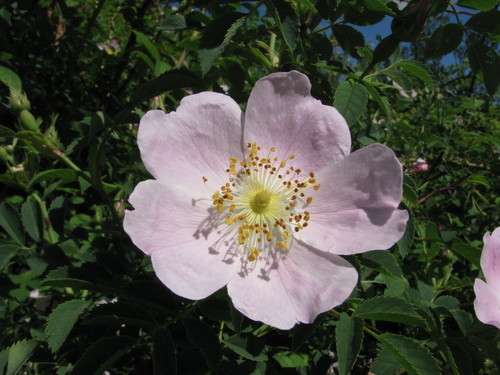
iNaturalist· cc0
no rights reserved, uploaded by Richard Fuller
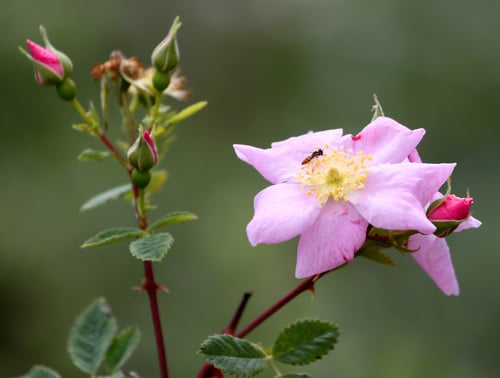
iNaturalist· cc-by-nc
(c) copper, some rights reserved (CC BY-NC), uploaded by copper
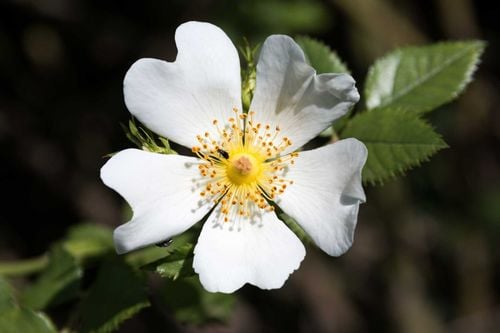
iNaturalist· cc-by
(c) Matthew Lincoln, some rights reserved (CC BY), uploaded by Matthew Lincoln
Summary
Source: WikipediaPyracantha angustifolia is a species of shrub in the rose family known by the common names narrowleaf firethorn, slender firethorn and woolly firethorn. The flowers are white and produce small round pomes and can be orange to red in color. These fruits are astringent and bitter, making them inedible for humans, but they are a food source for birds. The leaves, fruit and seeds contain hydrogen cyanide, the source of the bitter taste. The stems and branches have sharp spines. This shrub is cultivated and grown in yards and gardens as an ornamental plant. It can be used to make hedges for home security. This species is native to China but has been introduced to North America and Australia. It is an invasive species in Hawaii and in other areas.
Description
A shrub. It grows 3.5 m high and spreads 3.5 m wide. It has spines. The branches extend out sideways. The leaves are shiny and dark green. They are grey and furry underneath. There are dense heads of small white flowers. The fruit are yellow to orange berries. They are 1 cm across.
Edible Uses
The fruit is edible, though no detailed description is available; it is worth noting that this species is considered the least interesting fruiting pyracantha even for birds. Fruits measure approximately 5–6mm in diameter.
Traditional Uses
The fruit are eaten raw as a snack.
This uses section is brief — help expand it
Medicinal Uses
None known
Distribution
It is a temperate plant. It is native to SW China. It will grow in most soils. It grows between 1,600-3,000 m above sea level. It is resistant to frost but sensitive to drought. It suits hardiness zones 7-10. Arboretum Tasmania. In Sichuan and Yunnan.
Where It Grows
Africa, Argentina, Asia, Australia, Britain, China*, East Africa, Europe, Hawaii, Indonesia, Korea, Lesotho, New Zealand, North America, Pacific, SE Asia, South Africa, Southern Africa, South America, Spain, Tasmania, Tibet, USA, Zimbabwe,
Cultivation
It can be grown from seed or by heeled cuttings.
Propagation
Seed is best sown as soon as ripe in a cold frame with all fruit flesh removed, as this can inhibit germination. Stored seed requires 3 months of cold stratification and should be sown as early in the year as possible in a cold frame. Prick seedlings into individual pots when large enough to handle and grow on in the cold frame through their first winter. Plant out in late spring or early summer after the last expected frosts. Take cuttings of almost mature wood, 5–10cm with a heel, in mid-August in a cold frame. Pot up in October or the following spring.
Other Uses
A fairly wind-tolerant shrub suitable for use in shelterbelt plantings. Also useful for erosion control and can be trained as an espalier. Attracts wildlife.
Production
In China plants flower in May to June and fruit in October to December.
Notes
There are 7-9 Pyracantha species.
Synonyms
Also Known As
Anmilaximi, Duri-api daun kurus, Duri-api kuning, Saigulu, Yellow firethorn, Youlubuzhu
References (14)
- Bodkin, F., 1991, Encyclopedia Botanica. Cornstalk publishing, p 843
- Cundall, P., (ed.), 2004, Gardening Australia: flora: the gardener's bible. ABC Books. p 1115
- Flora of China @ efloras.org Volume 9
- Geng, Y., et al, 2016, Traditional knowledge and its transmission of wild edibles used by the Naxi in Baidi Village, northwest Yunnan province. Journal of Ethnobiology and Ethnomedicine. 12:10
- Hibbert, M., 2002, The Aussie Plant Finder 2002, Florilegium. p 244
Show all 14 references Hide references
- Ill. Handb. Laubholzk. 1:761. 1906
- Kew Plants of the World Online
- Lord, E.E., & Willis, J.H., 1999, Shrubs and Trees for Australian gardens. Lothian. p 255
- Plants for a Future database, The Field, Penpol, Lostwithiel, Cornwall, PL22 0NG, UK. http://www.scs.leeds.ac.uk/pfaf/
- Staples, G.W. and Herbst, D.R., 2005, A tropical Garden Flora. Bishop Museum Press, Honolulu, Hawaii. p 477 (Drawing)
- Sukarya, D. G., (Ed.) 2013, 3,500 Plant Species of the Botanic Gardens of Indonesia. LIPI p 694
- Weckerle, C. S., et al, 2006, Plant Knowledge of the Shuhi in the Hengduan Mountains, Southwest China. Economic Botany 60(1):2-23
- www.efloras.org Flora of China Volume 9
- Zhang, L., et al, 2016, Ethnobotanical study of traditional edible plants used by the Naxi people during droughts. Journal of Ethnobiology and Ethnomedicine. 12:39