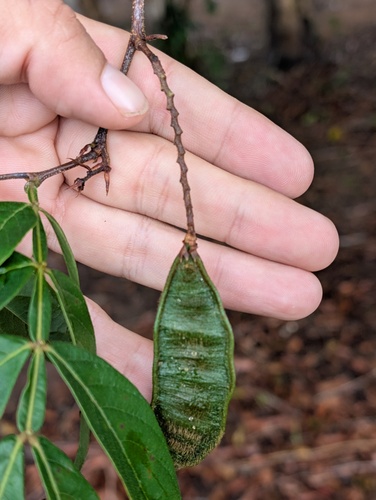
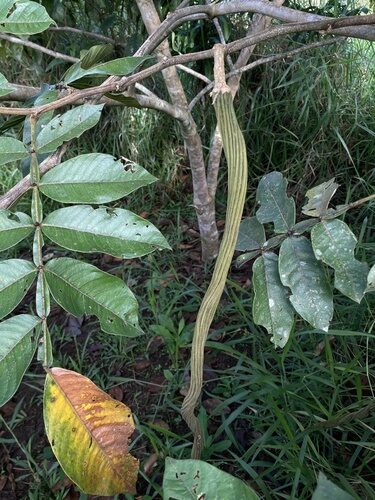
Psoralea hypogaea
Torr. & A.Gray
Small Indian breadroot
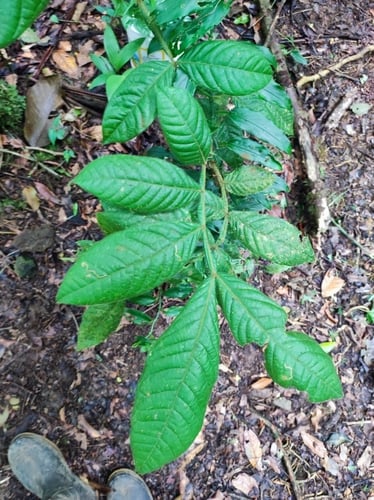
iNaturalist· cc-by
(c) velodrome, some rights reserved (CC BY)
iNaturalist· cc-by
(c) velodrome, some rights reserved (CC BY)
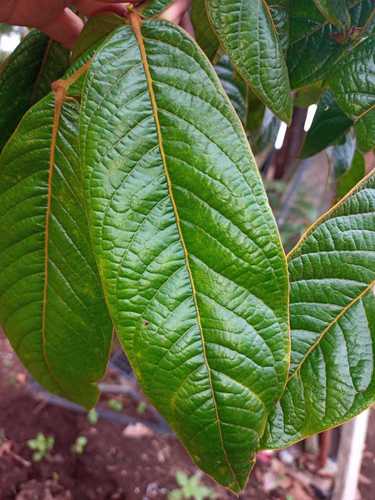
iNaturalist· cc-by
(c) Cody Stricker, some rights reserved (CC BY)
Summary
Source: WikipediaA low-growing perennial reaching just 10cm tall, hardy to UK zone 4. Hermaphroditic flowers attract insects. Thrives in light sandy to medium loamy, well-drained soil across mildly acid to basic pH ranges. Requires full sun and tolerates both dry and moist conditions. Fixes nitrogen in soil.
Description
A low-growing perennial reaching just 10cm tall, hardy to UK zone 4. Hermaphroditic flowers attract insects. Thrives in light sandy to medium loamy, well-drained soil across mildly acid to basic pH ranges. Requires full sun and tolerates both dry and moist conditions. Fixes nitrogen in soil.
Edible Uses
The root is rich in starch and can be eaten raw or cooked, or dried and ground into a powder for use in soups or mixed with cereals to make bread. The root reaches up to 60mm long and 15mm thick and was an important food source for Native North American peoples.
Traditional Uses
The roots are peeled and eaten fresh or dried and stored for later use. The root can be eaten raw or cooked and also ground into flour and used in soups and for bread.
Medicinal Uses
None known.
Known Hazards
Although no specific mention of toxicity for this species has been found, at least some members of this genus contain furanocoumarins, these substances can cause photosensitivity in some people.
Distribution
It is a temperate plant. It suits USDA hardiness zones 4-8
Where It Grows
North America, USA,
Cultivation
Succeeds in an ordinary garden soil. Requires a well-drained soil in a sunny position. Plants are very intolerant of root disturbance, they are best planted out into their permanent positions whilst still small. Some botanists have reclassified the plant and now call it Pediomelum hypogaeum. This species has a symbiotic relationship with certain soil bacteria, these bacteria form nodules on the roots and fix atmospheric nitrogen. Some of this nitrogen is utilized by the growing plant but some can also be used by other plants growing nearby.
Propagation
Pre-soak the seed for 24 hours in warm water, then sow in early to mid spring in a greenhouse. Sow directly into individual pots, or pot up seedlings as soon as possible to avoid root disturbance, growing them on in pots until planting out in their final positions. Transplanting this species almost always causes fatal root damage. Division can be attempted in spring with great care, but the plant strongly resents root disturbance and successful division is virtually impossible.
Other Uses
The plant is a good soil stabilizer in its natural environment. It is also a nitrogen fixer.
Synonyms
Also Known As
Little Indian breadroot, Palm-leaf scurf-pea, Subterranean indian breadroot
References (8)
- Beckstrom-Sternberg, Stephen M., and James A. Duke. "The Foodplant Database." http://probe.nalusda.gov:8300/cgi-bin/browse/foodplantdb.(ACEDB version 4.0 - data version July 1994)
- Hedrick, U.P., 1919, (Ed.), Sturtevant's edible plants of the world. p 534
- Illustrated Flora of Central Texas p 684 (As Pediomelum hypogaeum)
- Kermath, B. M., et al, 2014, Food Plants in the Americas: A survey of the domesticated, cultivated and wild plants used for Human food in North, Central and South America and the Caribbean. On line draft. p 625
- Lim, T. K., 2015, Edible Medicinal and Non Medicinal Plants. Volume 9, Modified Stems, Roots, Bulbs. Springer p 63
Show all 8 references Hide references
- Moerman, D. F., 2010, Native American Ethnobotany. Timber Press. p 381 (As Pediomelum hypogaeum)
- Plants for a Future database, The Field, Penpol, Lostwithiel, Cornwall, PL22 0NG, UK. http://www.scs.leeds.ac.uk/pfaf/
- Saunders, C.F., 1948, Edible and Useful Wild Plants. Dover. New York. p 7