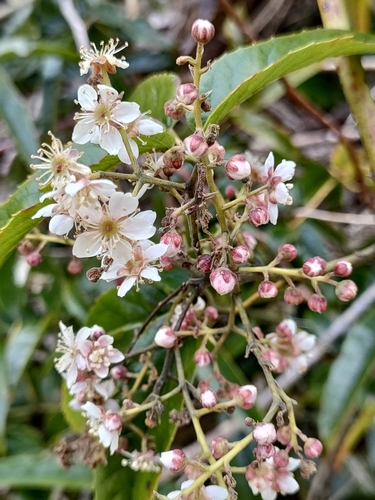
Prunus tomentosa
Thunb.
Nanking cherry, Downy cherry
iNaturalist· pd
Michael Kesl, no known copyright restrictions (public domain)
iNaturalist· cc-by-nc
(c) 红梅, some rights reserved (CC BY-NC)
iNaturalist· cc-by-nc
(c) Yana_Zlochevskaya, some rights reserved (CC BY-NC), uploaded by Yana_Zlochevskaya
Summary
Source: WikipediaPrunus tomentosa is a species of Prunus native to northern and western China (including Tibet), Korea, Mongolia, and possibly northern India (Jammu and Kashmir, though probably only cultivated there). Common names for Prunus tomentosa include Nanjing cherry, Korean cherry, Manchu cherry, downy cherry, Shanghai cherry, Ando cherry, mountain cherry, Chinese bush cherry, and Chinese dwarf cherry.
Description
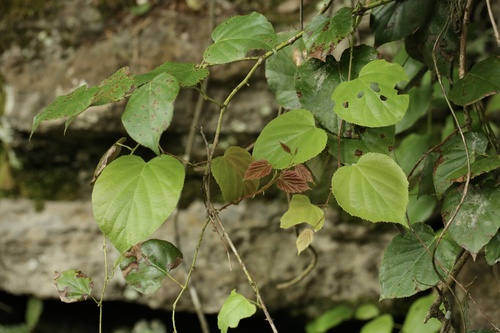
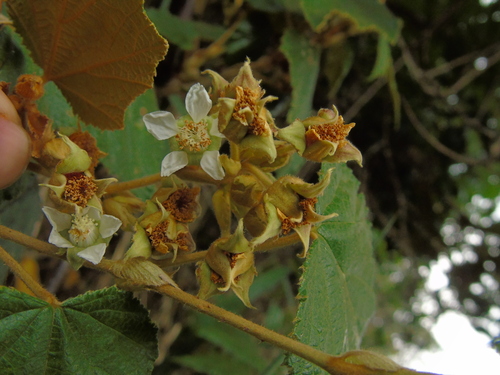
A small deciduous shrub. It has many branches. It grows 2 m high and spreads 2.4 m wide. The young stems are downy. The leaves are deep green and are puckered. They are 5 cm long and are fluffy underneath. The flowers are white to pale pink. They are 25 mm across and are single or in pairs. The fruit are small, round and red. They are about 1.25 cm across. There are some named cultivated varieties.
Edible Uses
The fruit is juicy, ranging from sub-acid to sweet, and can be eaten raw or cooked. Unripe fruits can be pickled. The fruit is about 12mm in diameter and contains one large seed. The seed is also edible raw or cooked, but should not be eaten if it tastes too bitter. Buds are cooked and eaten, though it is unclear whether these are flower or leaf buds.
Traditional Uses
The unripe fruit are pickled or boiled in honey. The ripe fruit are eaten raw or preserved. The buds are cooked and eaten. The fruit are used for wine.
Medicinal Uses
Like all members of the genus, this species contains amygdalin and prunasin, which break down in water to release hydrocyanic acid (prussic acid). In small amounts, this compound stimulates respiration, aids digestion, and produces a sense of well-being.
Known Hazards
Although no specific mention has been seen for this species, it belongs to a genus where most, if not all members of the genus produce hydrogen cyanide, a poison that gives almonds their characteristic flavour. This toxin is found mainly in the leaves and seed and is readily detected by its bitter taste. It is usually present in too small a quantity to do any harm but any very bitter seed or fruit should not be eaten. In small quantities, hydrogen cyanide has been shown to stimulate respiration and improve digestion, it is also claimed to be of benefit in the treatment of cancer. In excess, however, it can cause respiratory failure and even death.
Distribution
It is a cool temperate plant. It grows in northern China. It suits hardiness zones 2-8. In Sichuan and Yunnan.
Where It Grows
Asia, Australia, Canada, Central Asia, China, Himalayas, India, Japan, Korea, Mongolia, Tajikistan, Tibet, USA,
Cultivation
Thrives in a well-drained moisture-retentive loamy soil, growing well on limestone. Prefers some lime in the soil but is likely to become chlorotic if too much lime is present. Grows well in partial shade, though it fruits better when in a sunny position. Requires a sheltered position. Thrives in hot summers. Cultivated in Asia for its edible fruits, there are some named varieties. The fruits are not freely borne in Britain. The flowers are produced on the previous years growth. Most members of this genus are shallow-rooted and will produce suckers if the roots are damaged. Plants in this genus are notably susceptible to honey fungus.
Propagation
Seed requires 2–3 months of cold stratification and is best sown in a cold frame as soon as it is ripe. Stored seed should be sown in a cold frame as early in the year as possible and protected from mice. Germination can be slow, sometimes taking 18 months. Prick out seedlings into individual pots when large enough to handle, overwinter in a greenhouse or cold frame, then plant out in late spring or early summer the following year. Cuttings of half-ripe wood with a heel can be taken in July/August in a frame. Softwood cuttings from vigorous plants can be taken in spring to early summer in a frame. Layering can be done in spring.
Other Uses
A green dye can be obtained from the leaves, and a dark grey to green dye from the fruit. The plant makes an excellent windbreak hedgerow and produces suckers freely. As a true bush cherry, the fruit is relatively easy to protect from birds. It is partially self-pollinating but produces better yields when planted alongside other Nanking Cherry varieties. The fragrant pinkish-white flowers attract beneficial insects.
Production
Grafted trees have a shorter life span or 50-60 years.
Other Information
It is a cultivated food plant.
Notes
There are about 200 Prunus species. Vit C 63.5 mg/100 g. Amino acid 1992.5 mg/100g.
Synonyms
Also Known As
Aengdo, Aengdonamu, Chinese bush cherry, Korean cherry, Manchu cherry, Mao Yingtao, Maotao, Maoyingtao, Yeyingtao, Yusura ume
References (29)
- Ambasta, S.P. (Ed.), 2000, The Useful Plants of India. CSIR India. p 497
- Arora, R. K., 2014, Diversity in Underutilized Plant Species - An Asia-Pacific Perspective. Bioversity International. p 83
- "Chinese Nutrition Journal", 2002, Vol 23(6) p 110
- Cundall, P., (ed.), 2004, Gardening Australia: flora: the gardener's bible. ABC Books. p 1099
- Facciola, S., 1998, Cornucopia 2: a Source Book of Edible Plants. Kampong Publications, p 204
Show all 29 references Hide references
- Flora of China. Vol. 9, p 406 (As Cerasus tomentosa) and Flora of China. www.eFloras.org
- Glowinski, L., 1999, The Complete Book of Fruit Growing in Australia. Lothian. p 71
- Hedrick, U.P., 1919, (Ed.), Sturtevant's edible plants of the world. p 529
- http://en.hortipedia.com
- Hu, Shiu-ying, 2005, Food Plants of China. The Chinese University Press. p 448
- Jackes, D. A., 2007, Edible Forest Gardens
- John, L., & Stevenson, V., 1979, The Complete Book of Fruit. Angus & Robertson p 104
- Kang, Y., et al, 2012, Wild food plants and wild edible fungi in two valleys on the Qinling Mountains (Shaanxi, central China) Journal of Ethnobiology and Ethnomedicine; 9:26
- Kang, Y., et al, 2014, Wild food plants used by the Tibetans of Gongba Valley (Zouqu country, Gansu, China) Journal of Ethnobiology and Ethnomedicine 10:20
- Kermath, B. M., et al, 2014, Food Plants in the Americas: A survey of the domesticated, cultivated and wild plants used for Human food in North, Central and South America and the Caribbean. On line draft. p 715
- Levy-Yamamori, R., & Taaffe, G., 2004, Garden Plants of Japan. Timber Press. p 191
- J. A. Murray, Syst. veg. ed. 14:461. 1784 May-Jun (Fl. jap. 203. 1784 Aug)
- Pemberton, R. W. & Lee, N. S., 1996, Wild Food Plants in South Korea: Market Presence, New Crops, and Exports to the United States. Economic Botany, Vol. 50, No. 1, pp. 57-70
- Plants for a Future, The Field, Penpol, Lostwithiel, Cornwall, PL22 0NG, UK. http://www.scs.leeds.ac.uk/pfaf/
- Singh, H.B., Arora R.K.,1978, Wild edible Plants of India. Indian Council of Agricultural Research, New Delhi. p 69
- Song, M., et al, 2013, Traditional knowledge of wild edible plants in Jeju Island, Korea. Indian Journal of Traditional Knowledge. 12(2) pp 177-194
- Tanaka,
- USDA, ARS, National Genetic Resources Program. Germplasm Resources Information Network - (GRIN). [Online Database] National Germplasm Resources Laboratory, Beltsville, Maryland. Available: www.ars-grin.gov/cgi-bin/npgs/html/econ.pl (10 April 2000)
- Valder, P., 1999, The Garden Plants of China. Florilegium. p 116
- Watkins, R., 1979, Cherry, plum, peach, apricot and almond, in Simmonds, N.W., (ed), Crop Plant Evolution. Longmans. London. p 242
- Wiersema, J. H. & Leon, B., 2013, World Economic Plants. A Standard Reference CRC Press. 2nd Ed. p 565
- World Checklist of Useful Plant Species 2020. Royal Botanic Gardens, Kew
- www.efloras.org Flora of China Volume 9
- Zeven, A. C. & de West, J. M. J., 1982, Dictionary of cultivated plants and their regions of diversity. Wageningen. p 41