Prunus persica var. nectarina
(Linnaeus) Batsch
Nectarine
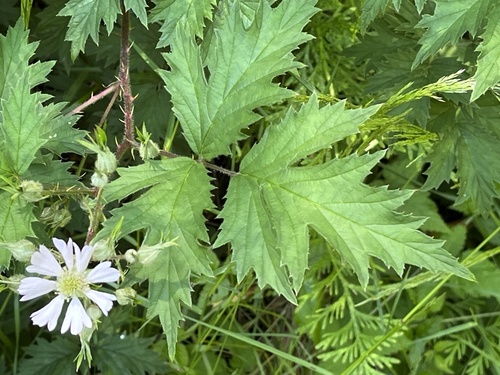
iNaturalist· cc-by-nc
(c) Colleen, some rights reserved (CC BY-NC), uploaded by Colleen
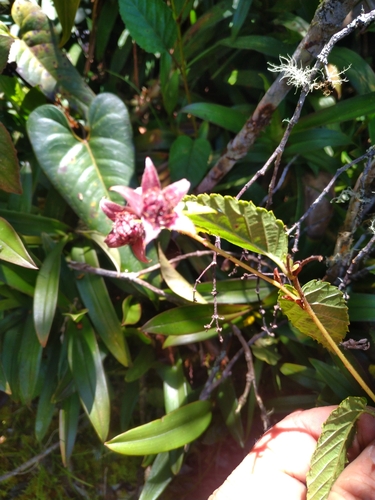
iNaturalist· cc-by-sa
(c) Yair Haklai, some rights reserved (CC BY-SA)
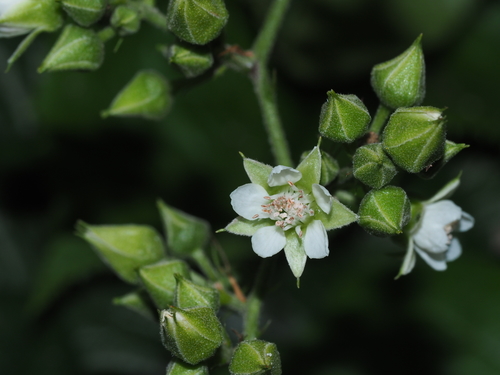
iNaturalist· cc-by-nc
(c) Brent Franklin, some rights reserved (CC BY-NC), uploaded by Brent Franklin
Description
A tree. It is similar to peach. There are about 150 different cultivated varieties of nectarine. The fruit can have stones which cling or which are free. The flesh can be yellow, orange or white. The skin is smooth and slightly oily.
Edible Uses
Nectarines are eaten fresh or cooked, dried, preserved, or used as toppings for ice cream and cakes. They are also made into jams, marmalades, pies, fruit salads, and juice.
Traditional Uses
The fruit are eaten fresh or cooked. They can be dried or preserved or used as topping on ice cream and cakes or used for jams, marmalades, pies, and fruit salads. They are also used for juice.
Distribution
A temperate plant. They suit a deep sandy loam. They need good drainage. They need mild, hot summers and cool to cold winters. It needs between 400-600 hours of cold less than 7°C each year. It suits plant hardiness zones 5-10.
Where It Grows
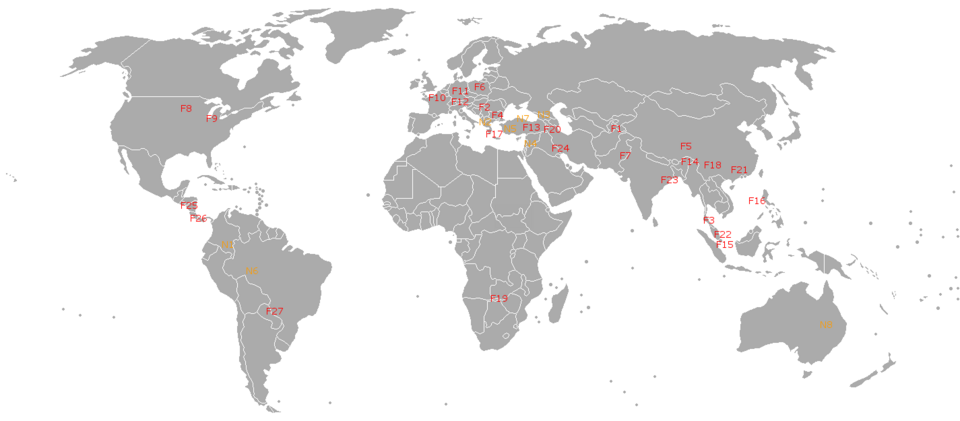
Australia, Britain, China, Europe, Italy, Mediterranean, Middle East, North America, Saudi Arabia, Serbia, South Africa, Southern Africa, South America, Tasmania, Turkmenistan, USA,
Cultivation
They are normally budded or grafted into peach rootstock.
Production
They will bear in 2-3 years.
Notes
There are about 200 Prunus species. Possibly now Prunus simonii Carriere.
Nutrition
| Part | Moisture | kJ | kcal | Protein | Vit A | Vit C | Iron | Zinc |
|---|---|---|---|---|---|---|---|---|
| Fruit - raw | 80.2 | 214 | 51 | 0.9 | 500 | 8 | 0.5 | 0.1 |
Synonyms
Also Known As
Yu-t'ao
References (8)
- Bianchini, F., Corbetta, F., and Pistoia, M., 1975, Fruits of the Earth. Cassell. p 152 (As Prunus persica var. nectarina)
- Bull. Acad. Imp. Sci. Saint-Petersbourg 29:83; Melanges Biol. Bull. Phys.-Math. Acad. Imp. Sci. Saint-Petersbourg 11:671. 1883 - [As (Aiton) Maxim.]
- Cheifetz, A., (ed), 1999, 500 popular vegetables, herbs, fruits and nuts for Australian Gardeners. Random House p 230
- Coombes, A.J., 2000, Trees. Dorling Kindersley Handbooks. p 267
- Facciola, S., 1998, Cornucopia 2: a Source Book of Edible Plants. Kampong Publications, p 193 (As Amygdalus persica Nucipersica group)
Show all 8 references Hide references
- Hu, Shiu-ying, 2005, Food Plants of China. The Chinese University Press. p 446
- John, L., & Stevenson, V., 1979, The Complete Book of Fruit. Angus & Robertson p 202
- Kiple, K.F. & Ornelas, K.C., (eds), 2000, The Cambridge World History of Food. CUP p 1821