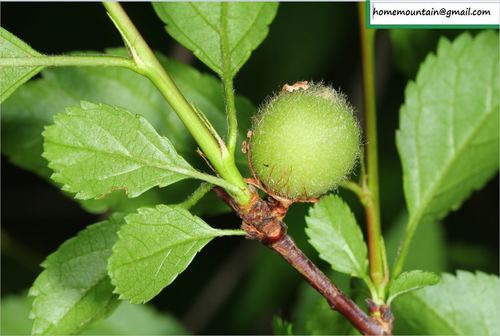
Prunus cocomilia
Tenore
Cocomilla plum, Greek plum
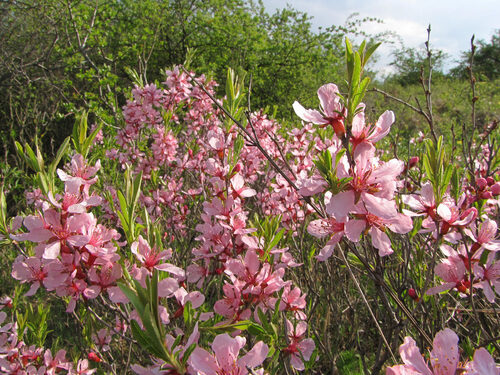
iNaturalist· cc-by-nc
(c) michael_mpanagiotopoulos, some rights reserved (CC BY-NC)
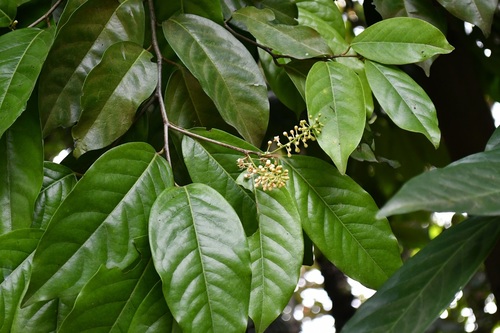
iNaturalist· cc-by-nc
(c) michael_mpanagiotopoulos, some rights reserved (CC BY-NC)
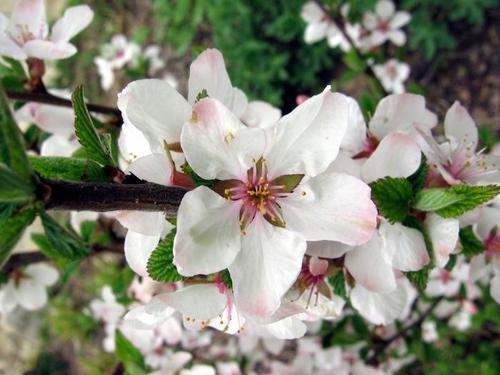
iNaturalist· cc-by-nc
(c) Konrad and Roland Greinwald, some rights reserved (CC BY-NC)
Summary
Source: WikipediaPrunus cocomilia is a species of plum commonly called Italian plum. It is native to Albania, Croatia, Greece, southern Italy (including Sicily), Montenegro, North Macedonia, Serbia, and western Turkey.
Description
Deciduous shrub growing to 5 m, hardy to UK zone 6. Flowers in April. Hermaphrodite, pollinated by insects. Tolerates light sandy, medium loamy, and heavy clay soils with good drainage. Grows in mildly acidic to basic pH. Adapts to semi-shade or full sun, prefers moist soil.
Edible Uses
The fruit has a bitter or sour flavour and can be eaten raw or cooked. It measures about 2cm in diameter and contains one large seed, though fruit is rarely produced in Britain. The seed can also be eaten raw or cooked, but should be avoided if it tastes too bitter.
Traditional Uses
The fruit are fermented.
This uses section is brief — help expand it
Medicinal Uses
No specific medicinal uses have been recorded for this species, but like all members of the genus it contains amygdalin and prunasin. These compounds break down in water to release hydrocyanic acid (prussic acid or cyanide), which in small amounts stimulates respiration, improves digestion, and produces a sense of well-being, despite being exceedingly poisonous in larger quantities.
Known Hazards
Although no specific mention has been seen for this species, it belongs to a genus where most, if not all members of the genus produce hydrogen cyanide, a poison that gives almonds their characteristic flavour. This toxin is found mainly in the leaves and seed and is readily detected by its bitter taste. It is usually present in too small a quantity to do any harm but any very bitter seed or fruit should not be eaten. In small quantities, hydrogen cyanide has been shown to stimulate respiration and improve digestion, it is also claimed to be of benefit in the treatment of cancer. In excess, however, it can cause respiratory failure and even death.
Distribution
Temperate.
Where It Grows
Albania, Balkans, Europe, Greece, Italy, Mediterranean, Sicily, Turkey, Türkiye,
Cultivation
Thrives in a well-drained moisture-retentive loamy soil. Prefers some lime in the soil but is likely to become chlorotic if too much lime is present. Succeeds in sun or partial shade though it fruits better in a sunny position. This species is closely related to P. cerasifera. Most members of this genus are shallow-rooted and will produce suckers if the roots are damaged. Plants in this genus are notably susceptible to honey fungus.
Propagation
Seed requires 2–3 months of cold stratification and is best sown in a cold frame as soon as it is ripe. Stored seed should be sown in a cold frame as early in the year as possible, with protection from mice. Germination can be slow, sometimes taking 18 months. Prick seedlings into individual pots when large enough to handle, overwinter in a greenhouse or cold frame, then plant out in late spring or early summer the following year. Cuttings of half-ripe wood with a heel can be taken in July/August in a frame. Softwood cuttings from vigorous plants can be taken in spring to early summer in a frame. Layering can be done in spring.
Other Uses
Green dye can be obtained from the leaves, and a dark grey to green dye from the fruit.
Notes
There are about 200 Prunus species.
Synonyms
Also Known As
Dag erigi
References (11)
- P. E. Boissier, Diagn. pl. orient. ser. 2, 5:96. 1859 (As Prunus pseudoarmeniaca)
- Ertug, F., 2000, An Ethnobotanical Study in Central Anatolia (Turkey). Economic Botany Vol. 54. No. 2. pp. 155-182
- Ertug, F, Yenen Bitkiler. Resimli Türkiye Florası -I- Flora of Turkey - Ethnobotany supplement
- Fl. napol. 1:lxviii. 1811-1815
- Hedrick, U.P., 1919, (Ed.), Sturtevant's edible plants of the world. p 523
Show all 11 references Hide references
- Heywood, V. H. & Zohary, D.,1995, A Catalogue of the Wild Relatives of Cultivated Plants Native to Europe. Flora Mediterranea 5 - 1995, p 394
- Pieroni, A. et al, 2014, Resilience at the border: traditional botanical knowledge among Macedonians and Albanian living in Gollobordo, Eastern Albania. Journal of Ethnobiology and Ethnomedicine. 10:31
- Plants for a Future database, The Field, Penpol, Lostwithiel, Cornwall, PL22 0NG, UK. http://www.scs.leeds.ac.uk/pfaf/
- Rivera, D. et al, 2006, Gathered Mediterranean Food Plants - Ethnobotanical Investigations and Historical Development, in Heinrich M, Müller WE, Galli C (eds): Local Mediterranean Food Plants and Nutraceuticals. Forum Nutr. Basel, Karger, 2006, vol 59, pp 18–74
- Sfikas, G., 1984, Trees and shrubs of Greece. Efstathiadis Group. Athens. p 68 (As Prunus pseudoarmeniaca)
- World Checklist of Useful Plant Species 2020. Royal Botanic Gardens, Kew