Prunus cerasoides
Buch.-Ham. ex D. Don
Himalaya Wild Cherry, Yunnan plum
iNaturalist· cc-by-nc
(c) ou.wildlife, some rights reserved (CC BY-NC), uploaded by ou.wildlife
iNaturalist· cc-by-nc
(c) MP Zhou, some rights reserved (CC BY-NC)
Summary
Source: WikipediaPrunus cerasoides, commonly known as the wild Himalayan cherry, sour cherry or pahhiya is a species of deciduous cherry tree in the family Rosaceae. Its range extends in the Himalayas from Margalla Hills in Pakistan through Himachal Pradesh in north-central India, to south-western China, Malay Peninsular (Cameron Highlands), Burma and Thailand. In India the tree is widely revered in the Himalayan state of Uttarakhand. The tree is found in temperate forest from 1,200 to 2,400 metres (3,900 to 7,900 ft) in elevation and extends to tropical highlands of Southeast Asia.
Description
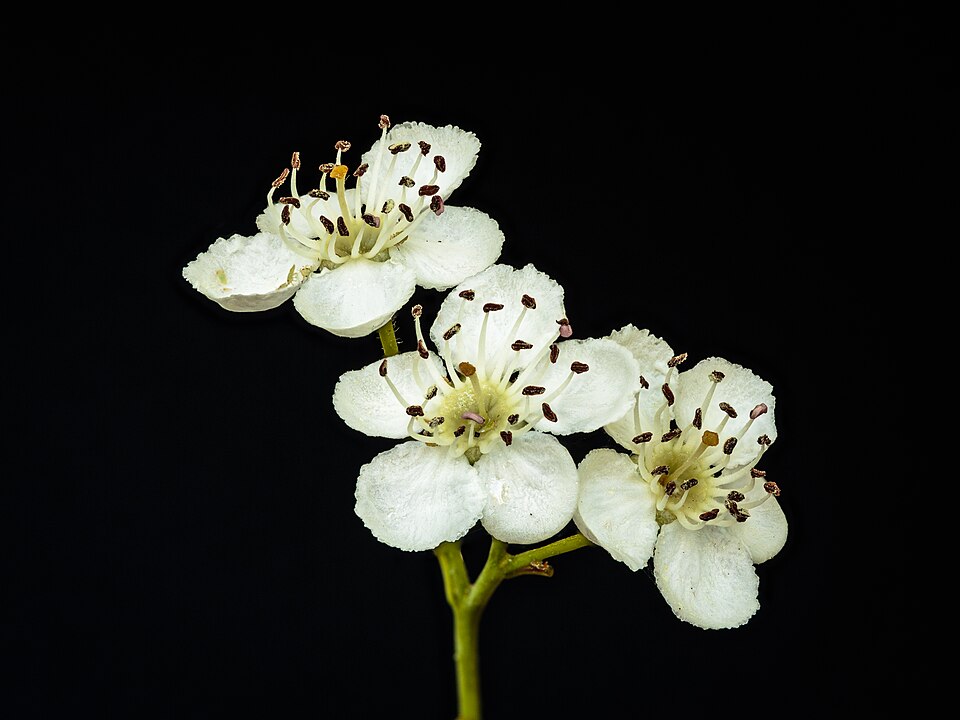
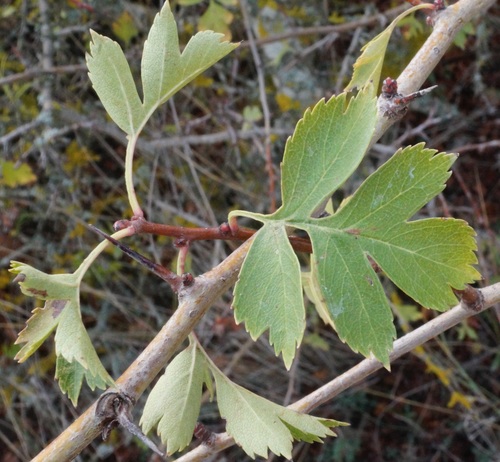
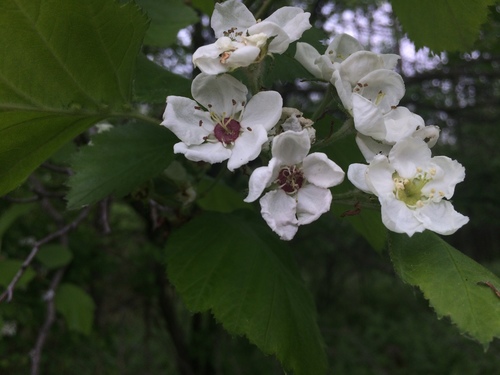
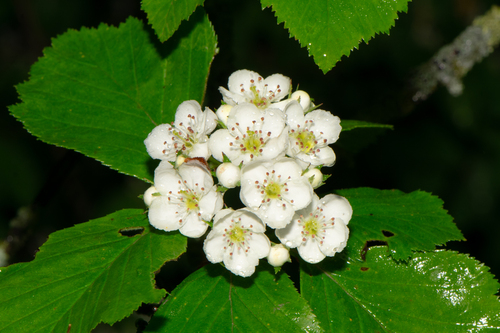
A small tree. It loses its leaves during the year. It grows to about 15 m high. The leaves have stalks. They are alternate. The leaves are 6-12.5 cm long by 2-5 cm wide. They are oval to sword shaped. They are pointed. There are fine teeth along the edge. The flowers are stalked. The flowers are pink. The fruit are red. They are fleshy and oval. The fruit are edible.
Edible Uses
The fruit can be eaten raw or cooked, though it is acid and astringent and more often cooked than eaten fresh. It measures about 15mm in diameter and contains one large seed. A gum obtained from the trunk can be chewed and serves as a substitute for gum tragacanth (see Astragalus spp.). The seed can also be eaten raw or cooked, but should be avoided if it tastes too bitter.
Traditional Uses
Ripe fruit are eaten raw. They are acidic. They are also used to make brandy and wine. The stem is the source of a gum used in gum tragacanth.
This uses section is brief — help expand it
Medicinal Uses
The fruit is astringent. Juice from the bark is applied externally to treat backaches. Like all members of the genus, this species contains amygdalin and prunasin, which break down in water to form hydrocyanic acid (prussic acid or cyanide). In small amounts this exceedingly poisonous compound stimulates respiration, improves digestion, and gives a sense of well-being.
Known Hazards
Although no specific mention has been seen for this species, it belongs to a genus where most, if not all members of the genus produce hydrogen cyanide, a poison that gives almonds their characteristic flavour. This toxin is found mainly in the leaves and seed and is readily detected by its bitter taste. It is usually present in too small a quantity to do any harm but any very bitter seed or fruit should not be eaten. In small quantities, hydrogen cyanide has been shown to stimulate respiration and improve digestion, it is also claimed to be of benefit in the treatment of cancer. In excess, however, it can cause respiratory failure and even death.
Distribution
It grows between 1,000 and 1,800 m altitude. In Nepal it grows between 1300-2400 m altitude. It grows in open places. In India it is in Garhwal Himalayas. It is somewhat frost tender. In Yunnan in China it grows in subtropical broadleaved evergreen forest.
Where It Grows
Africa, Asia, Bhutan, China, East Africa, Himalayas, India, Indochina, Indonesia, Laos, Myanmar, Nepal, Northeastern India, Pakistan, SE Asia, Sikkim, Southern Africa, Sri Lanka, Thailand, Tibet, Vietnam, Zimbabwe,
Cultivation
Thrives in a well-drained moisture-retentive loamy soil. Prefers some lime in the soil but is likely to become chlorotic if too much lime is present. Requires an open sunny sheltered position. Not very hardy in Britain but it succeeds outdoors in the milder areas of the country. Most members of this genus are shallow-rooted and will produce suckers if the roots are damaged. Plants in this genus are notably susceptible to honey fungus.
Propagation
Seed requires 2–3 months of cold stratification and is best sown in a cold frame as soon as it is ripe. Stored seed should be sown in a cold frame as early in the year as possible, with protection from mice. Germination can be slow, sometimes taking 18 months. Prick seedlings into individual pots when large enough to handle, overwinter in a greenhouse or cold frame, then plant out in late spring or early summer the following year. Cuttings of half-ripe wood with a heel can be taken in July/August in a frame. Softwood cuttings from vigorous plants can be taken in spring to early summer in a frame. Layering can be done in spring.
Other Uses
Green dye can be obtained from the leaves, and a dark grey to green dye from the fruit. The seeds are used as beads in necklaces and rosaries. The wood is moderately hard, strong, durable, and aromatic, and the branches are used as walking sticks.
Production
It is quick growing.
Other Information
They are often planted by wayside stopping places in the Himalayas. It is a cultivated food plant. It is sold in local markets.
Notes
There are about 200 Prunus species.
Synonyms
Also Known As
Anhdao, Ban paiyum, Byin-bying, Chai-ri, Chumbrei, Chyarbu, Dieng-soh-iong-krem, Gaopen Yingtao, Geiha, Kastha, Kevisi, Mai-sein, Padam, Paddam, Padma kathi, Padma, Padmak, Padmaka, Painu, Painyu, Paiyon, Paiyun, Paja, Pajja, Panni, Pannu, Payain, Payew, Payya, Pfovashi, Phaizong, Phaya, Phuya, Pohon ceri himalaya, Sour cherry, Takpa, Tall Pot cherry, Vashi
References (44)
- Agarwal, R. & Chandra, V., 2019, Diversity of wild edible plants in the Mandal-Chopta forest, Uttarakhand. Journal of Medicinal Plants Studies 2019; 7(1): 89-92
- Altschul, S.V.R., 1973, Drugs and Foods from Little-known Plants. Notes in Harvard University Herbaria. Harvard Univ. Press. Massachusetts. no. 1478 (As Prunus puddum)
- Ambasta, S.P. (Ed.), 2000, The Useful Plants of India. CSIR India. p 494
- Bajracharya, D., 1980, Nutritive Values of Nepalese Edible Wild Fruits. Z. Lebensm. Unters. Forsch. 171: 363-366
- Chase, P. & Singh, O. P., 2016, Bioresources of Nagaland: A Case of Wild 4 Edible Fruits in Khonoma Village Forest. in J. Purkayastha (ed.), Bioprospecting of Indigenous Bioresources of North-East India. p 51
Show all 44 references Hide references
- Dangol, D. R. et al, 2017, Wild Edible Plants in Nepal. Proceedings of 2nd National Workshop on CUAOGR, 2017.
- Devi, O.S., P. Komor & D. Das, 2010, A checklist of traditional edible bio-resources from Ima markets of Imphal Valley, Manipur, India. Journal of Threatened Taxa 2(11): 1291-1296
- Dharani, N., 2002, Field Guide to common Trees & Shrubs of East Africa. Struik. p 151 (As Prunus puddum)
- Dharani, N., 2002, Field Guide to common Trees & Shrubs of East Africa. Struik. p 151
- Dobriyal, M. J. R. & Dobriyal, R., 2014, Non Wood Forest Produce an Option for Ethnic Food and Nutritional Security in India. Int. J. of Usuf. Mngt. 15(1):17-37
- Facciola, S., 1998, Cornucopia 2: a Source Book of Edible Plants. Kampong Publications, p 201
- Flora of China @ efloras.org Volume 9
- Gangwar, A. K. & Ramakrishnan, P. S., 1990, Ethnobotanical Notes on Some Tribes of Arunachal Pradesh, Northeastern India. Economic Botany, Vol. 44, No. 1 pp. 94-105
- Gardner, S., et al, 2000, A Field Guide to Forest Trees of Northern Thailand, Kobfai Publishing Project. p 184
- Gautam, R. S., et al, 2020, Wild Edible Fruits of Nepal. Int. J. Appl. Sci. Biotechnol. Vol 8(3): 289-304
- Ghimeray, A. K., Lamsal, K., et al, 2010, Wild edible angiospermic plants of the Illam Hills (Eastern Nepal) and their mode of use by local community. Korean J. Pl. Taxon. 40(1)
- GUPTA,
- Hedrick, U.P., 1919, (Ed.), Sturtevant's edible plants of the world. p 528 (As Prunus puddum)
- Hu, Shiu-ying, 2005, Food Plants of China. The Chinese University Press. p 442
- Jabeen, A., et al, 2009, Indigenous uses of economically important flora of Margallah Hills National Park, Islamabad, Pakistan. African Journal of Biotechnology Vol. 8 (5), pp. 763-784
- Jin, Chen et al, 1999, Ethnobotanical studies on Wild Edible Fruits in Southern Yunnan: Folk Names: Nutritional Value and Uses. Economic Botany 53(1) pp 2-14
- Khakurel, D., et al, 2021, Foods from the wild: Local knowledge, use pattern and distribution in Western Nepal. PLOS ONE.
- Khan, D. & Shaukat, S.S., 2006, The Fruits of Pakistan: Diversity, Distribution, Trends of Production and Use. Int. J. Biol. Biotech., 3(3):463-499
- Manandhar, N.P., 2002, Plants and People of Nepal. Timber Press. Portland, Oregon. p 382
- Manju, S., and Sundriyal, R. C., 2001, Wild Edible Plants of the Sikkim Humalaya: Nutritive Values of Selected Species. Economic Botany 55(3): 377-390
- Masoodi, H. U. R. & Sundriyal, R. C., 2020, Richness of non-timber forest products in Himalayan communities—diversity, distribution, use pattern and conservation status. Journal of Ethnobiology and Ethnomedicine 16:56
- Negi, P. S. & Subramani, S. P., 2015, Wild Edible Plant Genetic Resources for Sustainable Food Security and Livelihood of Kinnaur District, Himachal Pradesh, India, International Journal of Conservation Science. 6 (4): 657-668
- Pfoze, N. L., et al, 2012, Survey and assessment of floral diversity on wild edible plants from Senapati district of Manipur, Northeast India. Journal of Biodiversity and Environmental Sciences. 1(6):50-52
- Pham-Hoang Ho, 1999, An Illustrated Flora of Vietnam. Nha Xuat Ban Tre. p 804
- Plants for a Future database, The Field, Penpol, Lostwithiel, Cornwall, PL22 0NG, UK. http://www.scs.leeds.ac.uk/pfaf/
- Polunin, O., & Stainton, A., 2006, Flowers of the Himalaya, Oxford India Paperbacks. p 114
- Prodr. fl. nepal. 239. 1825
- Radha, B., et al, 2013, Wild Edible Plant Resources of the Lohba Range of Kedarnath Forest Division (KFD), Garhwal Himalaya, India. Int. Res J. Biological Sci. Vol. 2 (11), 65-73
- Sawian, J. T., et al, 2007, Wild edible plants of Meghalaya, North-east India. Natural Product Radiance Vol. 6(5): p 420
- Singh, H.B., Arora R.K.,1978, Wild edible Plants of India. Indian Council of Agricultural Research, New Delhi. p 69
- Singh, V. B., et al, (Ed.) Horticulture for Sustainable Income and Environmental Protection. Vol. 1 p 217
- Sukarya, D. G., (Ed.) 2013, 3,500 Plant Species of the Botanic Gardens of Indonesia. LIPI p 473
- Sundriyal, M., et al, 1998, Wild edibles and other useful plants from the Sikkim Himalaya, India. Oecologia Montana 7:43-54
- Sundriyal, M., et al, 2004, Dietary Use of Wild Plant Resources in the Sikkim Himalaya, India. Economic Botany 58(4) pp 626-638
- Upreti, K., et al, 2010, Diversity and Distribution of Wild Edible Fruit Plants of Uttarakhand. Bioversity Potentials of the Himalaya. p 180
- Valder, P., 1999, The Garden Plants of China. Florilegium. p 103
- Wiersema, J. H. & Leon, B., 2013, World Economic Plants. A Standard Reference CRC Press. 2nd Ed. p 560
- World Checklist of Useful Plant Species 2020. Royal Botanic Gardens, Kew
- www.efloras.org Flora of China Volume 9 (As Cerasus cerasoides)