Angelica megaphylla
Diels
Summary
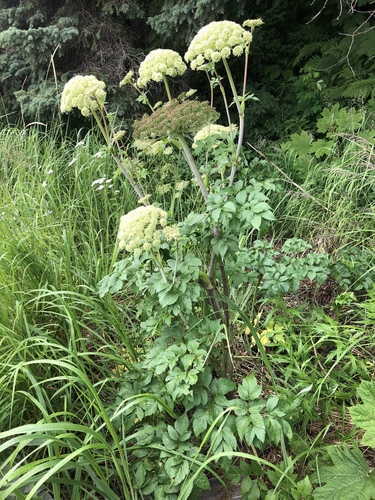
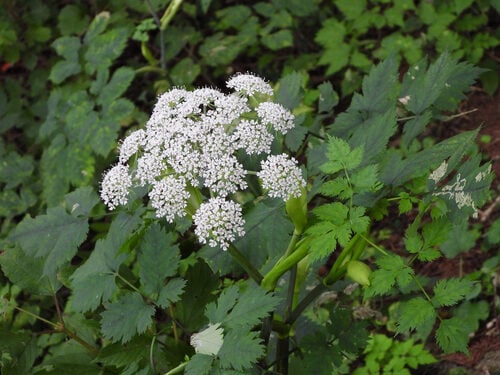
A hardy perennial reaching 2 m in height, Angelica megaphylla flowers August to September with seeds ripening September to October. The hermaphroditic self-fertile flowers are pollinated by insects. It thrives in light sandy, medium loamy, and heavy clay soils across mildly acid to basic pH ranges, tolerates semi-shade to full sun, and prefers moist soil conditions.
Description
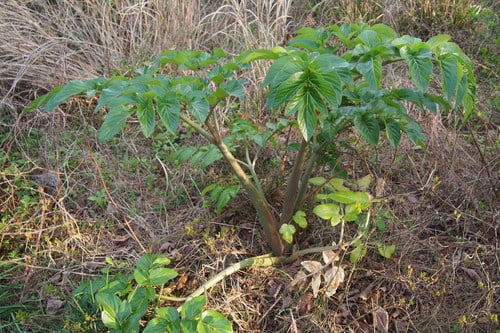
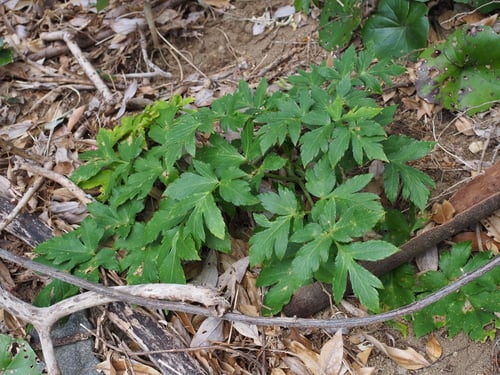
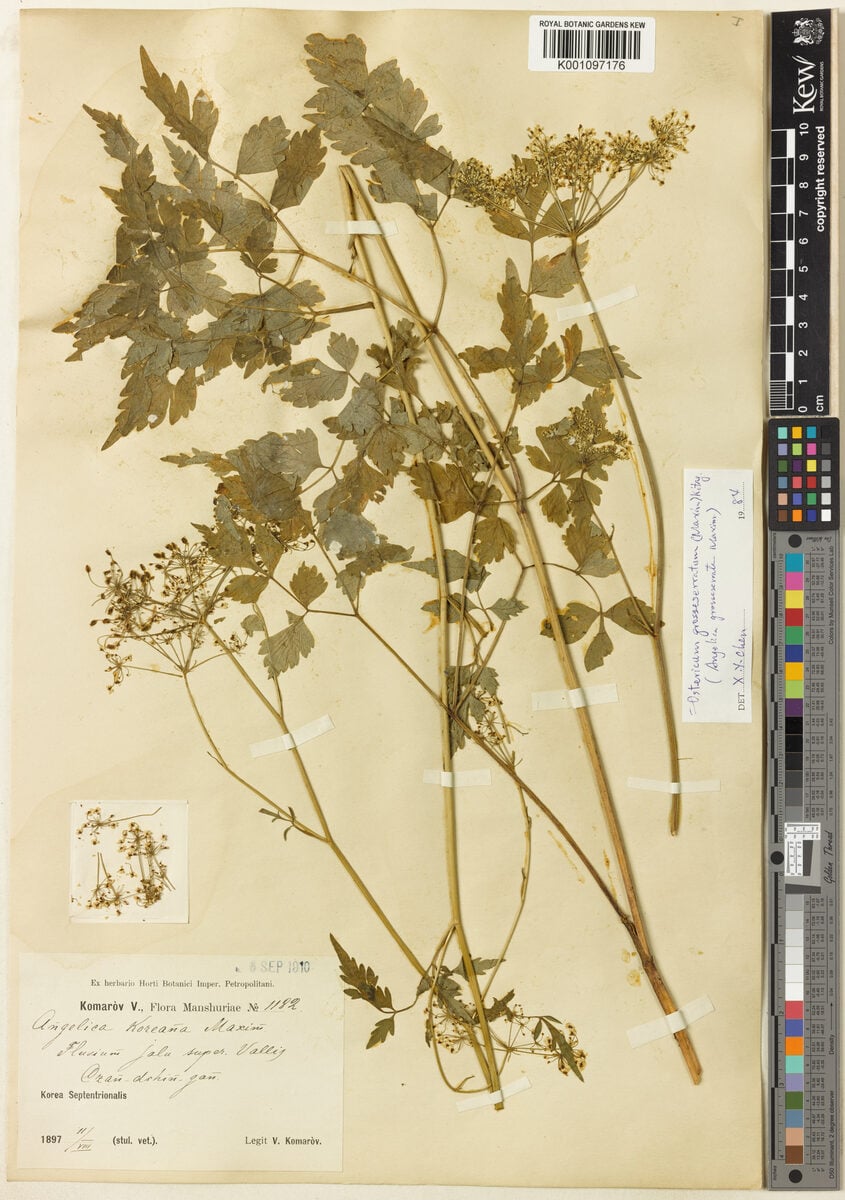
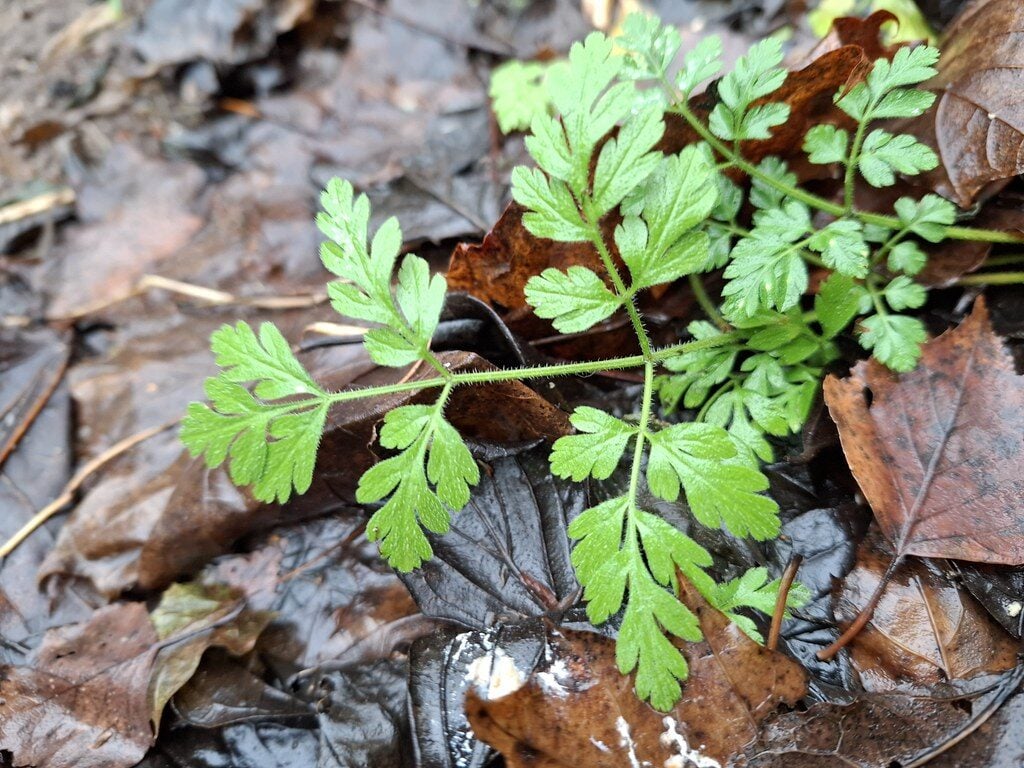
A herb. It keeps growing from year to year. It can grow to 2.5 m tall. The root is cone shaped and brown. The stem is 2 cm across and has thin ribs. The leaf stalks are about 20 cm long. The leaves are triangle or oval shaped and 20-40 cm long by 20-35 cm wide. There are 1-3 pairs of leaflets. The end one has unequal lobes. The leaflets are 5-12 cm long by 2-6 cm wide.
Edible Uses
Young leaves are edible when cooked.
Medicinal Uses
None known.
Known Hazards
All members of this genus contain furocoumarins, which increase skin sensitivity to sunlight and may cause dermatitis.
Distribution
It is a temperate plant. It grows in grassland and beside streams between 1,500-2,000 m above sea level in Sichuan in China.
Where It Grows
Asia, China, Korea,
Cultivation
We have very little information on this species and do not know how hardy it will be in Britain, though judging by its native range it could succeed outdoors in parts of this country. The following notes are based on the general needs of the genus. Requires a deep moist fertile soil in dappled shade or full sun. Plants are reliably perennial if they are prevented from setting seed.
Propagation
Sow seed in a cold frame as soon as it is ripe, as viability drops quickly. Spring sowing is possible but expect lower germination rates. Light is required for germination. Once seedlings are large enough to handle, prick them out into individual pots and grow on in a cold frame through their first winter, then plant out in spring. Seed can also be sown directly in situ as soon as it is ripe.
Other Uses
None known.
Notes
There are 50 Angelica species. They are temperate plants.
Synonyms
References (1)
- Plants for a Future database, The Field, Penpol, Lostwithiel, Cornwall, PL22 0NG, UK. http://www.scs.leeds.ac.uk/pfaf/