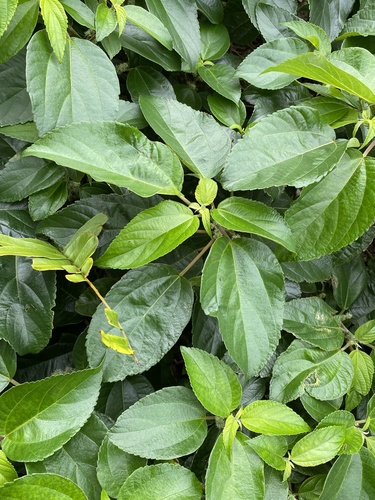
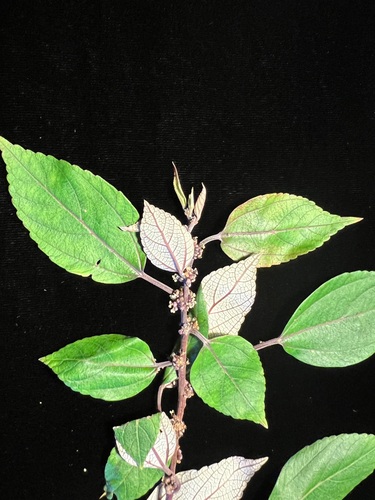
Pouzolzia zeylanica
(L.) Benn.
Graceful pouzolzbush
iNaturalist· cc-by-nc-sa
(c) 潘立傑 LiChieh Pan, some rights reserved (CC BY-NC-SA)
iNaturalist· cc-by-nc
(c) cjlorenz81, some rights reserved (CC BY-NC)
iNaturalist· cc-by-sa
(c) Douglas Goldman, some rights reserved (CC BY-SA), uploaded by Douglas Goldman
Summary
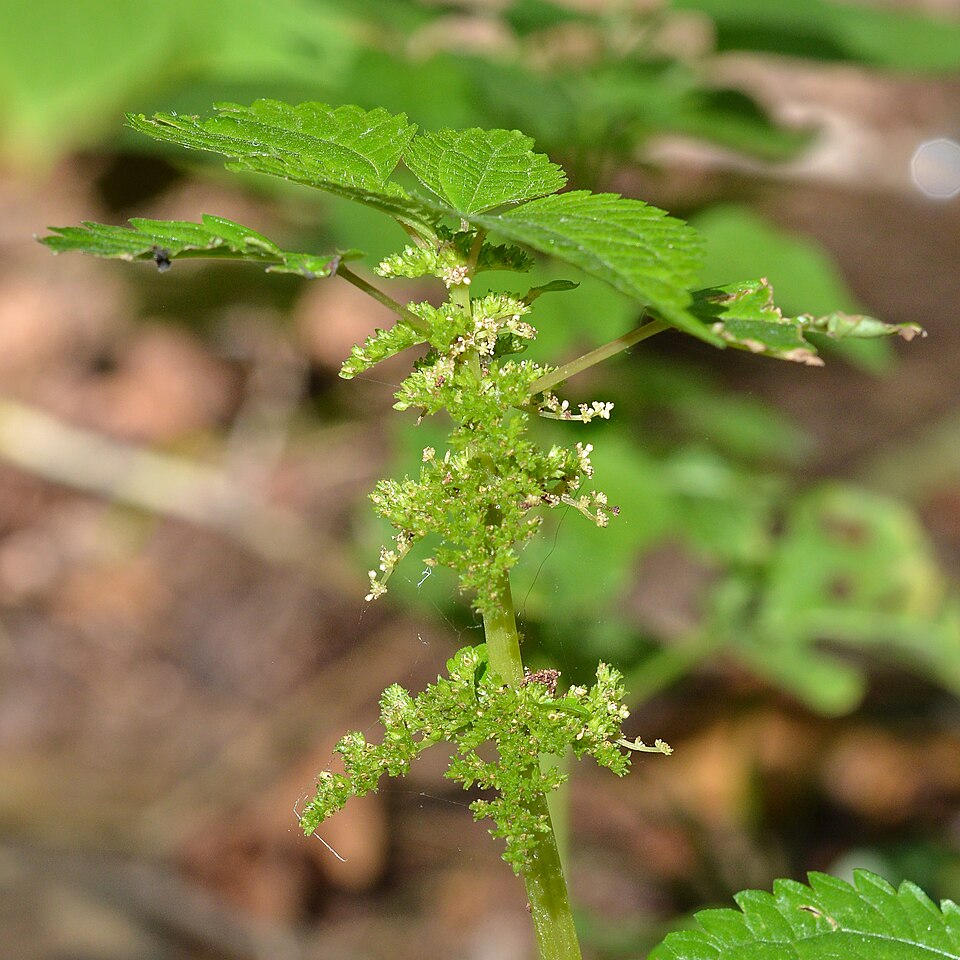
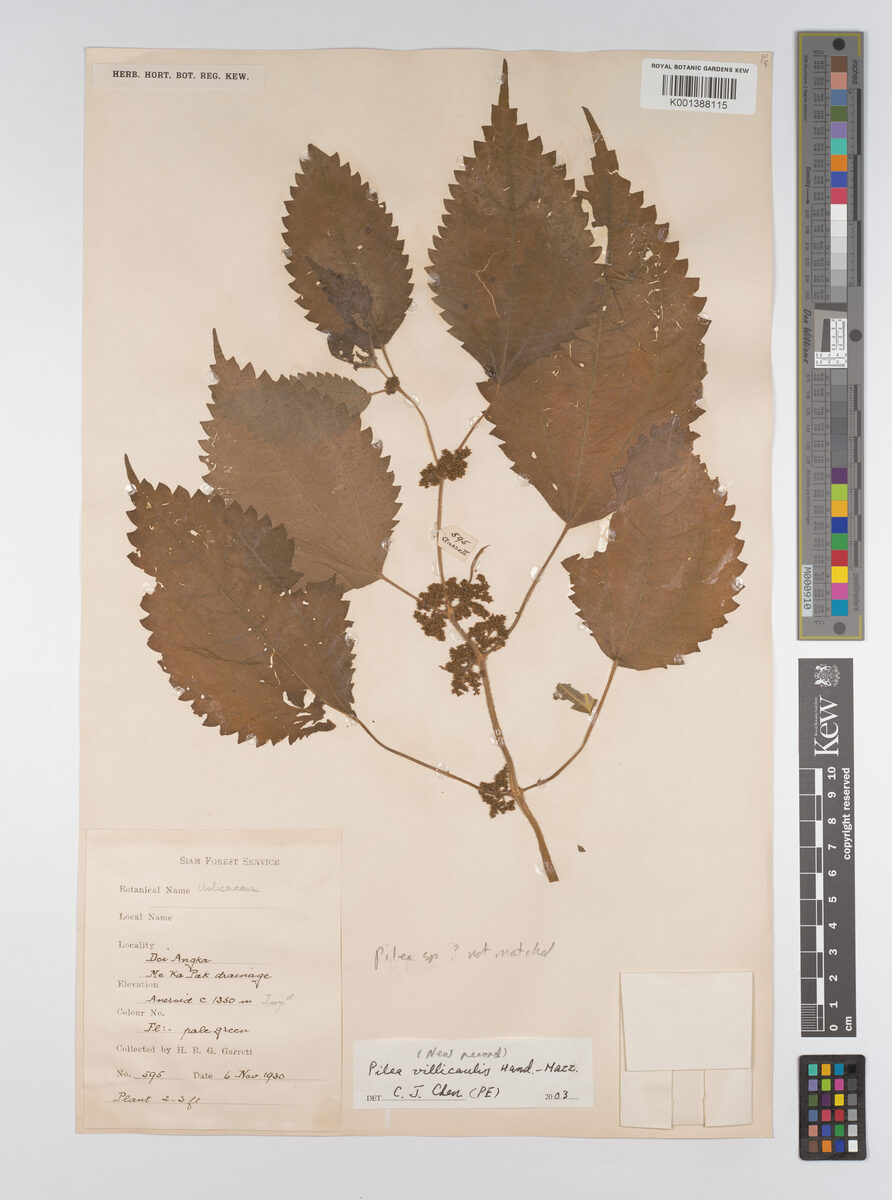
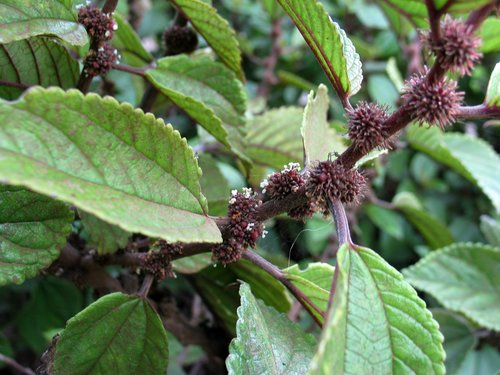
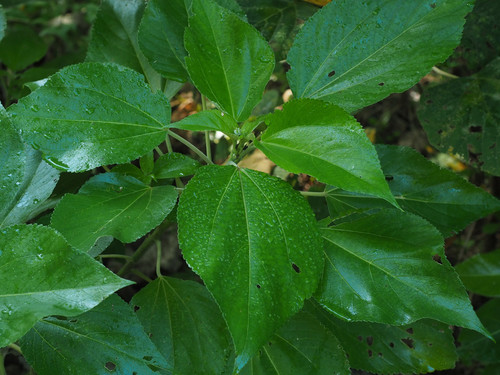
Source: WikipediaPouzolzia zeylanica, commonly known as graceful Pouzolz's bush or Ceylon pouzolzia, is a perennial herb native to Tropical and Subtropical Asia and Northern Australia. This species, which grows primarily in seasonally dry tropical biomes, reaches a height of 12–40 cm and is characterized by its pale green flowers arranged in loose, hairy clusters in the leaf axils. The plant features lance-shaped to rhomboid-ovate leaves that can be opposite or rarely alternate, and its rootstock is often tuberous. The species has also been introduced to other regions, including Florida and El Salvador.
Description
A small herb. It keeps growing from year to year. It grows 40-80 cm tall. The base of the plant can creep along the ground and form roots at the nodes. The leaves have leaf stalks and are thinly hairy. The lower leaves occur opposite one another and the higher leaves are alternate. The leaf blade is oval and 3.5 cm long by 1 cm wide. The side veins end at the edge of the leaf. The male and female flowers are in separate round heads in the axils of leaves. The flowers are greenish. The fruit is dry and oval and ribbed.
Edible Uses
The tender leaves and shoots are cooked as a vegetable and have a cucumber-like smell. The roots become tuberous and are eaten raw, boiled, or roasted. Leaves are also used for tea.
Traditional Uses
The tender leaves and shoots are cooked and eaten as a vegetable. They have the smell of cucumbers. When roots become tuberous they are eaten raw, boiled or roasted.
Medicinal Uses
The juice of the plant is used to treat boils, dysentery, fevers, toothaches and urinary problems. The juice of the root is used in the treatment of indigestion. The leaves are used as a vulnerary, but more especially as a cicatrizant for gangrenous ulcers. A paste of the plant is applied to cuts and wounds.
Distribution
A tropical and subtropical plant. It grows in moist and humid places. In Vietnam it grows from sea level to 1,000 m above sea level. In Yunnan.
Where It Grows
Africa, Asia, Australia, Bhutan, Cambodia, China, Himalayas, India, Indochina, Japan, Laos, Malaysia, Maldives, Middle East, Myanmar, Nepal, Northeastern India, Pacific, Papua New Guinea, PNG, Pakistan, Philippines, SE Asia, Sikkim, Singapore, Socotra, Sri Lanka, Thailand, Vietnam, Yemen,
Cultivation
Plants are grown from seed.
Other Uses
A useful cordage fibre is obtained from the bark.
Other Information
It is sold in local markets in China.
Synonyms
Also Known As
Akar kutu babi, Aubi itek, Ban pate, Barbere, Basisingam, Borali bokuwa, Chiple jhar, Chipli, Daun balam, Deresan, Du shu tou, Eddu-mutte dumpa, Eddu, Gubai, Jukut krinching, Jukut letah hayam, Kallurki, Katumpang lemah, Kermah, Kukon-kukon, Nichasag, Orang-aring, Pokok kedudu paya, Reen hui, Regetan, Rubai, Sam-louthi, Ubai itek, Ubai-ubai
References (25)
- Ambasta, S.P. (Ed.), 2000, The Useful Plants of India. CSIR India. p 488
- Balkrishna, A., et al, 2022, Indigenous Uses of Plants among Forest-dependent Communities of Seijosa, Arunachal Pradesh. International Journal of Economic Plants 2022, 9(1):064-080
- Baro, D., Baruah, S. and Borthukar, S. K. 2015, Documentation on wild vegetables of Baksa district, BTAD (Assam). Scholars Research Library. Archives of Applied Science Research, 2015, 7 (9):19-2
- Borrell, O.W., 1989, An Annotated Checklist of the Flora of Kairiru Island, New Guinea. Marcellin College, Victoria Australia. p 144
- Barua, U., et al, 2007, Wild edible plants of Majuli island and Darrang districts of Assam. Indian Journal of Traditional Knowledge 6(1) pp 191-194 (As Pouzolzia indica)
Show all 25 references Hide references
- Burkill, I.H., 1966, A Dictionary of the Economic Products of the Malay Peninsula. Ministry of Agriculture and Cooperatives, Kuala Lumpur, Malaysia. Vol 2 (I-Z) p 1836
- Flora of Australia, Volume 3, Hamamelidales to Casuarinales, Australian Government Publishing Service, Canberra (1989) p 86, 87
- Flora of China @ efloras.org Volume 5
- Joshi, N. & Siwakoti, M., 2012, Wild Vegetables Used by Local Community of Makawanpur District and Their Contribution to Food Security and Income Generation. Nepal Journal of Science and Technology Vol. 13, No. 1 (2012) 59-66
- Leach, G. J., 1988, Bush Food Plants of the Blackwater and Karawari Rivers Area, East Sepik Province, Papua New Guinea. Science in New Guinea 14(2). p 104
- Li, D. et al, 2017, Ethnobotanical survey of herbal tea plants from the traditional markets in Chaoshan, China. Journal of Ethnopharmacology. 205 (2017) 195-206
- Manandhar, N.P., 2002, Plants and People of Nepal. Timber Press. Portland, Oregon. p 380
- Martin, F.W. & Ruberte, R.M., 1979, Edible Leaves of the Tropics. Antillian College Press, Mayaguez, Puerto Rico. p 223
- Mot So Rau Dai an Duoc O Vietnam. Wild edible Vegetables. Ha Noi 1994, p 68
- Ogle, B. M., et al, 2003, Food, Feed or Medicine: The Multiple Functions of Edible Wild Plants in Vietnam. Economic Botany 57(1): 103-117
- Paczkowska, G . & Chapman, A.R., 2000, The Western Australian Flora. A Descriptive Calatogue. Western Australian Herbarium. p 565
- Peekel, P.G., 1984, (Translation E.E.Henty), Flora of the Bismarck Archipelago for Naturalists, Division of Botany, Lae, PNG. p 152, 150
- Savita, et al, 2006, Studies on wild edible plants of ethnic people in east Sikkim. Asian J. of Bio Sci. (2006) Vol. 1 No. 2 : 117-125
- Sujanapal, P., & Sankaran, K. V., 2016, Common Plants of Maldives. FAO & Kerala FRI, p 218
- Tanaka, Y. & Van Ke, N., 2007, Edible Wild Plants of Vietnam. Orchid Press. p 142
- WATT,
- Wheeler, J.R.(ed.), 1992, Flora of the Kimberley Region. CALM, Western Australian Herbarium, p 85 (Drawing)
- World Checklist of Useful Plant Species 2020. Royal Botanic Gardens, Kew
- Xu, You-Kai, et al, 2004, Wild Vegetable Resources and Market Survey in Xishuangbanna, Southwest China. Economic Botany. 58(4): 647-667
- Yesodharan, K. & Sujana, K. A., 2007, Wild edible plants traditionally used by the tribes in the Parambokulam Wildlife Sanctuary, Kerala, India. Natural Product Radiance 6(1) pp 74-80