Potentilla indica
(Andrews) Wolf
Indian strawberry
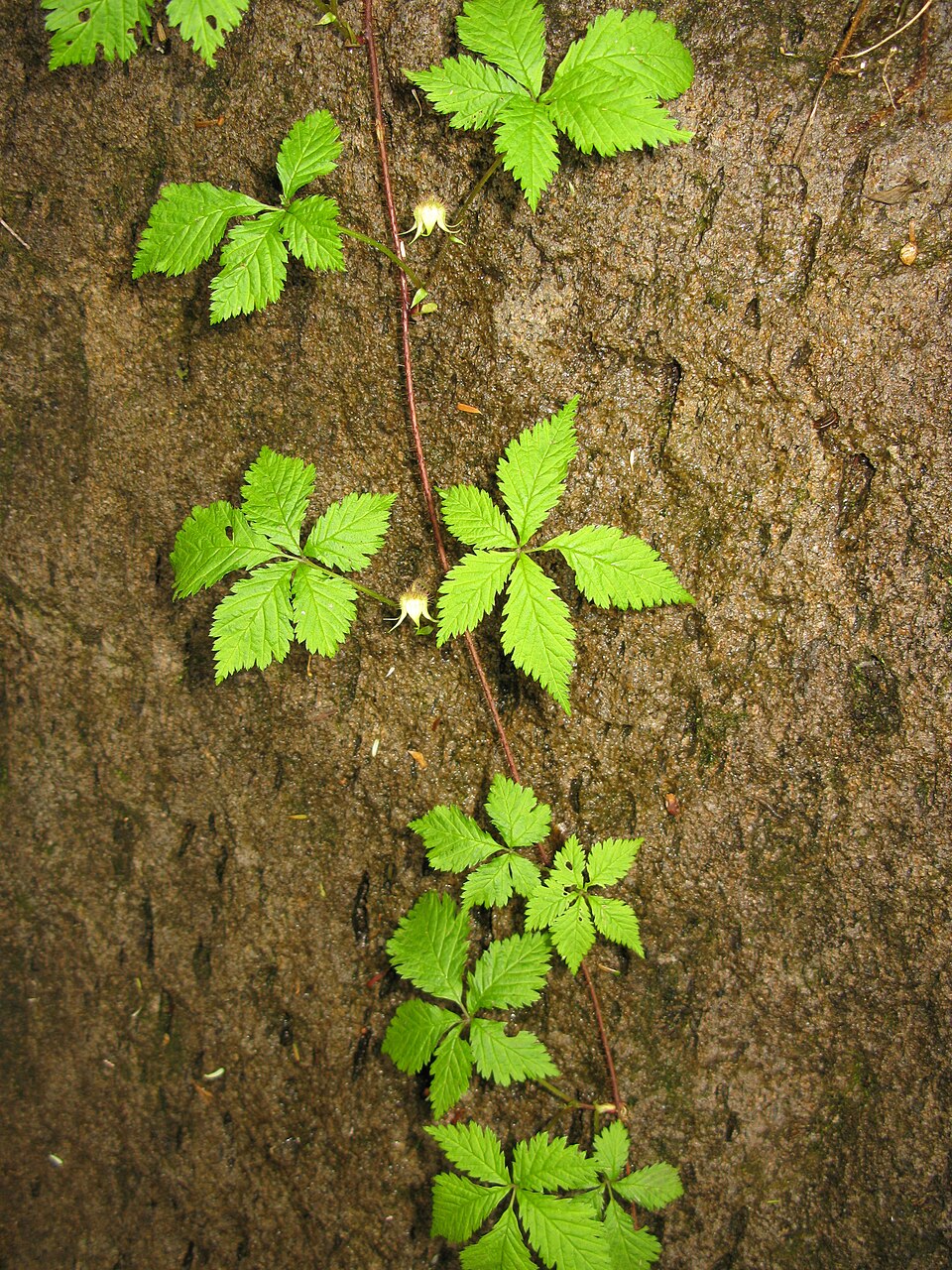
iNaturalist· cc-by-nc-sa
(c) Rob Curtis, some rights reserved (CC BY-NC-SA), uploaded by Rob Curtis
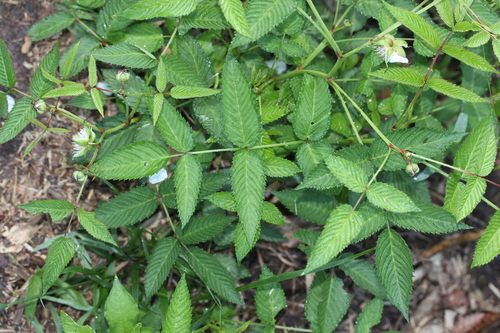
iNaturalist· cc-by-nc
(c) Markus Ackermann, some rights reserved (CC BY-NC), uploaded by Markus Ackermann
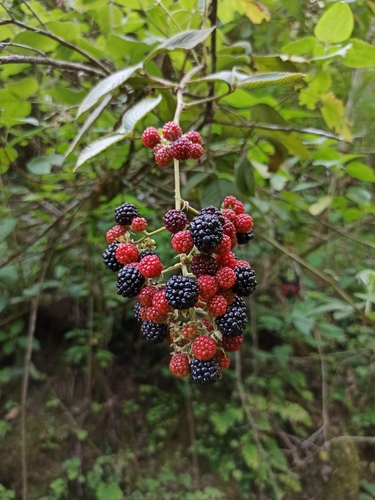
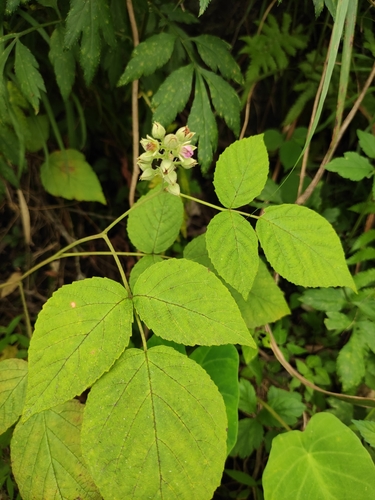
iNaturalist· cc-by-nc
(c) tomguerreiro, some rights reserved (CC BY-NC)
Summary
Source: WikipediaPotentilla indica, known commonly in as false strawberry, mock strawberry, Indian strawberry, wild strawberry, (also snakeberry in North America) is a flowering plant in the family Rosaceae, native to West Asia to India, East Asia, and Southeast Asia. It has ternate foliage and an aggregate accessory fruit, similar to true strawberries of the genus Fragaria. Unlike the white or slightly pink flowers of true strawberries, Potentilla indica has yellow flowers, as do many other Potentilla species. It is native to eastern and southern Asia, but has naturalized in many regions worldwide. They are considered to be an invasive species and weed by some. Many sources consider this plant part of the genus Potentilla due to evidence from chloroplast genetic sequence data that the genus Duchesnea is included within Potentilla, though some still list it as Duchesnea indica.
Description
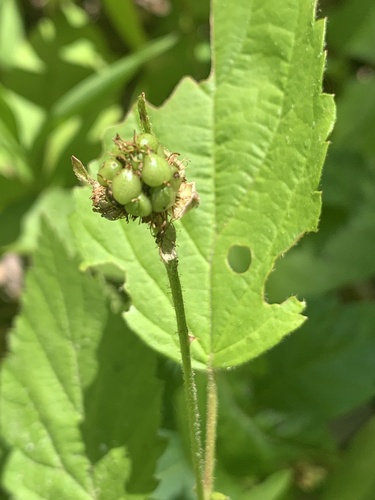
A creeping herb. The leaves have stalks. They are alternate. There are leafy structures at the base of the leaf stalk. The leaves have 3 leaflets. The leaflets do not have stalks. They are 1-2.5 cm long by 1-1.8 cm wide. They have teeth and are hairy. The middle leaflet is larger than the others. The flowers have stalks. The flowers are yellow and occur singly. The fruit is round, red and succulent. See Duchesnia indica
Edible Uses
The ripe fruit can be eaten raw, though it is watery with little flavor.
Traditional Uses
The ripe fruit can be eaten raw. They are watery and with little flavour.
This uses section is brief — help expand it
Medicinal Uses
The fresh berries are edible but considered less palatable than proper strawberries. The cousin Potentilla fulgens is widely distributed in the Khasi Hills and Jaintia Hills, Meghalaya, northeastern India, where the plants are known in the Khasi as lyniangbru (and in English as "Himalayan cinquefoil"), and usage of this species extends to the Potentilla genus. Roots of Potentilla are consumed (chewed) with betel nuts by the Khasi people, and the P. indica species is also used in this way. There is recorded ethno-medicinal usage (in northeastern India) as anthelmintic to get rid of parasites and to treat lung symptoms. A survey conducted in Assam, India from 2018-2020 documented the use of Potentilla indica by traditional healers to treat asthma. In traditional Chinese medicine, it is used for clearing heat, cooling blood, detumescence, and detoxication.
Distribution
A tropical and subtropical plant. In Nepal they grow between 500-2600 m altitude. They grow in moist places.
Where It Grows
Afghanistan, Africa, Argentina, Asia, Australia, Austria, Belgium, Bolivia, Brazil, Britain, Bulgaria, Canary Is., Caucasus, Central Asia, Chile, China, Colombia, Czech Republic, Ecuador, France, Georgia, Germany, Guatemala, Himalayas, India, Indochina, Indonesia, Italy, Japan, Korea, Laos, Malaysia, Mauritius, Myanmar, Nepal, Netherlands, New Zealand, North America, Northeastern India, NW India, Pakistan, Philippines, Poland, Portugal,Reunion, Romania, Russia, SE Asia, Singapore, South Africa, Southern Africa, Spain, Sri Lanka, Switzerland, Taiwan, Tajikistan, Thailand, Tibet, Turkey, Türkiye, Ukraine, Uruguay, USA, Vietnam, Yugoslavia,
Cultivation
Plants are grown from seed.
Notes
There are about 500 Potentilla species.
Synonyms
Also Known As
Bada mewa, Bhuin ainselu, Da zamki toot, Kakyen khujin laba, Keppu annu, Mock strawberry, Punjakha, Saladren, Shanzi-yaing, Shemei
References (16)
- P. F. A. Ascherson & K. O. R. P. P. Graebner, Syn. mitteleur. Fl. 6:66. 1904
- Ali, H., et al, 2011, Ethnobotanical profile of some plant resources in Malam Jabba valley of Swat, Pakistan. Journal of Medicinal Plants Research Vol. 5(18), pp 4676-4687 (As Fragaria indica)
- Burkill, I. M., 1966,
- Bussman, R. W., et al, 2021, Unity in diversity—food plants and fungi of Sakartvelo (Republic of Georgia), Caucasus. Journal of Ethnobiology and Ethnomedicine (2021) 17:72 p 14 (As Fragaria indica Andr.)
- Kang, Y., et al, 2012, Wild food plants and wild edible fungi in two valleys on the Qinling Mountains (Shaanxi, central China) Journal of Ethnobiology and Ethnomedicine; 9:26
Show all 16 references Hide references
- Khan, M. & Hussain, S., 2014, Diversity of wild edible plants and flowering phenology of district Poonch (J & K) in the northwest Himalaya. Indian Journal of Sci, Res. 9(1): 032-038 (As Fragaria indica Andr.)
- Kew Plants of the World Online
- Manandhar, N.P., 2002, Plants and People of Nepal. Timber Press. Portland, Oregon. p 378
- Masoodi, H. U. R. & Sundriyal, R. C., 2020, Richness of non-timber forest products in Himalayan communities—diversity, distribution, use pattern and conservation status. Journal of Ethnobiology and Ethnomedicine 16:56
- Meitei, L. R., et al, 2022, An ethnobotanical study on the wild edible plants used by forest dwellers in Yangoupokpi Lokchao Wildlife Sanctuary, Manipur, India. Ethnobotany Research and Application 23:15
- Milow, P., et al, 2013, Malaysian species of plants with edible fruits or seeds and their evaluation. International Journal of Fruit Science. 14:1, 1-2
- Nayaham, M. C., et al, 1993, Less Known Edible Fruit - Yielding plants of Nilgiris. Ancient Science of Lif. Vol. X11 Nos. 3 & 4, pp 363-376
- PROSEA No. 2
- Rana, D., et al, 2019, Ethnobotanical knowledge among the semi-pastoral Gujjar tribe in the high altitude (Adhwari’s) of Churah subdivision, district Chamba, Western Himalaya. Journal of Ethnobiology and Ethnomedicine (2019) 15:10 (As Fragaria indica)
- Sasi, R. & Rajendran, A., 2012, Diversity of Wild Fruits in Nilgiri Hills of the Southern Western Ghats - Ethnobotanical Aspects. IJABPT, 3(1) p 82-87
- World Checklist of Useful Plant Species 2020. Royal Botanic Gardens, Kew