Reynoutria multiflora
(Thunb.) Moldenke
Climbing knotweed, Flowery knotweed, Chinese cornbind
iNaturalist· cc0
no rights reserved, uploaded by 葉子
iNaturalist· cc-by-nc
(c) alstonmcchaha, some rights reserved (CC BY-NC)
iNaturalist· cc-by-nc
(c) Nate Martineau, some rights reserved (CC BY-NC), uploaded by Nate Martineau
Description
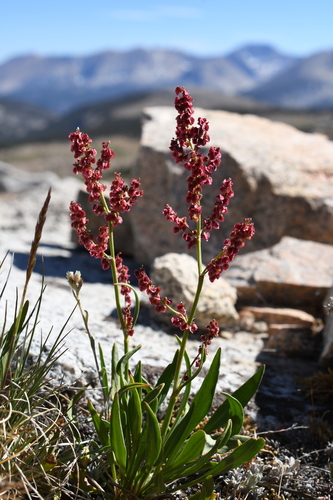
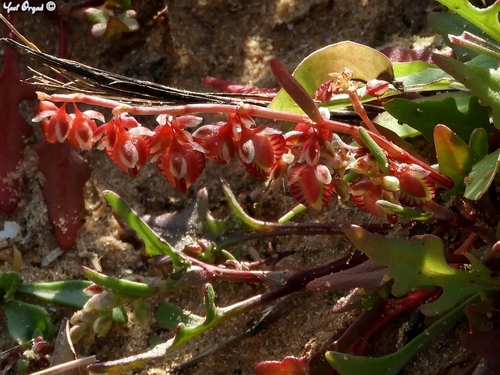
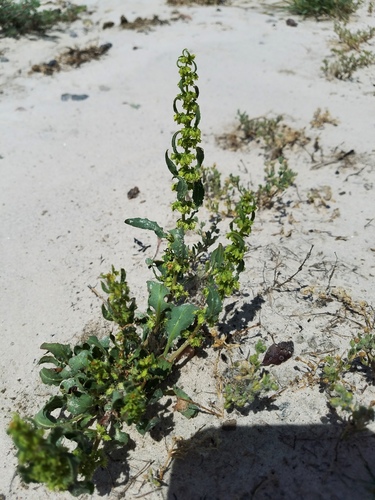
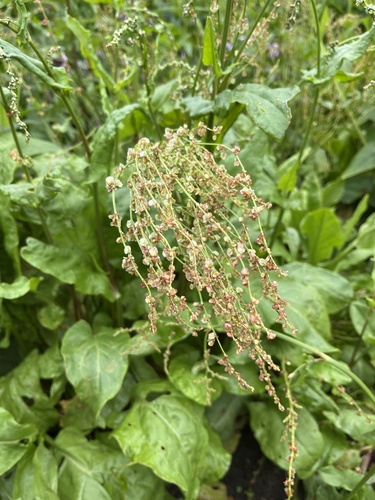
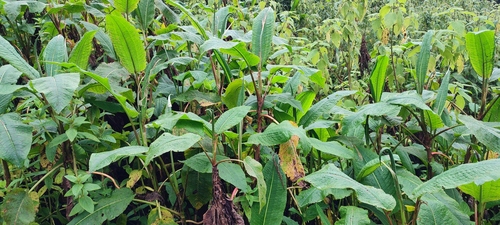
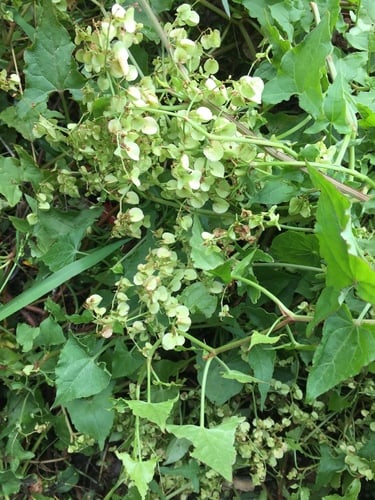
A twining woody climber. It keeps growing from year to year. It is 3-4 m long. The stems are woody near the base. It loses its leaves during the year. It has large tuberous rhizomes. The stems are red when young. The leaves are light green and oval. The leaves are alternate and have a leaf stalk. The blade is oval and 5-7 cm long by 3-5 cm wide. It tapers to a point at the end. The flowers are small and white or pink. They are in slender panicles or groups at the ends of branches. These can be 20-24 cm long. The fruit have 3 wings. It is a dry black 3 sided seed.
Edible Uses
The roots are washed, sliced, soaked overnight and boiled in changes of water to remove bitter compounds, then washed, steamed, re-boiled and eaten in tonic soups, porridges and wines. The large underground rhizome is used as food. The flowers are also eaten.
Traditional Uses
The roots are washed, sliced, soaked overnight and boiled in changes of water to remove the bitter principle then washed, steamed, re-boiled and eaten. They are used in tonic soups, porridges and wines. The large underground rhizome is used as a food and medicine. The flowers are also eaten.
Medicinal Uses
Pleuropterus multiflorus is listed in the Chinese Pharmacopoeia and is one of the most popular perennial traditional Chinese medicines. Caution must be taken, however, as overconsumption can lead to toxicity-induced hepatitis.
Known Hazards
Although no specific mention has been made for this species, there have been reports that some members of this genus can cause photosensitivity in susceptible people. Many species also contain oxalic acid (the distinctive lemony flavour of sorrel) - whilst not toxic this substance can bind up other minerals making them unavailable to the body and leading to mineral deficiency. Having said that, a number of common foods such as sorrel and rhubarb contain oxalic acid and the leaves of most members of this genus are nutritious and beneficial to eat in moderate quantities. Cooking the leaves will reduce their content of oxalic acid. People with a tendency to rheumatism, arthritis, gout, kidney stones or hyperacidity should take especial caution if including this plant in their diet since it can aggravate their condition.
Distribution
A subtropical plant. In Sichuan.
Where It Grows
Asia, China*, India, Indochina, Japan*, Korea, Malaysia, SE Asia, Taiwan, Vietnam,
Cultivation
Plants can be grown from seed. They can also be grown from cuttings or by division of the tuber.
Propagation
Seed - germination is usually free and easy. Sow the seed in containers and, when they are large enough to handle, prick the seedlings out into individual pots and plant them out when they are large enough. Division is very easy - larger divisions can be planted out direct into their permanent positions. We have found that it is better to pot up the smaller divisions and grow them on in light shade until they are well established before planting them out. Stem cuttings 30 - 40cm long.
Production
Tubers are collected from plants that are 3-4 years old.
Notes
It is used in medicine. There are about 7 Fallopia species.