Plumbago zeylanica
L.
Ceylon Leadwort
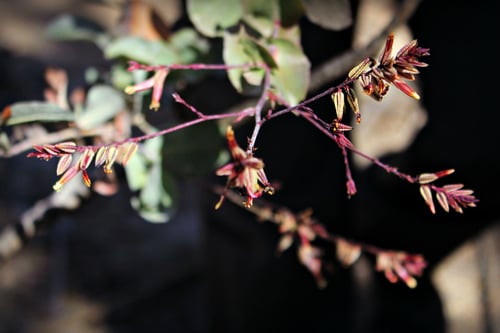
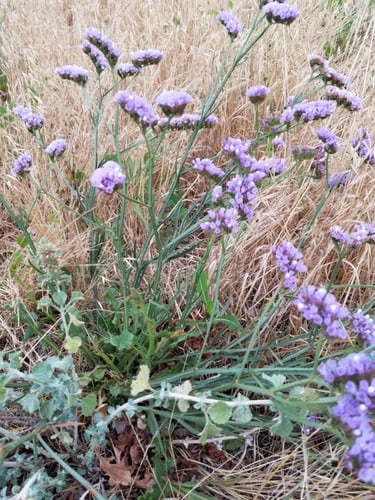
iNaturalist· cc0
no rights reserved, uploaded by 葉子
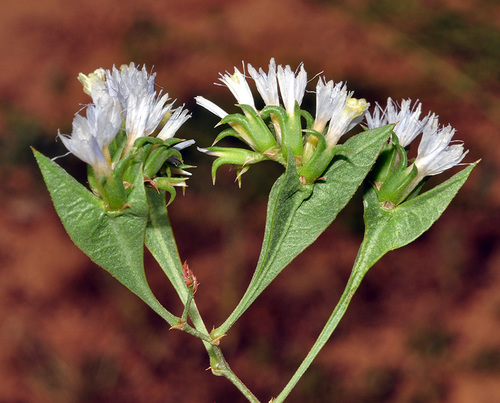
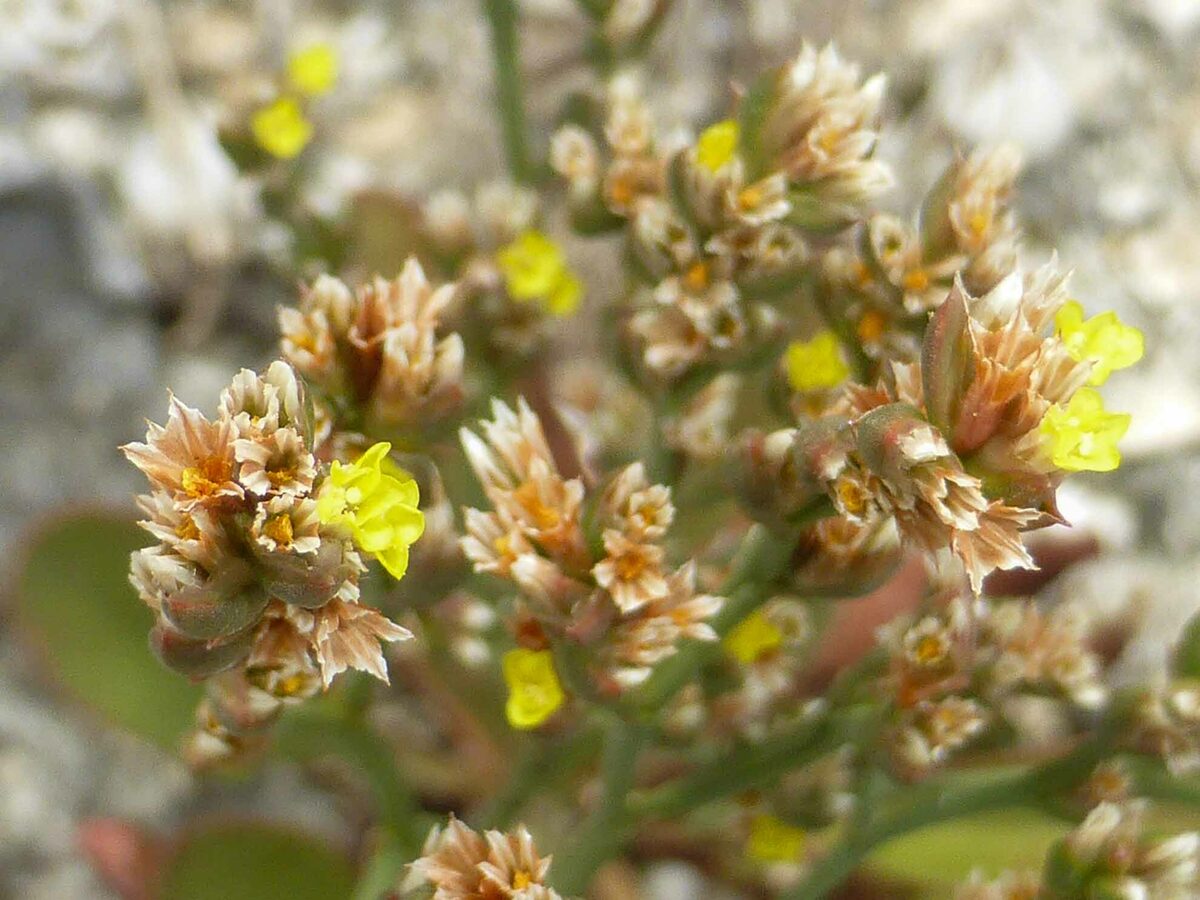
iNaturalist· cc-by-nc
(c) Barry Sullender, some rights reserved (CC BY-NC), uploaded by Barry Sullender
iNaturalist· cc-by-nc
(c) 阿元, some rights reserved (CC BY-NC), uploaded by 阿元
Summary
Source: WikipediaPlumbago zeylanica, commonly known as Ceylon leadwort, doctorbush or wild leadwort, is a species of plumbago with a pantropical distribution. Carl Linnaeus described the paleotropical P. zeylanica and Neotropical P. scandens as separate species, but they are currently considered synonymous.
Description
A herb. It grows as a shrub to 1-3 m tall. It can spread to 2 m wide. The branches are spreading. The stems are ribbed. The base of the leaf stalk can be ear shaped. The leaf blade is oval. It is 5-8 cm long by 2.5-4 cm wide. They can be larger or smaller. The base is wedge shaped and it tapers to the tip. There are 5-70 flowers in a flower cluster. The flowers are white or pale blue. The fruit is a cylindrical capsule. The seeds are red-brown. They are 7 mm by 1.5 mm.
Edible Uses
The leaves are cooked and eaten as a vegetable or made into a drink. The roots are fermented to make a drink.
Traditional Uses
The leaves are used for making a drink. They are also cooked and eaten as a vegetable. The roots are fermented to make a drink. CAUTION: It is probably mainly used as a medicine.
Medicinal Uses
Early folk medicine used the crushed plant internally and externally as an abortifacient. In Ayurveda, P. zeylanica is known as chitrak, meaning "the spotted one". It is used with other herbs to lessen its intense pungency.
Known Hazards
The plant is poisonous and is probably mainly used as a medicine rather than food.
Distribution
It suits tropical and subtropical locations. It is damaged by frost. It suits shaded sites. It can grow in acid or slightly alkaline soils. It grows between 100-1600 m altitude in S China. It can grow on termite mounds. In XRBG Yunnan. In Sichuan.
Where It Grows
Africa, American Samoa, Angola, Asia, Australia, Benin, Botswana, Burkina Faso, China, East Africa, East Timor, Eswatini, Ethiopia, Fiji, Guiana, Guianas, Guinea, Guinée, Guinea-Bissau, Guyana, Hawaii, India, Indochina, Indonesia, Kenya, Laos, Malawi, Malaysia, Marquesas, Mozambique, Myanmar, Norfolk Island, Northeastern India, Pacific, Pakistan, Papua New Guinea, PNG, Philippines, Samoa, Sao Tome and Principe, SE Asia, Sierra Leone, Sikkim, Somalia, South Africa, Southern Africa, South America, Sri Lanka, Suriname, Swaziland, Taiwan, Thailand, Timor-Leste, USA, Venezuela, Vietnam, West Africa, Zambia, Zimbabwe,
Cultivation
Plants can be grown from seed or cuttings of firm young growth.
Propagation
Seed - easily propagated, the seeds germinate in 3 - 4 weeks at 21°c. Germination is almost 100% if both ends of the seed are cut before sowing. After 3 months storage, germination decreased to 40%. Sowing the seeds in a nursery and transplanting into the field at a density of 60 × 60 cm has given good results. Stem cuttings. Roots develop in 1 month - wait for good stem growth before potting them up. Root cuttings.
Other Uses
Juice from the roots is used as a tattoo pigment that can range from navy blue to black. A paste of the powdered root or the root sap is used for tattooing - the paste or sap causes blisters and the new skin has a darker colour. Plumbagin, a medically active compound in the plant, has strong antifeedant and moulting inhibiting effects on insects and has nematicidal and acaricidal activities. Sometimes planted in living fences.
Other Information
It is sold in local markets.
Notes
There are about 15 Plumbago species. They are mainly in the tropics. It is used for medicine. It has anti-microbial and anti-fungal properties. It is a muscle stimulant.
Also Known As
Amera, Bachhoaxa, Bama, Bau hua dan, Buombuom tichlan, Cheraka, Chet tamun plengkao, Chitrak, Chitramulan, Chitur, Duoi-cong, Elkuus, Godong enchok, Jarak, Kan-gyok-phyu, Kengoi, Keriyontus, Ki enchok, Kodiveli, Leadwort, Melekuya, Perdu dokter, Plumbago, Plumbago seilon, Poksor, Seto cheetu, Tshuaj zoo ntxhia
References (45)
- Achigan-Dako, E, et al (Eds), 2009, Catalogue of Traditional Vegetables in Benin. International Foundation for Science.
- Ambasta, S.P. (Ed.), 2000, The Useful Plants of India. CSIR India. p 471
- Arora, R. K., 2014, Diversity in Underutilized Plant Species - An Asia-Pacific Perspective. Bioversity International. p 44
- Bhaskarachary, K., et al, 1995, Carotene content of some common and less familiar foods of plant origin. Food Chemistry 54: 189-193
- Bhogaonkar, P. Y. & Devarkar, V. D., 2018, Inventory for ethnovegetable knowledge of the tribals of Satpura hill area-Melghat, Dist. Amravati (India), Plantae Scientia, 2018; Vol. 01 Issue 01: 01-08
Show all 45 references Hide references
- Bodkin, F., 1991, Encyclopedia Botanica. Cornstalk publishing, p 813
- Bremness, L., 1994, Herbs. Collins Eyewitness Handbooks. Harper Collins. p 117
- Burkill, I.H., 1966, A Dictionary of the Economic Products of the Malay Peninsula. Ministry of Agriculture and Cooperatives, Kuala Lumpur, Malaysia. Vol 2 (I-Z) p 1806
- Cooper, W. and Cooper, W., 2004, Fruits of the Australian Tropical Rainforest. Nokomis Editions, Victoria, Australia. p 403
- Cowie, I, 2006, A Survey of Flora and vegetation of the proposed Jaco-Tutuala-Lore National Park. Timor-Lests (East Timor) www.territorystories.nt/gov.au p 52
- Devi, O.S., P. Komor & D. Das, 2010, A checklist of traditional edible bio-resources from Ima markets of Imphal Valley, Manipur, India. Journal of Threatened Taxa 2(11): 1291-1296
- Elliot, W.R., & Jones, D.L., 1997, Encyclopedia of Australian Plants suitable for cultivation. Vol 7. Lothian. p 387
- Engel, D.H., & Phummai, S., 2000, A Field Guide to Tropical Plants of Asia. Timber Press. p 152
- Flora of Australia Volume 49, Oceanic Islands 1, Australian Government Publishing Service, Canberra. (1994) p 104
- Flora of Pakistan. www.eFloras.org
- Fowler, D. G., 2007, Zambian Plants: Their Vernacular Names and Uses. Kew. p 53
- Hani Medicine of Xishuangbanna, 1999, p 211
- Kiran, K. C., et al, 2019, Diversity and Seasonal Availability of Potential Wild Edible Plants from Vidarbha Region of Maharashtra State, India. Int.J.Curr.Microbiol.App.Sci (2019) 8(2): 1434-1446
- Lautenschläger, T., et al, 2018, First large-scale ethnobotanical survey in the province of Uíge, northern Angola. Journal of Ethnobiology and Ethnomedicine (2018) 14:51
- Milson. J., 2000, Trees and Shrubs of north-west Queensland. DPI p 250
- Molla, A., Ethiopian Plant Names. http://www.ethiopic.com/aplants.htm
- Morley, B.D., & Toelken, H.R., (Eds), 1983, Flowering Plants in Australia. Rigby. p 86
- Mot So Rau Dai an Duoc O Vietnam. Wild edible Vegetables. Ha Noi 1994, p 262
- Paczkowska, G . & Chapman, A.R., 2000, The Western Australian Flora. A Descriptive Calatogue. Western Australian Herbarium. p 458
- Pandy, R. K. & Saini, S. K., 2007, Edible plants of tropical forests among tribal communities of Madhya Pradesh. Indian Journal of Traditional Knowledge. 6(1), pp 185-190
- Parham, B. E. V., 1972, Plants of Samoa. New Zealand Department of Scientific and Industrial Research. Information Series. No. 85 p 63
- Peng Tse-Hsiang, Kamelin, R.V., Plumbaginaceae. Flora of China.
- Pham-Hoang Ho, 1999, An Illustrated Flora of Vietnam. Nha Xuat Ban Tre. p 756
- Pickering, H., & Roe, E., 2009, Wild Flowers of the Victoria Falls Area. Helen Pickering, London. p 93
- Prabha, Y. P., et al, 2010, Documentation of Wild Edible Plants of Melghat Forest, Dist. Amravati, Maharashtra State, India. Ethnobotanical Leaflets 14: 751-58, 2010.
- Prafulla, S., 2017, Wild Food Diversity of Nawegaon-Nagzira Tiger Reserve in Gondia-Bhandara district of Maharashtra, India. Int. J. of Life Sciences, 2017, Vol. 5 (4): 620-626
- Ramachandran,V. S., & Udhayavani, C., 2013, Knowledge and uses of wild edible plants by Paniyas and Kurumbas of Western Nilgiris, Tamil Nadu. Indian Journal of Natural Products and Resources. 4(4) December 2013, pp 412-418
- Rodriguez-Amaya, D. B., 1999, Carotenoides y Prepracion de Alimentos. University Estadual de Campinas, Brasil, Ph.D. thesis. p 19
- Roodt, V., 1998, Common Wild Flowers of the Okavango Delta. Medicinal Uses and Nutritional value. The Shell Field Guide Series: Part 2. Shell Botswana. p 139
- Savita, et al, 2006, Studies on wild edible plants of ethnic people in east Sikkim. Asian J. of Bio Sci. (2006) Vol. 1 No. 2 : 117-125
- Smith, A.C., 1981, Flora Vitiensis Nova, Lawaii, Kuai, Hawaii, Volume 2 p 308
- Sp. pl. 1:151. 1753
- Staples, G.W. and Herbst, D.R., 2005, A tropical Garden Flora. Bishop Museum Press, Honolulu, Hawaii. p 460
- Sukarya, D. G., (Ed.) 2013, 3,500 Plant Species of the Botanic Gardens of Indonesia. LIPI p 689
- Swaziland's Flora Database http://www.sntc.org.sz/flora
- Tebkew, M., et al, 2018, Uses of wild edible plants in Quara district, northwest Ethiopia: implication for forest management. Agriculture and Food Security (2018) 7:12
- Termote, C., et al, 2014, Assessing the potential of wild foods to reduce the cost of a nutritionally adequate diet: An example from eastern Baringo District, Kenya. Food and Nutrition Bulletin, vol. 35, no. 4
- Wheeler, J.R.(ed.), 1992, Flora of the Kimberley Region. CALM, Western Australian Herbarium, p 151
- Whitney, C. W., et al, 2014, Conservation and Ethnobotanical Knowledge of a Hmong Community in Long Lan, Luang Prabang, Lao People’s Democratic Republic. Ethnobotany Research and Applications 12:643-658
- World Checklist of Useful Plant Species 2020. Royal Botanic Gardens, Kew