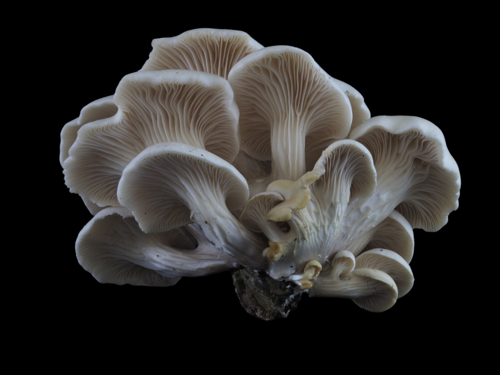
Pleurotus ostreatus
(Jacq. ex Fries) Kummer
Oyster mushroom, Tree oyster mushroom
wikimedia· cc-by-sa
Sven Manguard (via Wikimedia Commons)
wikimedia· cc0
Rosser1954 Roger Griffith (via Wikimedia Commons)
gbif· cc-by
GBIF
iNaturalist· cc-by-nc
(c) Kai Joaquin, some rights reserved (CC BY-NC), uploaded by Kai Joaquin
iNaturalist· cc-by-nc-nd
(c) N.W.R, some rights reserved (CC BY-NC-ND), uploaded by N.W.R
Summary
Source: WikipediaPleurotus ostreatus, commonly known as the oyster mushroom, grey oyster mushroom, oyster fungus, hiratake, or pearl oyster mushroom, is a popular edible mushroom found in temperate and subtropical forests around the world.
Description
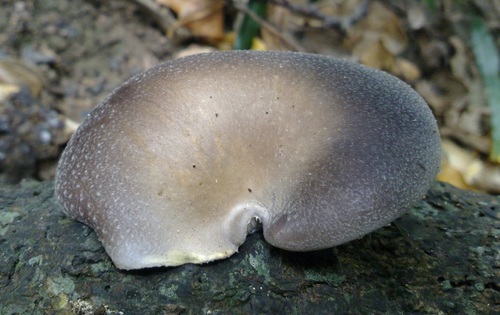
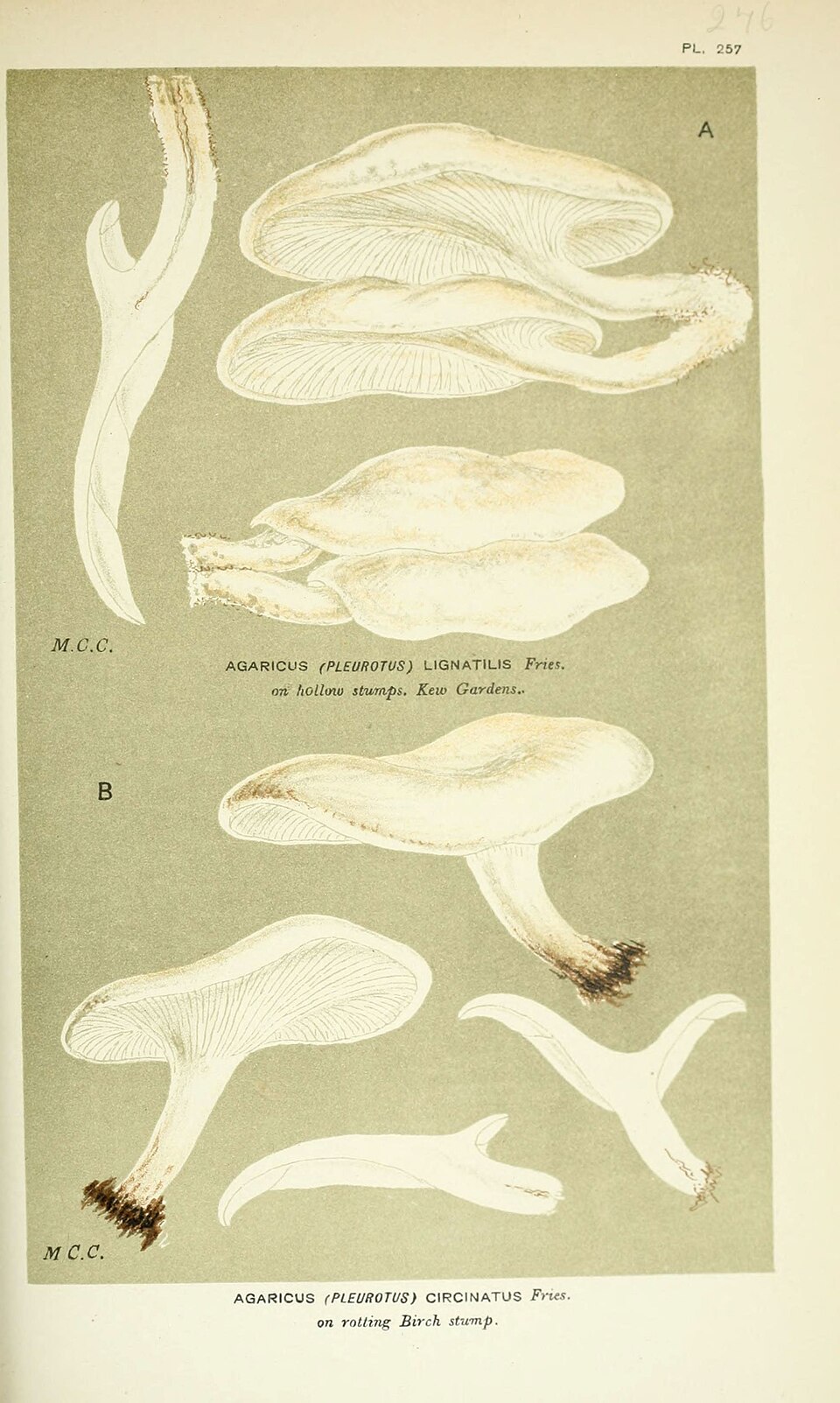
A mushroom. It is a white to grey to pink mushroom. It is fan shaped. The cap is 5-15 cm across. It is moist and spongy. The gills run down the stem and are widely separated. The stem is white, short and firm. They grow in shelf-like layers.
Edible Uses
Commercial cultivation of this mushroom first began in Germany as a subsistence measure during World War I, and it is now grown commercially around the world for food. The oyster mushroom is a choice edible. Oyster mushrooms are used in Czech, Polish, and Slovak contemporary cuisine in soups and stews in a similar fashion to meat, as well as breaded to become a vegetarian alternative to the kotlet in Polish dishes. It is a delicacy in Japanese, Korean and Chinese cuisine. In Indonesia it is common to find street food vendors selling crispy deep fried oyster mushrooms. It is frequently served on its own, in soups, stuffed, or in stir-fry recipes with soy sauce. Oyster mushrooms may be used in sauces, such as vegetarian oyster sauce. The mushroom's taste has been described as mild with a slight odor similar to anise. It is best when picked young; as the mushroom ages, the flesh becomes tough and the flavor becomes acrid.
Traditional Uses
It is edible but can cause diarrhea and intestinal troubles in some people. The young fruiting bodies are used in soups, pastas and seafood dishes. They are stewed, sauteed in butter, prepared in tempura, used in soups, sauces and casseroles. It can be dried or preserved in oil. They are also frozen or canned.
Distribution
It is a temperate plant. They grow and form clumps in dead trees. It grows in wooded areas.
Where It Grows
Africa, Armenia, Asia, Australia, Balkans, Bangladesh, Bhutan, Britain, Bulgaria, Cambodia, Canada, Caucasus, Central America, Central Asia, China, Costa Rica, Europe, Georgia, Ghana, Greece, Himalayas, Hong Kong, Hungary, India, Indochina, Indonesia, Iraq, Italy, Japan, Jordan, Korea, Kyrgyzstan, Mediterranean, Mexico, Middle East, Nepal, North America, Northeastern India, Pacific, Peru, Philippines, Poland, Russia, SE Asia, Serbia, Sicily, Slovenia, South Africa, Southern Africa, South America, Spain, Taiwan, Tasmania, Thailand, Turkey, Türkiye, USA, West Africa, West Timor,
Other Information
It is sold in local markets.
Nutrition
| Part | Moisture | kJ | kcal | Protein | Vit A | Vit C | Iron | Zinc |
|---|---|---|---|---|---|---|---|---|
| Mushroom raw | 87.8 | 155 | 37 | 4.1 | 5 | 0 | 1.7 | 0.8 |
| Mushroom | — | 64 | 28.4 | — | — | — | — | — |
Also Known As
Abalone mushroom, Akandjasunk, Bamboo sati, Hed rang rom Bhutan, Hiratake, Hira-take, How gu, Inyik, Kakhasunk, Kanney, Kannye chyau, K'almakha, Marmo syamu, Mukhum hafalam, Naki shamong, Oyster mushroom, Patak, Pinggu, Pleurotte, Shimeji, Tit lakhar, Uyen, Welu sati
References (59)
- Akata, I., et al, 2012, Chemical Composition and Antioxidant Activities of 16 Wild Edible Mushroom Species Grown in Anatolia. International Journal of Pharmacology 8(2): 134-138
- Alexopoulos, C.J., 1962, Introductory Mycology. Wiley Toppan. p 517
- Ambasta, S.P. (Ed.), 2000, The Useful Plants of India. CSIR India. p 470
- Aziz, F. H. & Toma, F. M., 2012, First Observations on the Mushroom in Mountain Area of Iraqi Kurdistan Region. Journal of Advanced Laboratory Research in Biology 3(4)
- Bhaben, T., et al, 2010, Wild edible fungal resources by ethnic tribes of nagaland, India. Indian Journal of Traditional Knowledge. Vol 10(3) p 513
Show all 59 references Hide references
- Bianchini, F., Corbetta, F., and Pistoia, M., 1975, Fruits of the Earth. Cassell. p 124
- Boa, E. R., Wild edible fungi and their importance to people. FAO Non Wood Forest Products Booklet 17
- Burkill, I.H., 1966, A Dictionary of the Economic Products of the Malay Peninsula. Ministry of Agriculture and Cooperatives, Kuala Lumpur, Malaysia. Vol 2 (I-Z) p 1802
- Bussman, R. W., et al, 2016, A comparative ethnobotany of Khevsureti, Samtskhe-Javakheti, Tusheti, Svaneti, and Racha-Lechkhumi, Republic of Georgia (Sakartvelo), Caucasus. Journal of Ethnobiology and Ethnomedicine (2016)
- Bussman, R. W., et al, 2021, Unity in diversity—food plants and fungi of Sakartvelo (Republic of Georgia), Caucasus. Journal of Ethnobiology and Ethnomedicine (2021) 17:72 p 17
- Cherubini, A. & Landi, S., Andar per Funghi, Edizioni DieRre, p 60
- Chowdhury, M. M. H., et al, 2015, Annals of Clinical Microbiology and Antimicrobials, 14:8
- Christensen, M., et al, 2008, Collection and Use of Wild Edible Fungi in Nepal. Economic Botany, 62(1), 2008, pp. 12–23
- Ciesla, W.M., 1998, Non-wood forest products from conifers. Non-wood forest products 12, FAO, Rome, p 91
- Dabbour, I. R. & Takruri, H. R., 2002, Protein quality of four types of edible mushrooms found in Jordan. Plant Foods for Human Nutrition 57:1-11
- Devi, O.S., P. Komor & D. Das, 2010, A checklist of traditional edible bio-resources from Ima markets of Imphal Valley, Manipur, India. Journal of Threatened Taxa 2(11): 1291-1296
- Devkota, S., 2008, Distribution and Status of Highland mushrooms: A study from Dolpa, Nepal. J.Nat.Hist.Mus.Vol.23,2008, 51-59
- Dongol, et al, 1995, Edible Mushrooms in Nepal
- Ergonul, P. G. et al, 2013, Fatty Acid Compositions of Six Wild Edible Mushroom Species. The Scientific World Journal. Volume 2013, Article ID 163964
- Facciola, S., 1998, Cornucopia 2: a Source Book of Edible Plants. Kampong Publications, p 255
- Fan, L., et al, The Use of Edible Wild Plants and Fungi in Korean-Chinese Villages. Journal of Environmental Information Science 44-5 p 71-79
- Food Composition Tables for use in East Asia FAO http://www.fao.org/infoods/directory No. 511
- Genccelep, H. et al, 2009, Determination of mineral contents of wild-grown edible mushrooms. Food Chemistry 113: 1033-1036
- Gryzenhout, M., 2010, Mushrooms of South Africa. Pocket Guide. Struik. p 57
- Hall, I. R., et al, 2003, Edible and Poisonous Mushrooms of the World. Timber Press. p 214
- http://www.mykoweb.com/CAF/edible.html
- Jordan, P., 2000, The Mushroom Guide and Identifier, Hermes House, p 84
- Kaufmann, B. et al, 1999, The Great Encyclopedia of Mushrooms. Konemann. p 68
- Kharel, S. & Rajbhandary, S., Ethnomycological Knowledge of Some Wild Edible Mushrooms in Bhardeo, Lalitpur, Nepal.
- Kiple, K.F. & Ornelas, K.C., (eds), 2000, The Cambridge World History of Food. CUP p 318, 1819, 1827
- Kuhnlein, H. V. and Turner, N. J., 1991, Traditional Plant Foods of Canadian Indigenous Peoples. Food and Nutrition in History and Anthropology Volume 8. Gordon and Breach. p 27
- Lentini, F. and Venza, F., 2007, Wild food plants of popular use in Sicily. J Ethnobiol Ethnomedicine. 3: 15
- Mabey, R., 1973, Food for Free. A Guide to the edible wild plants of Britain, Collins. p 43
- Manzi, P., and Pizzoferrato, 2000, Beta-glucans in edible mushrooms. Food Chemistry 68:315-318
- Medhi, P. & Borthakur, S. K., 2012, Phytoresources from North Cachur Hills of Assam -3: Edible plants sold at Hflong market. Indian Journal of Natural Products and Resources. 3(1) pp 84-109
- Medhi, P. & Borthakur, S. K., 2013, Wild edible plants sold by the Zeme Nagas at the makeshift market of Mahur, Dima Hasao district of Assam. Pleione 7(1): 84 - 93. 2013
- Medhi, P., Sarma, A and Borthakur, S. K., 2014, Wild edible plants from the Dima Hasao district of Assam, India. Pleione 8(1): 133-148
- Moerman, D. F., 2010, Native American Ethnobotany. Timber Press. p 419
- Mulherin, J., 1994, Spices and natural flavourings. Tiger Books, London. p 61
- Mycologia 86(2) p 173-180
- Nanagulyan, S., et al, 2020, Wild plants and fungi sold in the markets of Yerevan (Armenia). Journal of Ethnobiology and Ethnomedicine 16:26
- Obadi, M., et al, 2014, Evaluation of the Chemical and Antioxidant Properties of Wild and Cultivated Mushrooms of Ghana. Molecules 2014, 19, 19532-19548
- Ostry, M. E., et al, 2010, Field Guide to Common Macrofungi in Eastern Forests and Their Ecosystem Functions. USDA Forest Service General Technical Report NRS-79 p 71 (As Pleurotus populinus)
- Pace, G., 1998, Mushrooms of the world. Firefly books. p 125
- Penjor, D. et al, 2014 Wild mushrooms and their contribution to livelihoods and diet in Bhutan. in Promotion of Underutilized Indigenous Food Resources for Food Security and Nutrition in Asia and Pacific. FAO. Bangkok p 70
- Phawa, G. M., Dkhar, E. K. & Marbaniang, D., 2019, Indigenous Wild Edible Plants of Bataw Village, East Jaintia Hills District, Meghalaya. International Journal of Arts, Science and Humanities. 7(2)
- Pieroni A, Nebel S, Santoro RF, Heinrich M., 2005, Food for two seasons: culinary uses of non-cultivated local vegetables and mushrooms in a south Italian village. Int J Food Sci Nutr. 56(4):245-72
- Prafulla, S., 2017, Wild Food Diversity of Nawegaon-Nagzira Tiger Reserve in Gondia-Bhandara district of Maharashtra, India. Int. J. of Life Sciences, 2017, Vol. 5 (4): 620-626
- Reinking, 1921,
- Schneider, E., 2001, Vegetables from Amaranth to Zucchini: The essential reference. HarperCollins. p 451, 455
- Solomon, C., 2001, Encyclopedia of Asian Food. New Holland. p 239
- Sukenti, K., et al, 2016, Ethnobotanical study on local cuisine of the Sasak tribe in Lombok Island, Indonesia. Journal of Ethnic Foods. 3 (2016) 189-200 p 198
- Tanaka,
- Taram, M., et al, 2018, Wild Food Plant Resources of Komkar Adi Tribe of Upper Siang District in Arunachal Pradesh, India. Bulletin of Arunachal Forest Research, Vol. 33(2), 27-35
- Turner, N., 1997, Food Plants of Interior First Peoples. Royal BC Museum Handbook p 41
- Vetner, J., 2004, Arsenic content of some edible mushroom species. Eur. Food Res. Technol. 219: 71-74
- Vetner, J., 2005, Lithium content of some common edible wild-growing mushrooms. Food Chemistry 90:31-37
- Waters, C T, Morgan, W C, McGeary, D J, 1992, Oriental Vegetables. AgMedia, Victoria, Australia p108
- Yang, J., et al, 2002, Antioxidant properties of several commercial mushrooms. Food Chemistry 77 (2002) 229-235