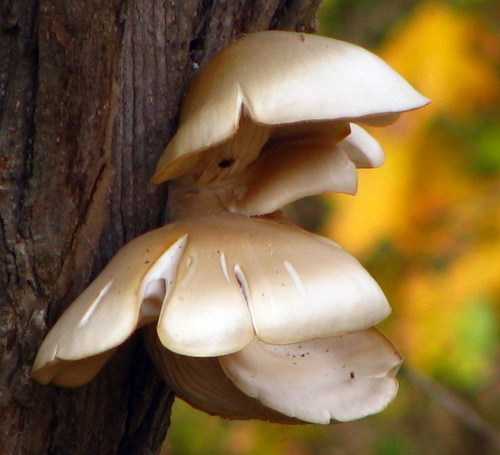
Pleurotus cornucopiae
(Paulet:Pers.) Rolland
Branched oyster mushroom
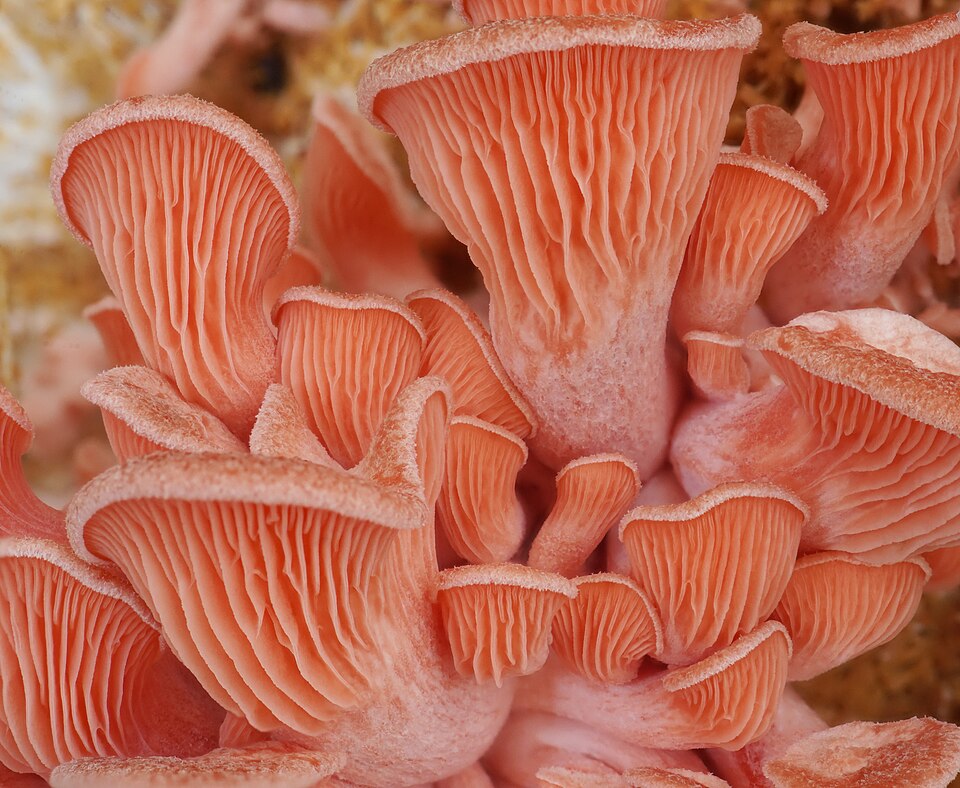
iNaturalist· cc-by-nc
(c) cuevo, some rights reserved (CC BY-NC)
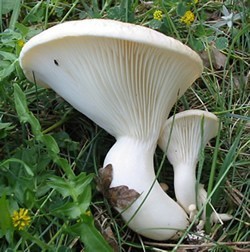
iNaturalist· cc-by-nc
(c) Joseph Pallante, some rights reserved (CC BY-NC), uploaded by Joseph Pallante
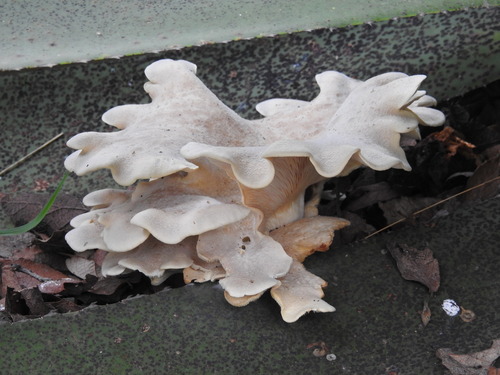
iNaturalist· cc-by-nc
(c) cuevo, some rights reserved (CC BY-NC)
Summary
Source: WikipediaPleurotus cornucopiae is a species of edible fungus in the genus Pleurotus, It is quite similar to the better-known Pleurotus ostreatus, and like that species is cultivated and sold in markets in Europe and China, but it is distinguished because its gills are very decurrent, forming a network on the stem.
Edible Uses
This mushroom is edible and it is cultivated in a manner similar to P. ostreatus, though less extensively. Specimens are best collected young and with the tougher stems dicarded. A Chinese paper evaluated several commercially available varieties of P. cornucopiae and reported that it in the Shanghai area an appropriate growth medium is cotton-seed hulls and wood-chips, with 65% water content. Another paper (actually treating the yellow-topped form) also suggested pasteurized switch grass as a useful substrate, though the yield was less than with cotton-seed hulls and straw.
Where It Grows
Mushroom, Fungus,
Other Information
Pleurotaceae
Notes
A mushroom.
Synonyms
Also Known As
Baihuangceer, Kannye chyau, Machalosoko, Maghvali, Marmo syamu, Seli shamu
References (19)
- Amai, 1938,
- Boa, E. R., 2004, Wild edible fungi and their importance to people. FAO Non Wood Forest Products Booklet 17
- Bussman, R. W., et al, 2016, A comparative ethnobotany of Khevsureti, Samtskhe-Javakheti, Tusheti, Svaneti, and Racha-Lechkhumi, Republic of Georgia (Sakartvelo), Caucasus. Journal of Ethnobiology and Ethnomedicine (2016)
- Bussman, R. W., et al, 2021, Unity in diversity—food plants and fungi of Sakartvelo (Republic of Georgia), Caucasus. Journal of Ethnobiology and Ethnomedicine (2021) 17:72 p 16
- Cherubini, A. & Landi, S., Andar per Funghi, Edizioni DieRre, p 60
Show all 19 references Hide references
- Christensen, M., et al, 2008, Collection and Use of Wild Edible Fungi in Nepal. Economic Botany, 62(1), 2008, pp. 12–23
- Facciola, S., 1998, Cornucopia 2: a Source Book of Edible Plants. Kampong Publications, p 255
- Jordan, P., 2000, The Mushroom Guide and Identifier, Hermes House, p 84
- Kasper-Pakosz, R., et al, 2016, Wild and native plants and mushrooms sold in the open-air markets of south- eastern Poland. Journal of Ethnobiology and Ethnomedicine 12:45
- Kaufmann, B. et al, 1999, The Great Encyclopedia of Mushrooms. Konemann. p 69
- Kharel, S. & Rajbhandary, S., Ethnomycological Knowledge of Some Wild Edible Mushrooms in Bhardeo, Lalitpur, Nepal.
- Kiple, K.F. & Ornelas, K.C., (eds), 2000, The Cambridge World History of Food. CUP p 320
- Mukhia, P.K., et al, 2013, Wild plants as Non Wood Forest Products used by the rural community of Dagana, a southern foothill district of Bhutan, SAARC Journal, 27 pages
- Pace, G., 1998, Mushrooms of the world. Firefly books. p 123
- Perez-Moreno, J. et al, 2008, Wild Mushroom Markets in Central Mexico and a Case Study at Ozumba. Economic Botany, 62(3), 2008, pp. 425–436
- Perez-Moreno, J., et al, 2009, Social and Biotechnological Studies of Wild Edible Mushrooms in Mexico. Acta Botanica Yunnanica Suppl. XV1: 55-61
- Rijal, A., 2011, Surviving on Knowledge: Ethnobotany of Chepang community from mid-hills of Nepal. Ethnobotany Research & Applications 9:181-215
- Semwal, K. C., et al, 2014, Edible mushrooms of the Northwestern Himalaya, India: a study of indigenous knowledge, distribution and diversity. Mycosphere 5(3): 440–461
- www.plantnames.unimelb.edu.au