Pleurotus eryngii
(DC.) Quel.
King oyster mushroom
iNaturalist· cc-by
(c) Davide Puddu, some rights reserved (CC BY), uploaded by Davide Puddu
iNaturalist· cc-by
(c) Davide Puddu, some rights reserved (CC BY), uploaded by Davide Puddu
Summary
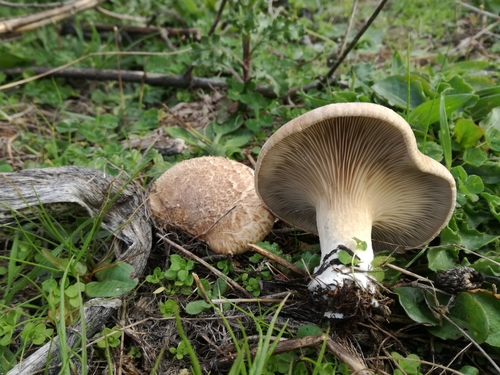
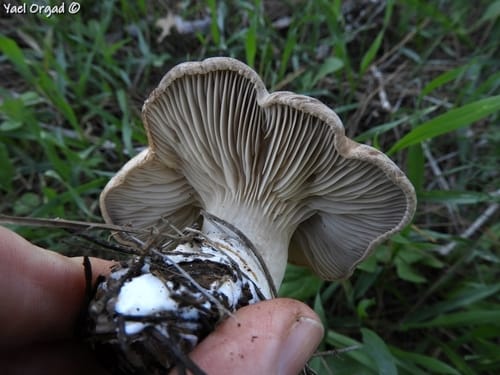
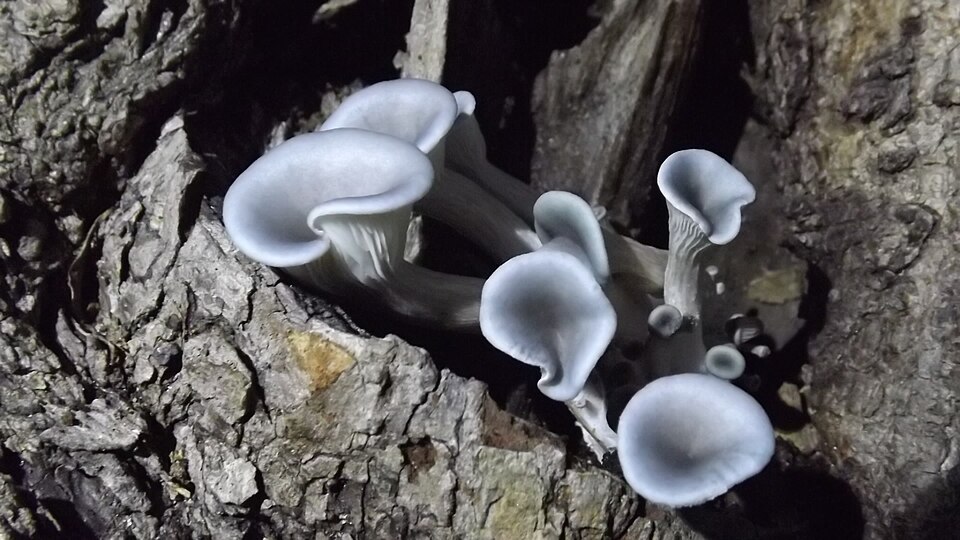
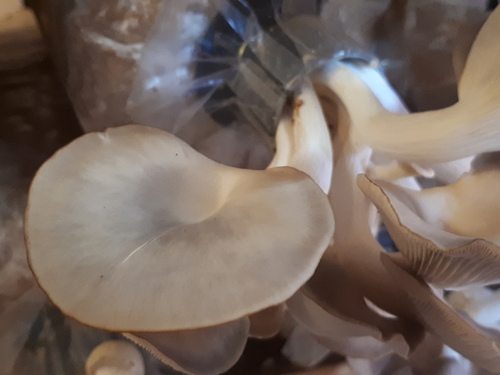
Source: WikipediaPleurotus eryngii (also known as king trumpet mushroom, French horn mushroom, eryngi, king oyster mushroom, king brown mushroom, boletus of the steppes, trumpet royale, aliʻi oyster) is an Old World species of fungus.
Description
A temperate mushroom in the family Pleurotaceae, commonly known as the king oyster mushroom. The fruiting bodies are sold in local markets.
This description is brief — help expand it
Edible Uses
The fruiting bodies are eaten, typically boiled in oil or fried.
Traditional Uses
The fruiting bodies are eaten. They are boiled in oil or fried.
This uses section is brief — help expand it
Medicinal Uses
The mushroom has a good shelf life and is widely cultivated. It has little flavor or aroma when raw. When cooked, it develops rich umami flavor and a meaty texture. When cultivating RAPD can be used in the mushroom industry for the classification and maintenance of high-quality mushroom spawns. P. eryngii are commercially produced, edible mushrooms, with P. eryngii making up 30% of the Korean edible mushroom market since its introduction in 1995. It is commonly used as a meat substitute. Pleurotus eryngii may contain chemicals that stimulate the immune system. Dietary intake of P. eryngii may function as cholesterol-lowering dietary agent. Like some other Pleurotus species, P. eryngii attacks nematodes and may provide a control method for these parasites when they infect cats and dogs. It is very frequently used in Apulian cuisine. An example of this is when it is put on top of orecchiette.
Distribution
It is a temperate plant.
Where It Grows
Africa, Armenia, Asia, Central Asia, Cambodia, Caucasus, China, East Africa, Europe, India, Iraq, Italy, Japan, Jordan, Korea, Kyrgyzstan, Laos, Mediterranean, Middle East, North Africa, SE Asia, Spain, Tanzania, Turkey, Türkiye,
Other Information
It is sold in local markets.
Nutrition
| Part | Moisture | kJ | kcal | Protein | Vit A | Vit C | Iron | Zinc |
|---|---|---|---|---|---|---|---|---|
| Mushroom | 87.5 | 100 | 24 | 3.6 | — | 0 | 0.7 | 0.2 |
Synonyms
Also Known As
Caoyuan ceer, Cardarella, Eryngo Pleurotus, Het tin haet, Qarçki goizh, Tagavorakan akandjasunk, Trumpet royale
References (15)
- Boa, E. R., Wild edible fungi and their importance to people. FAO Non Wood Forest Products Booklet 17
- Cherubini, A. & Landi, S., Andar per Funghi, Edizioni DieRre, p 62
- Ertug, F., 2004, Wild Edible Plants of the Bodrum Area. (Mugla, Turkey). Turk. J. Bot. 28 (2004): 161-174
- Facciola, S., 1998, Cornucopia 2: a Source Book of Edible Plants. Kampong Publications, p 255
- forests-366202-SI
Show all 15 references Hide references
- Genccelep, H. et al, 2009, Determination of mineral contents of wild-grown edible mushrooms. Food Chemistry 113: 1033-1036
- Kaufmann, B. et al, 1999, The Great Encyclopedia of Mushrooms. Konemann. p 68
- Kaye, G.C., 1986, Wild and Exotic Mushroom Cultivation in North America
- Nanagulyan, S., et al, 2020, Wild plants and fungi sold in the markets of Yerevan (Armenia). Journal of Ethnobiology and Ethnomedicine 16:26
- Pace, G., 1998, Mushrooms of the world. Firefly books. p 123
- Pieroni A, Nebel S, Santoro RF, Heinrich M., 2005, Food for two seasons: culinary uses of non-cultivated local vegetables and mushrooms in a south Italian village. Int J Food Sci Nutr. 56(4):245-72
- Pieroni, A., et al, 2017, The spring has arrived: traditional wild vegetables gathered by Yarsanis (Ahl-e Haqq) and Sunni Muslims in Western Hawraman, SE Kurdistan (Iraq). Acta Soc Bot Pol 86(1):3519
- Schneider, E., 2001, Vegetables from Amaranth to Zucchini: The essential reference. HarperCollins. p 456
- Tibuhwa, 2013, Wild Mushroom - an underutilized healthy food resource and income generator: experience from Tanzania rural areas. Journal of Ethnobiology and Ethnomedicine 9:49
- www.plantnames.unimelb.edu.au