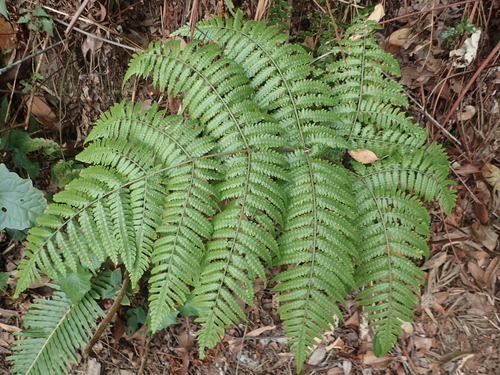
Pleocnemia irregularis
(C. Presl) Holttum
Boat fern
iNaturalist· cc-by-nc
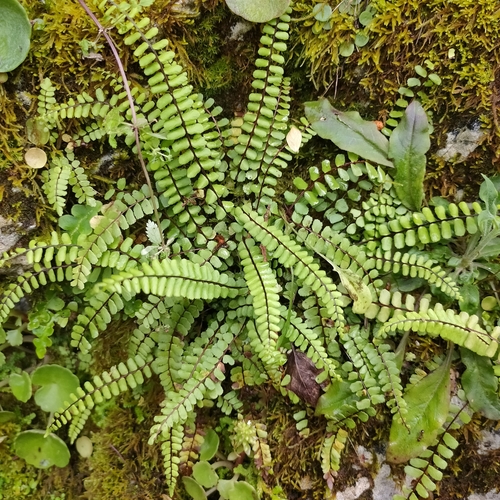
(c) Nurul, some rights reserved (CC BY-NC), uploaded by Nurul
iNaturalist· cc-by
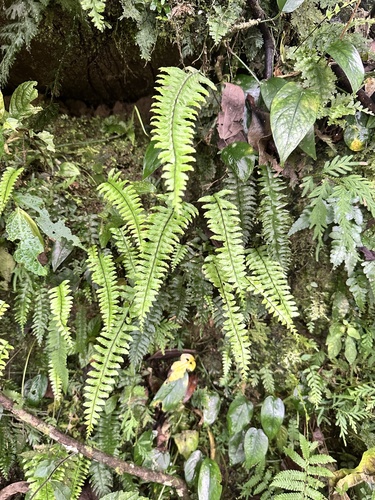
(c) Ganjar Cahyadi, some rights reserved (CC BY), uploaded by Ganjar Cahyadi
iNaturalist· cc-by-nc
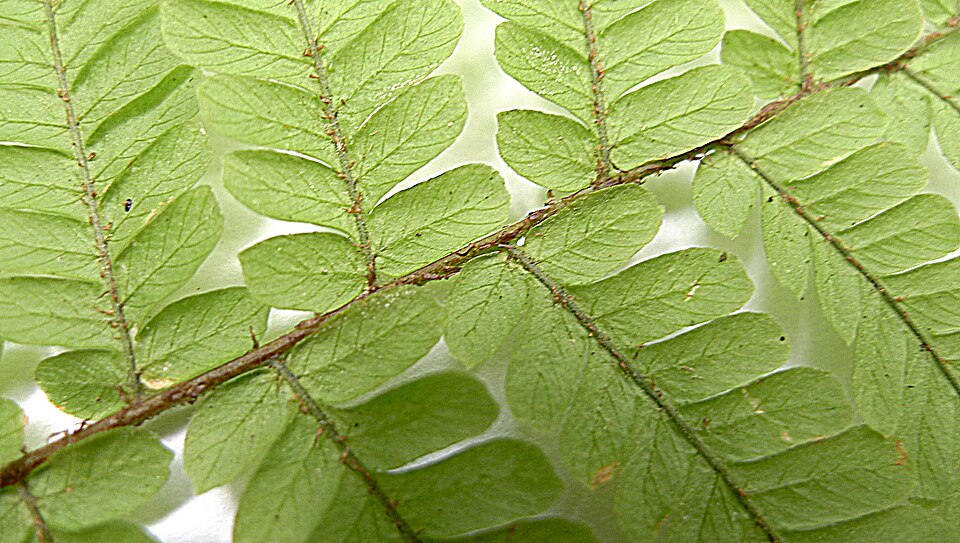
(c) Ehoarn Bidault, some rights reserved (CC BY-NC), uploaded by Ehoarn Bidault
Description
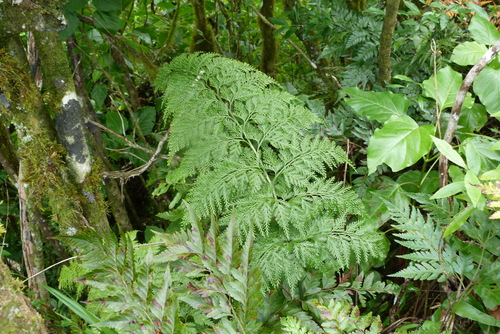
A robust fern. It has a thick rhizome. It grows in the soil. It is scaly. It grows up to 2 m high. The rhizome is erect and 10-30 cm long and mostly underground. It is 5-10 cm across. It has roots on all sides. The leaves are arranged in spirals. The leaves are twice divided. They are 1 m long and 70 cm wide. The leaflets are deeply lobed. The leaflets near the base are the largest. The spore bodies or sori are all over the underside of the leaves.
Edible Uses
The young unfolded fronds are eaten raw or steamed, and are best used cooked in a mixture of other leaves.
Traditional Uses
The young unfolded leaves are eaten raw or steamed. It is best used cooked in a mixture of other leaves.
This uses section is brief — help expand it
Distribution
A tropical plant. It tends to grow on dry slopes in dense forests. It occurs at low to medium altitudes. In Indonesia it grow from sea level to 650 m above sea level. It grows in cool, moist places. It can be in the sun or shade. It is often along rivers.
Where It Grows
Asia, Cambodia, Fiji, Indochina, Indonesia, Malaysia, Myanmar, Pacific, Papua New Guinea, PNG, Philippines, SE Asia, Solomon Islands, Thailand,
Cultivation
It can be grown by buds and spores.
Synonyms
Also Known As
Ber'ai, Pakis kapal, Paku andam, Paku kapal, Paku kebo, Paku papan
References (12)
- Burkill, I.H., 1966, A Dictionary of the Economic Products of the Malay Peninsula. Ministry of Agriculture and Cooperatives, Kuala Lumpur, Malaysia. Vol 1 (A-H) p 817 (As Dictyopteris difformis)
- Chai, T., et al, 2015, Cytotoxicity and Antiglucosidase Potential of Six Selected Edible and Medicinal ferns. Acta Poloniae Pharmaceutica ñ Drug Research, Vol. 72 No. 2 pp. 297- 401.
- French, B.R., 2010, Food Plants of Solomon Islands. A Compendium. Food Plants International Inc. p 372
- Flora of Solomon Islands
- Holttum, 1974, Kew Bulletin. 29: 347
Show all 12 references Hide references
- Ochse, J. J. et al, 1931, Vegetables of the Dutch East Indies. Asher reprint. p 596 (As Dictyopteris irregularis)
- Ong, H. C., Mojiun, P. F. J., & Milow, P., 2011, Traditional knowledge of edible plants among the Temuan villagers in Kampung Guntor, Negeri Sembilan, Malaysia. African Journal of Agricultural Research Vol. 6(8), pp. 1962-1965, 18 April, 2011 (As Acrypteris irregularis)
- Ong, H., et al, 2012, Traditional knowledge and usage of edible plants among the Semai community of Kampung Batu 16, Tapah, Perak, Malaysia. Scientific Research and Essays Vol. 7(4), pp. 441-445, 30 January, 2012
- Piggott, A. G. 1988, Ferns of Malaysia in Colour. Tropical press, Malaysia. p 333
- Sukarya, D. G., (Ed.) 2013, 3,500 Plant Species of the Botanic Gardens of Indonesia. LIPI p 877
- World Checklist of Useful Plant Species 2020. Royal Botanic Gardens, Kew
- Yusuf, U. K., 2010, Ferns of Malaysian Rain Forest. A Journey Through the Fern World. Universiti Putra Malaysia Press p 34