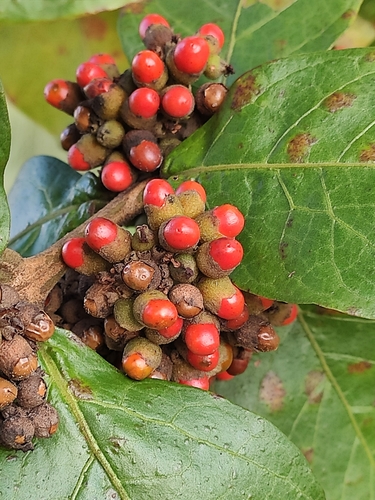
Plectranthus mollis
(Aiton) Spreng.
Soft-stem mintleaf
iNaturalist· cc-by-nc
(c) Mayur Nandikar, some rights reserved (CC BY-NC)
iNaturalist· cc0
no rights reserved
iNaturalist· cc0
no rights reserved
Description
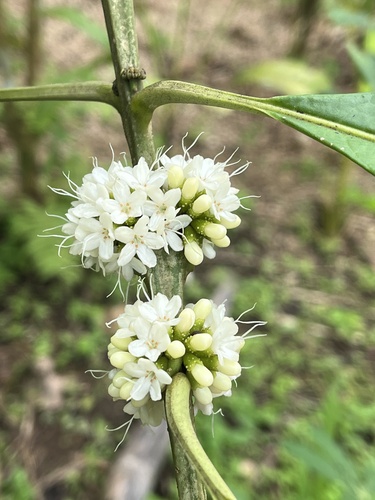
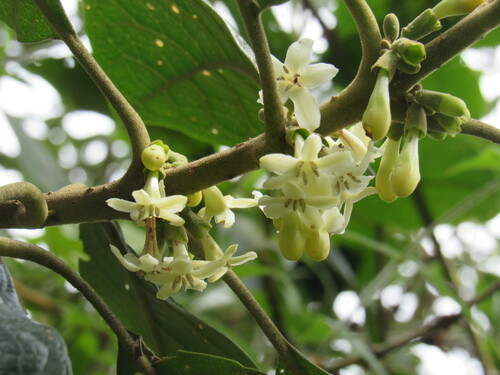
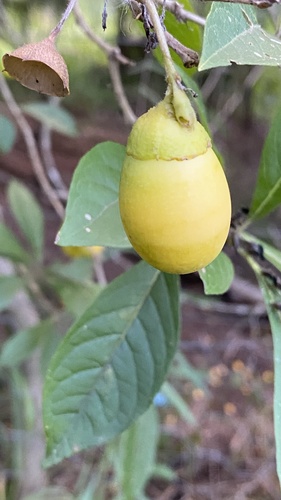
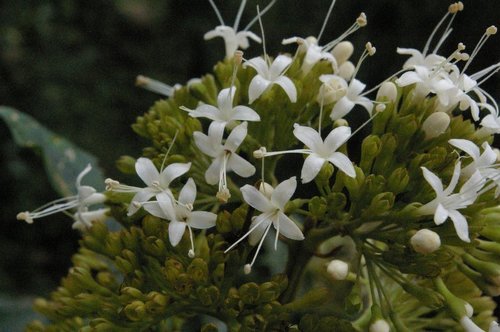
An annual herb. It is small and erect. It grows 30-50 cm tall. The leaves are opposite and broadly oval. They are 5-12 cm long. They are heart shaped at the base and pointed at the top. There are teeth along the edge. The leaf stalks are 3-7 cm long. The flowers are in branched groups 7-20 cm long at the ends of branches. The flowers are pale blue and on 3-4 cm long stalks. The fruit are round and 2-3 mm across. They are brown with purple dots.
Edible Uses
The leaves are cooked as a vegetable.
Traditional Uses
The leaves are cooked as a vegetable.
This uses section is brief — help expand it
Medicinal Uses
It is used in medicine.
Distribution
It is a tropical plant. In Nepal it grows between 900-1,500 m above sea level.
Where It Grows
Asia, Himalayas, India, Nepal, Northeastern India, Sri Lanka,
Propagation
Seed - sow in well-drained soil, covering lightly with a thin layer of sand, and place in a warm but shaded spot. The seed germinates in about three weeks. Cuttings of Plectranthus species generally root easily - soft tips root faster than semi-hardwood growth. The cuttings are best taken 60 - 100mm long with three or four nodes, making the cut just below a node. Place them in sand, perlite, vermiculite or peat, or any mixture of these, keep them moist and shaded and they should root in 2 - 3 weeks
Other Uses
The seeds are fried in mustard oil and then massaged all over the body as an insect repellant. The crushed leaves are used as a mosquito repellant. The essential oil obtained from the plant has shown good mosquito repellent activity and also acts as a strong mosquitocidal agent
Notes
There are about 250 Plectranthus species. They are mainly in the tropics. It is used in medicine.
Synonyms
Also Known As
Bir sikinri ba, Chichithoni, Gondri, Guhya silam, Lal-agada, Nonadakasa, Perim-tolassi
References (4)
- Ambasta, S.P. (Ed.), 2000, The Useful Plants of India. CSIR India. p 467
- Lukhoba, C. W., et al, 2006, Plectranthus: A review of ethnobotanical uses. Journal of Ethnopharmacology 103 (2006) 1–24
- Maikhuri, R, K, and Gangwar, A. K., 1993, Ethnobiological Notes on the Khasi and Garo Tribes of Meghalaya, Northeast India, Economic Botany, Vol. 47, No. 4, pp. 345-357 (As Plectranthus incanus)
- Sawian, J. T., et al, 2007, Wild edible plants of Meghalaya, North-east India. Natural Product Radiance Vol. 6(5): p 420 (As Plectranthus incanus)