Platostoma africanum
P. Beauv.
iNaturalist· cc-by-nc-sa
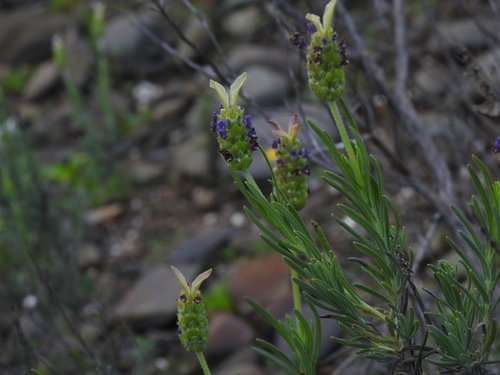
(c) Marco Schmidt, some rights reserved (CC BY-NC-SA)
iNaturalist· cc-by-nc-sa
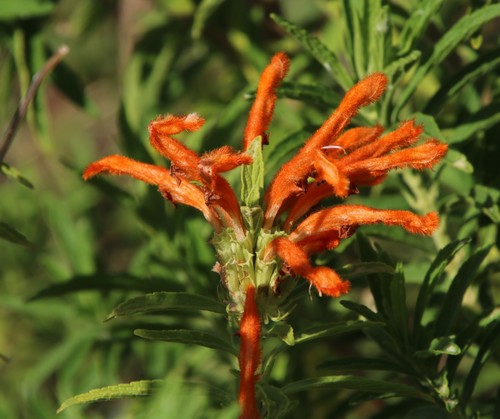
(c) Marco Schmidt, some rights reserved (CC BY-NC-SA)
iNaturalist· cc-by-nc-sa
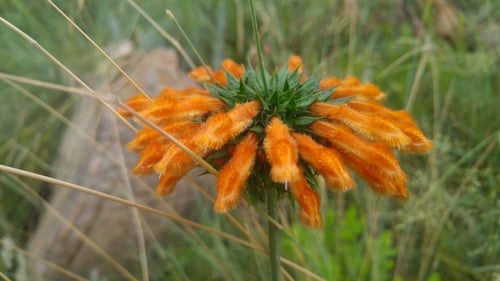
(c) Marco Schmidt, some rights reserved (CC BY-NC-SA)
Description
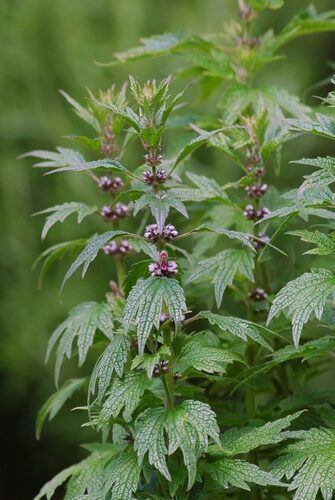
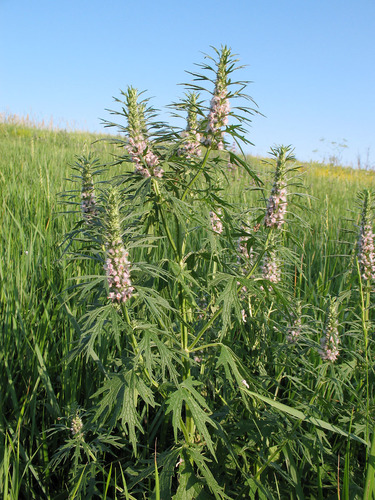
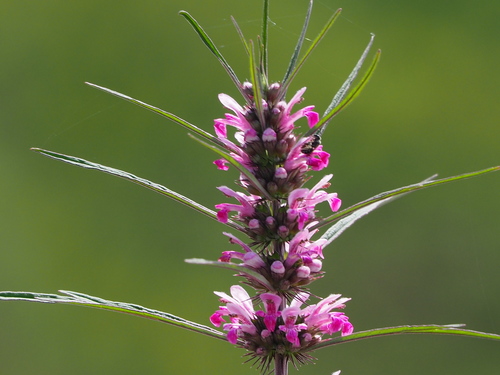
A trailing herb. It can grow each year from seeds or last a few years. It grows 1 m long. The stems are pale green and 4 angled. The leaves are opposite and oval. They are 5 cm long by 3.5 cm wide. The tip is pointed and they are smooth around the edge. They narrow to the base. The leaf stalk is 2 cm long. The leaves are pale grey-green underneath. The flowers are small. They are along a narrow flower head at the top of the plant. The fruit are 4 oval nutlets.
Edible Uses
The leaves are cooked and eaten either alone or with other vegetables, and are sold in local markets.
Traditional Uses
The leaves are cooked and eaten. They are cooked along or along with other vegetables.
This uses section is brief — help expand it
Medicinal Uses
The plant is used in medicine.
Distribution
A tropical plant. It grows in wet forests. It grows in savannah woodland and on the edges of small lakes. It grows in part shade. In Tanzania it grows between 100-2,500 m above sea level.
Where It Grows
Africa, Benin, Burkina Faso, Burundi, Central Africa, Central African Republic, CAR, Congo, East Africa, Guinea, Guinée, Guinea-Bissau, India, Kenya, Malawi, Sao Tome and Principe, Sierra Leone, Tanzania, West Africa, Zambia,
Cultivation
Plants can be grown from seed.
Production
Leaves are collected during the rainy season.
Other Information
Leaves are sold in local markets.
Notes
It is used in medicine.
Synonyms
Also Known As
Kisogo, Kisungu
References (16)
- Achigan-Dako, E, et al (Eds), 2009, Catalogue of Traditional Vegetables in Benin. International Foundation for Science.
- Ambasta, S.P. (Ed.), 2000, The Useful Plants of India. CSIR India. p 467
- Anon., 2000, The Role of Non Wood Forest products in Food Security and Income Generation. Report. Tanzania. p 18
- Avouhou, H. T., et al, 2012, Ethnobotanical Factors Influencing the Use and Management of Wild Edible Plants in Agricultural Environments in Benin. Ethnobotany Research & Applications Vol 10:571-592
- Catarino, L., et al, 2016, Ecological data in support of an analysis of Guinea-Bissau's medicinal flora. Data in Brief 7 (2016):1078-1097
Show all 16 references Hide references
- Catarino, L. et al, 2019, Edible Leafy Vegetables from West Africa (Guinea-Bissau): Consumption, Trade and Food Potential. Foods 2019, 8, 493
- Dansi, A., et al, 2008, Traditional leafy vegetables and their use in the Benin Republic. Genet Resour Crop Evol (2008) 55:1239–1256
- Dansi, A., et al, 2009, Traditional leafy vegetables in Benin: folk nomenclature, species under threat and domestication. Acta Bot. Gallica 156(2), 183-199
- Fowler, D. G., 2007, Zambian Plants: Their Vernacular Names and Uses. Kew. p 81
- Grubben, G. J. H. and Denton, O. A. (eds), 2004, Plant Resources of Tropical Africa 2. Vegetables. PROTA, Wageningen, Netherlands. p 564
- Harkonen, M. & Vainio-Mattila, K., 1998, Some examples of Natural Products in the Eastern Arc Mountains. Journal of East African Natural History 87:265-278
- Jardin, C., 1970, List of Foods Used In Africa, FAO Nutrition Information Document Series No 2.p 95
- Martin, F.W. & Ruberte, R.M., 1979, Edible Leaves of the Tropics. Antillian College Press, Mayaguez, Puerto Rico. p 196
- Ruffo, C. K., Birnie, A. & Tengnas, B., 2002, Edible Wild Plants of Tanzania. RELMA p 530
- Vainio-Mattila, K., 2000, Wild vegetables used by the Sambaa in the Usumbara Mountains, NE Tanzania. Ann. Bot. Fennici 37:57-67
- World Checklist of Useful Plant Species 2020. Royal Botanic Gardens, Kew