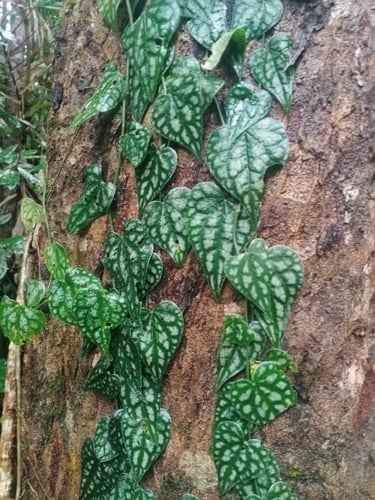
Piper umbellatum
L.
Shrubby Pepper
iNaturalist· cc-by-nc
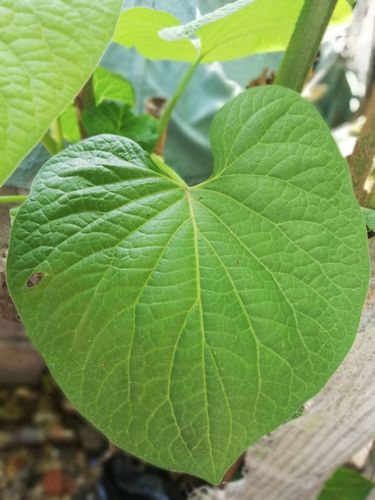
(c) Radha Veach, some rights reserved (CC BY-NC)
iNaturalist· cc-by-nc
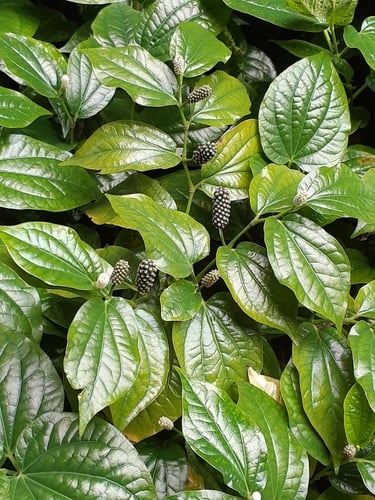
(c) Yolanda M. Leon, some rights reserved (CC BY-NC), uploaded by Yolanda M. Leon
Summary
Source: WikipediaPiper umbellatum, commonly known as cow-foot leaf, is a species of pepper plant native to the Americas, including Mexico, Central America, the Caribbean, and tropical regions of South America. It has been widely naturalized in other tropical regions of the world.
Description
A small shrub. It is erect and 1-2 m high. The stems are thick, strong and with lines along them. The leaf stalk is 15-25 cm long. The leaf blade is oval and 17-37 cm long by 15-32 cm wide. They are like a membrane. They have brown glands. The base is deeply heart shaped. There is a sharp tip. There are 11-13 veins. The flowers have both sexes. The spikes are 2-7 together in clusters on short stalks in the axils of leaves. The spikes are 7-12 cm long.
Edible Uses
Parts of the plant is edible, commonly the young leaves and flowers are eaten steamed as a vegetable. The fruit can be eaten when ripe, and the bark can be used as a condiment. In the Philippines, where the plant has been introduced, it is used to wrap a steamed shrimp and grated coconut dish known as pinais. The plant that has been traditionally used in folk remedies for digestive and liver-related maladies. In 2002, a research group based at the Tokyo Medical and Dental University discovered antibacterial properties of the plant specific to Helicobacter pylori. Two years later in laboratory testing at the Pharmaceutical Sciences College (FCF) of the University of São Paulo, molecules found within the plant were demonstrated to have UVB-protective properties. For its medicinal and cosmetic promise, the Brazilian pharmaceutical company Natura obtained exclusive marketing rights to products developed from the plant.
Traditional Uses
The leaves are eaten raw or cooked as a flavouring. They are used for wrapping other dishes. They have a peppery taste. The leaves and young flowers are cooked with fish. The fruit are eaten. The bark is used as a condiment.
Medicinal Uses
The leaves are widely used as an antseptic, emollient, vermifuge and vulnerary. The juice is taken as a diuretic, emmenagogue and galactagogue. An infusion of young ground-up leaves is taken to treat severe colic. The aerial parts are commonly given to women to regulate menses and prevent abortion. A decoction is given to treat hypertension, toothache, jaundice, malaria, urinary and kidney problems, syphilis and gonorrhoea, leucorrhoea, menstrual problems and stomach-ache. The plant is taken in order to expel tapeworms, whilst suppositories of the leaves are used to rid the body of pinworms. The crushed leaves are applied in the form of an enema to treat rectal prolapse. The leaves are used in massages for relieving migraine and other forms of headache, and are applied in a friction to relieve rheumatic pain. A decoction is used as a wash for feverish children, and is also applied on wounds and inflamed tumours. They are applied as a poultice on swellings, boils and burns. The leaf juice is used as ear drops to remedy earache and as eye drops to remedy conjunctivitis. The fruits are chewed with betel leaves (Piper betle) to treat coughs. The leaves and fruits are used to treat pain in the kidneys, oedema, anaemia and colic. The root is considered diuretic, febrifuge and stimulant, and also to promote the flow of bile. A root decoction is used as a powerful digestive and as a treatment for dyspepsia, constipation, jaundice, malaria, urinary and kidney problems, syphilis and gonorrhoea, leucorrhoea, menstrual problems and stomach-ache. A decoction of the roots is applied on wounds and inflamed tumours. The roots are macerated in alcohol and used to treat rheumatism. The pounded twigs and seeds, mixed with salt, are taken against intestinal worms. A tea made from the flower clusters is used in the treatment of coughs. In Brazil Piper umbellatum is much used in baths to subdue oedema and uterine complaints. The essential oil from the aerial parts of the plant has a high content of beta-pinene (27%), alpha-pinene (18%), (E)-nerolidol (12%) and beta-caryophyllene (10%). The roots and aerial parts contain 4-nerolidylcatechol, a powerful antioxidant with chemopreventative potential. This may explain the traditional use of the plant in the treatment of skin cancer. A methanol extract of the leaves showed significant anti-malarial activity against Plasmodium falciparum in vitro. A water-ethanol extract showed anti-inflammatory and analgesic effects.
Known Hazards
The acrid compounds of the leaves and roots are irritant in high doses and cause severe inflammation of the gastrointestinal tract. They cause burning, salivation, stomatitis, vomiting, severe abdominal pain and diarrhoea. The plant is an ingredient of an arrow poison.
Distribution
It is a tropical plant. It needs a sheltered position and moist, well drained soil. It grows within wet places in the forests at about 300 m in Taiwan. In Zimbabwe it grows between 400-1,200 m above sea level. In Nigeria it grows to 1,830 m above sea level.
Where It Grows
Africa, Angola, Asia, Australia, Belize, Bolivia, Brazil, Burundi, Cambodia, Cameroon, Caribbean, Central Africa, Central African Republic, CAR, Central America, China, Colombia, Comoros, Congo DR, Congo R, Costa Rica, Cuba*, Dominican Republic, East Africa, Ecuador, El Salvador, Equatorial-Guinea, Ethiopia, Gabon, Ghana, Guatemala, Guinea, Guinée, Guinea-Bissau, Haiti, Honduras, India, Indochina, Indonesia, Ivory Coast, Jamaica, Kenya, Leeward Is., Lesser Antilles*, LIberia, Madagascar, Malawi, Malaysia, Mauritius, Mexico, Mozambique, Myanmar, Nicaragua, Nigeria, North America, Pacific, Panama, Papua New Guinea, PNG, Philippines, Puerto Rico, Reunion, Rwanda, Sao Tome and Principe, SE Asia, Seychelles, Sierra Leone, Solomon Islands, South America*, Sri Lanka, Sudan, Taiwan, Tanzania, Thailand, Togo, Trinidad-Tobago, Uganda, USA, Venezuela, Vietnam, West Africa, West Indies*, Zimbabwe,
Cultivation
Plants can be grown from seed and cuttings. Stem cuttings with roots at the nodes can be used.
Propagation
Seed - The seeds show dormancy, which can be broken by direct sunlight. Division of suckers
Other Uses
There is a popular belief in some parts of Central America that if the juice of the foliage is rubbed on the skin, it will prevent attacks of redbugs or chiggers, or even of the small ticks.
Other Information
It is cultivated.
Notes
There are between 1000-2000 Piper species. They are mostly in the tropics.
Nutrition
| Part | Moisture | kJ | kcal | Protein | Vit A | Vit C | Iron | Zinc |
|---|---|---|---|---|---|---|---|---|
| Leaves | 82.1 | 288 | 69 | 4.6 | — | — | — | — |
Synonyms
Also Known As
Amebume, Amuaha, Blata, Bogolo, Bumbu, Capeba, Cow-foot leaf, Da hu jiao, Dombo, Gufgafa, Gunjo, Ibulabondo, Itolombo, Kambo, Kilemba kimfinda, Labalaba, Lembe, Malemba lemba, Mambogeah, Mariapanga, Membefeh, Muengeleka mfinda, Namabondo, Natsamak, Natsamar, Ndembelembe, Ogach, Pariparoba, Timizi, Ucheng-uchengan
References (46)
- Abbiw, D.K., 1990, Useful Plants of Ghana. West African uses of wild and cultivated plants. Intermediate Technology Publications and the Royal Botanic Gardens, Kew. p 42
- Alimenticias - FloraSBS
- Altschul, S.V.R., 1973, Drugs and Foods from Little-known Plants. Notes in Harvard University Herbaria. Harvard Univ. Press. Massachusetts. no. 583 (As Piper subpeltatum) \\\ Ambasta, S.P. (Ed.), 2000, The Useful Plants of India. CSIR India. p 487 (As Pothomorphe subpeltata)
- Billong Fils, P. E., et al, 2020, Ethnobotanical survey of wild edible plants used by Baka people in southeastern Cameroon. Journal or Ethnobiology and Ethnomedicine. 16:64 p 9 (As Potomorphe umbellata)
- Burkill, H. M., 1985, The useful plants of west tropical Africa, Vol. 4. Kew.
Show all 46 references Hide references
- Burkill, I.H., 1966, A Dictionary of the Economic Products of the Malay Peninsula. Ministry of Agriculture and Cooperatives, Kuala Lumpur, Malaysia. Vol 2 (I-Z) p 1783
- Caballero-Serrano, V., et al, 2019, Traditional ecological knowledge and medicinal plant diversity in Ecuadorian Amazon home gardens. Global Ecology and Conservation 17 (2019) e00524 p 12
- Chapman, J. D. & Chapman, H. M., 2001, The Forest Flora of Taraba and Andamawa States, Nigeria. WWF & University of Canterbury. p 195
- Elliot, W.R., & Jones, D.L., 1997, Encyclopedia of Australian Plants suitable for cultivation. Vol 7. Lothian. p 331
- Facciola, S., 1998, Cornucopia 2: a Source Book of Edible Plants. Kampong Publications, p 172 (As Pothomorphe umbellata)
- Food Composition Tables for use in Africa FAO http://www.fao.org/infoods/directory No. 740
- Gallois, S., et al, 2020, Methodological priorities in assessing wild edible plant knowledge and use – a case study among the Baka in Cameroon.
- Grubben, G. J. H. and Denton, O. A. (eds), 2004, Plant Resources of Tropical Africa 2. Vegetables. PROTA, Wageningen, Netherlands. p 564
- Hedrick, U.P., 1919, (Ed.), Sturtevant's edible plants of the world. p 501
- Jackes, B.R., 2001, Plants of the Tropics. Rainforest to Heath. An Identification Guide. James Cook University. p 73
- Jardin, C., 1970, List of Foods Used In Africa, FAO Nutrition Information Document Series No 2.p 94
- Kermath, B. M., et al, 2014, Food Plants in the Americas: A survey of the domesticated, cultivated and wild plants used for Human food in North, Central and South America and the Caribbean. On line draft. p 666
- Kew Plants of the World Online
- Kuo, W. H. J., (Ed.) Taiwan's Ethnobotanical Database (1900-2000), http://tk.agron.ntu.edu.tw/ethnobot/DB1.htm
- Latham, P & Mbuta, A., 2017, Useful Plants of Central Province, Democratic Republic of Congo. Volume 2. Salvation Army p 110
- Lautenschläger, T., et al, 2018, First large-scale ethnobotanical survey in the province of Uíge, northern Angola. Journal of Ethnobiology and Ethnomedicine (2018) 14:51
- Manvell, A., 2011, Use of Non-Timber Forest Products around Sapo National Park, Liberia (Report B) p 19
- Martin, F.W. & Ruberte, R.M., 1979, Edible Leaves of the Tropics. Antillian College Press, Mayaguez, Puerto Rico. p 74, 99, 213
- Martin, F.W. & Ruberte, R.M., 1979, Edible Leaves of the Tropics. Antillian College Press, Mayaguez, Puerto Rico. p 212 (As Heckeria umbellata)
- Mercy, N. A., et al, 2016, Survey of Wild Vegetables in the Lebialem Highlands of South Western Cameroon. Journal of Plant Sciences 4(6): 172-184
- Nkeoua, G. & Boundzanga, G. C., 1999, Donnees sur les produits forestieres non ligneux en Republique du Congo. FAO. p 34
- Ochse, J. J. et al, 1931, Vegetables of the Dutch East Indies. Asher reprint. p 586
- Okigbo, B.N., Vegetables in Tropical Africa, in Opena, R.T. & Kyomo, M.L., 1990, Vegetable Research and development in SADCC countries. Asian Vegetable Research and development Centre. Taiwan. p 44
- Plants of Haiti Smithsonian Institute http://botany.si.edu/antilles/West Indies
- PROSEA handbook Volume 13 Spices. p 279 (As Pothomorphe umbellata)
- PROSEA handbook Volume 13 Spices. p 279 (As Pothomorphe subpeltata)
- Roa, J. A. G. & Boada, D. S. G., 2018, Fundación para el Fortalecimiento de la Fruticultura y Plantas Alimenticias no Convencionales en Colombia.
- Senbeta, F., et al, 2013, Diversity of Useful Plants in the Coffee Forests of Ethiopia. Ethnobotany Research & Applications 11:049-069
- Sp. pl. 1:30. 1753
- Terashima, H., et al, 1992, Ethnobotany of the Lega in the Tropical Rainforest of Eastern Zaire (Congo): Part Two, Zone de Walikale, African Study Monographs, Suppl. 19:1-60
- Termote, C., et al, 2011, Eating from the wild: Turumbu, Mbole and Bali traditional knowledge of non-cultivated edible plants, District Tshopo, DRCongo, Gen Resourc Crop Evol. 58:585-618
- Torre, de la, L., et al, 2008, Enciclopedia de las Plantas Útiles del Ecuador. Herbario QCA. Pontificia Universidad Católica del Ecuador. p 502
- Tseng Yung-chien, Xia Nianhe, Gilbert, M.G., Piperaceae. Flora of China.
- Ubom, R. M., 2010, Ethnobotany and Diversity Conservatioon in the Niger Delta, Nigeria. International Journal of Botany. 6(3): 310-322
- von Katja Rembold, 2011, Conservation status of the vascular plants in East African rain forests. Dissertation Universitat Koblenz-Landau p 177
- White, F., Dowsett-Lemaire, F. and Chapman, J. D., 2001, Evergreen Forest Flora of Malawi. Kew. p 432
- Wiersema, J. H. & Leon, B., 2013, World Economic Plants. A Standard Reference CRC Press. 2nd Ed. p 535
- World Checklist of Useful Plant Species 2020. Royal Botanic Gardens, Kew
- Yimer, A., et al, 2021, Ethnobotanical study of wild edible plants used by Meinit Ethnic Community at Bench-Maji Zone, Southwest Ethiopia. Research Square. p 5
- Zapfack, L., et al, 2001, Ethnobotanical Survey of the Takamanda Forest Reserve. Consultancy Report PROFA, Cameroon. p 28
- Zuchowski W., 2007, Tropical Plants of Costa Rica. A Zona Tropical Publication, Comstock Publishing. p 305