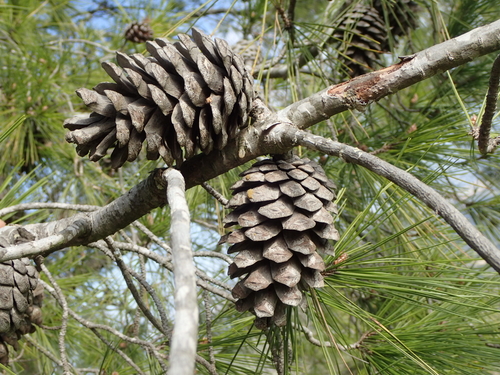
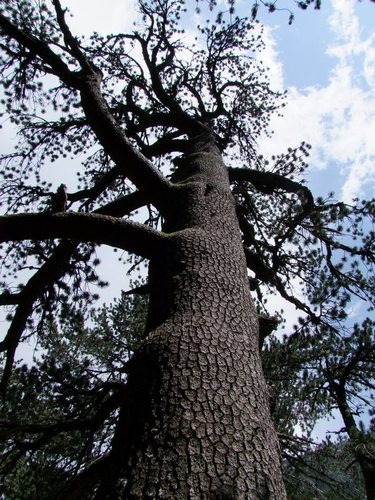
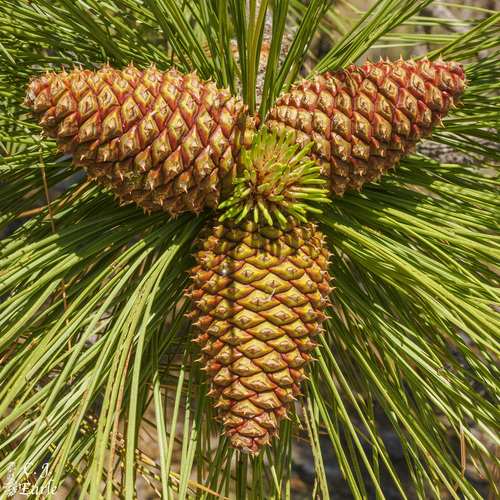
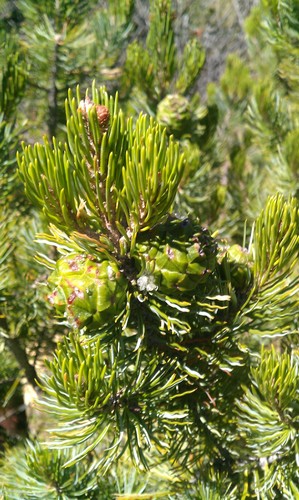
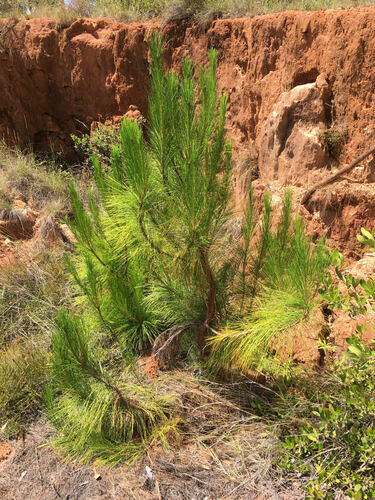
Pinus x quadrifolia
Parl. ex Sudw.
Parry pinyon
iNaturalist· cc-by-nc
(c) Jan Thompson, some rights reserved (CC BY-NC)
iNaturalist· cc-by-nc
(c) Jan Thompson, some rights reserved (CC BY-NC)
iNaturalist· cc-by-nc
(c) Jan Thompson, some rights reserved (CC BY-NC)
Description
A natural hybrid pine species found in Baja California, Mexico, where it is an important food source.
This description is brief — help expand it
Edible Uses
The seeds are eaten and are nutritionally significant, containing 11% protein, 37% fat, and 44% carbohydrate.
Traditional Uses
The seeds are eaten.
This uses section is brief — help expand it
Distribution
It is a tropical plant.
Where It Grows
Australia, Central America, Mexico, North America, USA,
Other Information
They are an important food in Baja California, Mexico.
Notes
There are over 100 species of Pinus. The seeds are 11% protein, 37% fat and 44% carbohydrate,.
Synonyms
References (8)
- Beckstrom-Sternberg, Stephen M., and James A. Duke. "The Foodplant Database." http://probe.nalusda.gov:8300/cgi-bin/browse/foodplantdb.(ACEDB version 4.0 - data version July 1994)
- Ciesla, W.M., 1998, Non-wood forest products from conifers. Non-wood forest products 12, FAO, Rome, p 73
- Elias, T.S. & Dykeman P.A., 1990, Edible Wild Plants. A North American Field guide. Sterling, New York p 228
- Facciola, S., 1998, Cornucopia 2: a Source Book of Edible Plants. Kampong Publications, p 170
- Hedrick, U.P., 1919, (Ed.), Sturtevant's edible plants of the world. p 498 (As Pinus parryana)
Show all 8 references Hide references
- Plants for a Future database, The Field, Penpol, Lostwithiel, Cornwall, PL22 0NG, UK. http://www.scs.leeds.ac.uk/pfaf/
- Saunders, C.F., 1948, Edible and Useful Wild Plants. Dover. New York. p 76
- Wickens, G.E., 1995, Edible Nuts. FAO Non-wood forest products. FAO, Rome. p176