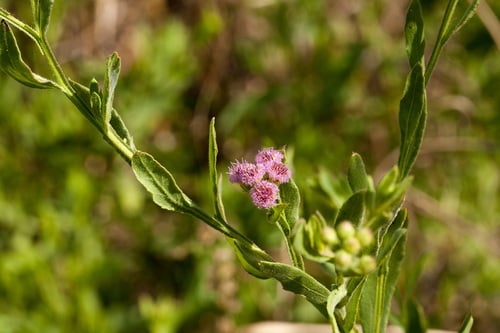
Anaphalis margaritacea
(L.) Bentham & J. D. Hooker
Western pearly everlasting
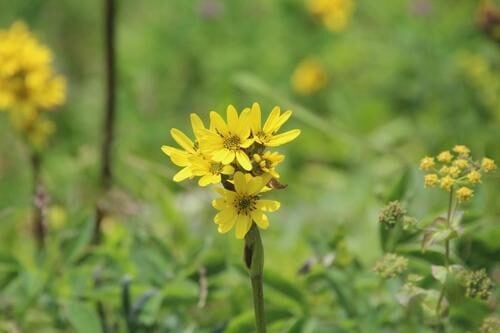
iNaturalist· cc-by-nc
(c) barcelonab, some rights reserved (CC BY-NC)
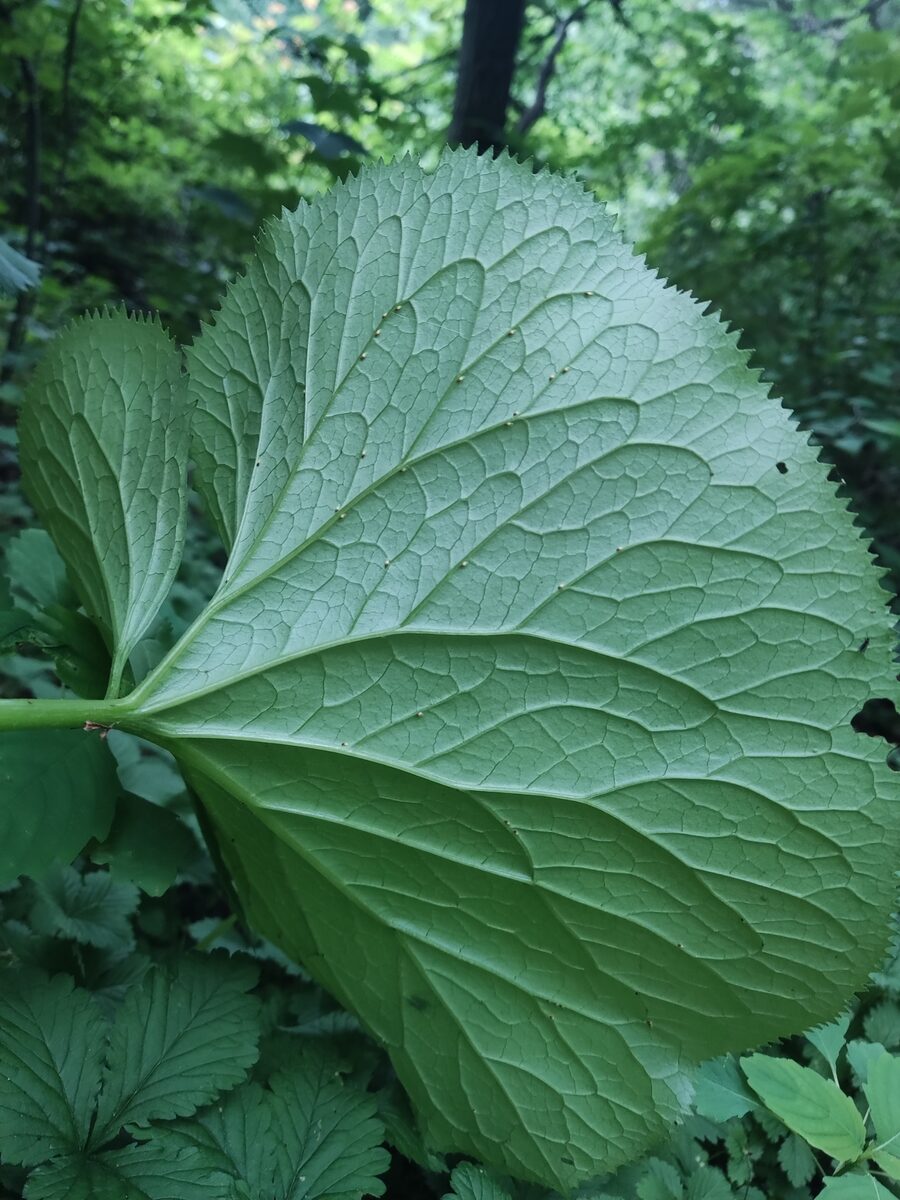
iNaturalist· cc-by-nc
(c) Gwen L'Hirondelle, some rights reserved (CC BY-NC), uploaded by Gwen L'Hirondelle
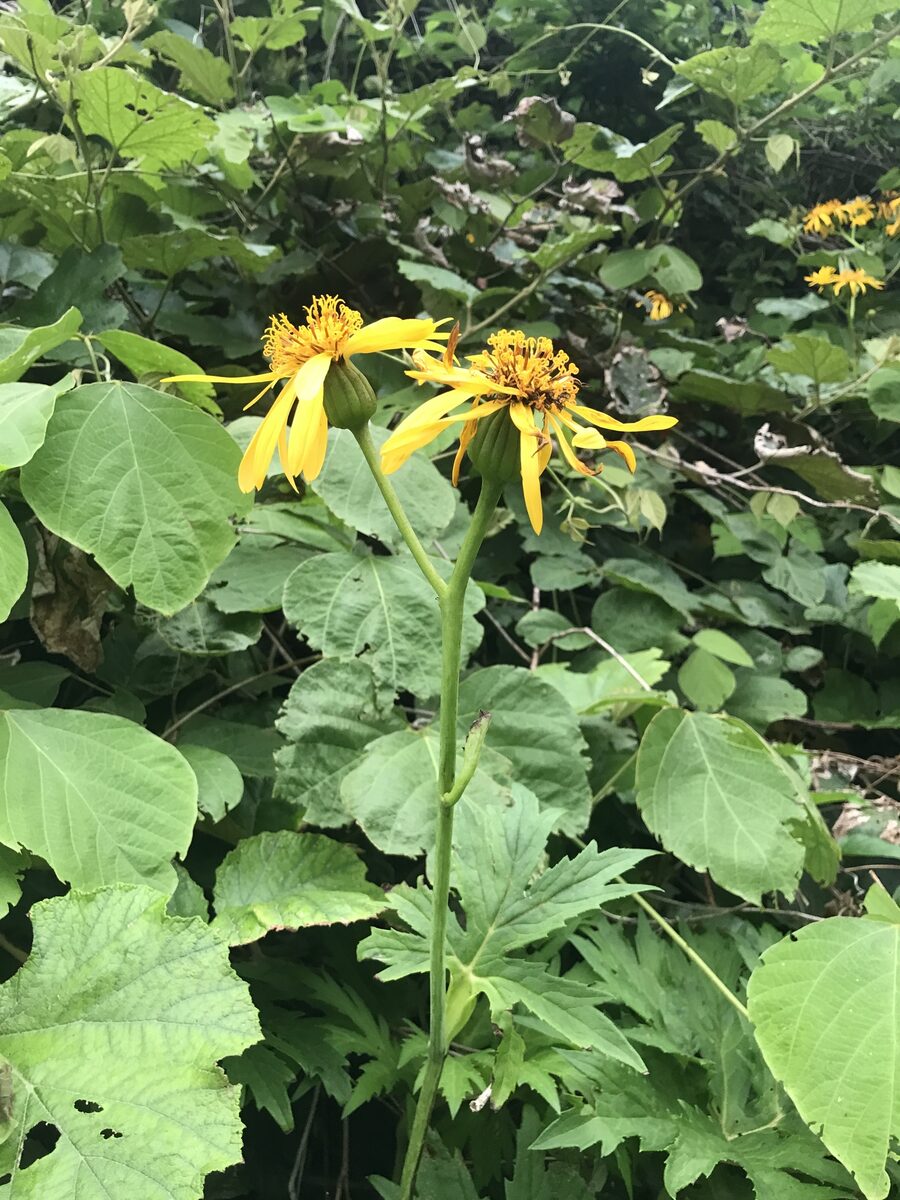
iNaturalist· cc-by-nc
(c) Pat Deacon, some rights reserved (CC BY-NC), uploaded by Pat Deacon
Summary
Source: WikipediaAnaphalis margaritacea, commonly known as the western pearly everlasting or pearly everlasting, is an Asian and North American species of flowering perennial plant in the family Asteraceae.
Description
A perennial daisy family herb. It grows 80-100 cm high and spreads 40-60 cm wide. The leaves are grey-green above and have white hairs underneath. The leaves are 7-13 cm long by 2 cm wide. The edges are wavy. The flower heads are 11 mm across. The flowers are clustered. These are 15 cm across. The fruit is a dry warty achene.
Edible Uses
Young leaves are edible when cooked.
Traditional Uses
It is chewed in place of tobacco. The whole plant is cooked with pork or green-shelled duck eggs. The young leaves are cooked and eaten.
This uses section is brief — help expand it
Medicinal Uses
Pearly everlasting was widely used medicinally by native North American Indian tribes but sees little use in modern herbalism. The whole plant is anodyne, antiseptic, astringent, expectorant, and sedative. Taken internally, it is a good remedy for diarrhoea, dysentery, and pulmonary complaints. A poultice of the flowers or whole plant is applied to burns, sores, ulcers, bruises, swellings, and rheumatic joints. An infusion of the plant can be steamed and inhaled to treat headaches. A cooled infusion of the roots and shoots has been used as a laxative and emetic to treat 'poison stomach'.
Distribution
A temperate plant. It grows in open woods. It grows in shady slopes in Pakistan between 700-1,300 m above sea level. It can tolerate drought and frost. In China it grows in pine forests and in dry soils and sub-alpine meadows between 300-3,400 m above sea level. It suits hardiness zones 3-9. In Sichuan and Yunnan.
Where It Grows
Alaska*, Asia, Australia, Bhutan, Britain, Canada, China, Europe, France, Himalayas, India, Indochina, Japan, Korea, Myanmar, Nepal, North America, NW India, Pakistan, Russia, SE Asia, Slovenia, Sri Lanka, Taiwan, Thailand, Tibet, USA, Vietnam,
Cultivation
Plants are grown by seeds.
Propagation
Sow seed in spring in a cold frame, though sowing when ripe in autumn typically gives the best results. Germination usually occurs in 4–8 weeks at 15°C. Once large enough to handle, prick seedlings into individual pots and overwinter in a cold frame, then plant out in late spring or early summer after the last expected frosts. Division is straightforward at almost any time of year and divisions can be planted directly into their permanent positions if needed.
Other Uses
Yellow to gold, green, and brown dyes can be obtained from the flowers, stems, and leaves combined. The leaves, flowers, and stems have been used as incense, particularly in baby cradles.
Notes
There are about 100 Anaphalis species.
Synonyms
Also Known As
Bukiphool, Mačje tačke, Qing ming cai
References (13)
- Amjad, M. S., et al, 2015, Ethnobotanical inventory and folk uses of indigenous plants from Pir Nasoora National Park, Azad Jammu and Kashmir. Asian Pac J Trop Biomed 2015; 5(3): 234-241
- Bodkin, F., 1991, Encyclopedia Botanica. Cornstalk publishing, p 78
- Cormack, R. G. H., 1967, Wild Flowers of Alberta. Commercial Printers Edmonton, Canada. p 342
- Cundall, P., (ed.), 2004, Gardening Australia: flora: the gardener's bible. ABC Books. p 149
- Flora of Pakistan.
Show all 13 references Hide references
- Gen. pl. 2:303. 1873
- Hedrick, U.P., 1919, (Ed.), Sturtevant's edible plants of the world. p 54
- Hu, Shiu-ying, 2005, Food Plants of China. The Chinese University Press. p 717
- Kang, Y., et al, 2012, Wild food plants and wild edible fungi in two valleys on the Qinling Mountains (Shaanxi, central China) Journal of Ethnobiology and Ethnomedicine; 9:26
- Kang, Y., et al, 2012, Wild food plants and wild edible fungi of Heihe valley (Qinling Mountains, Shaanxi, central China): Herbophilia and indifference to fruits and mushrooms. Acta Societas Botanicorum Poloniae 81(4):4-5-413
- MacKinnon, A., et al, 2009, Edible & Medicinal Plants of Canada. Lone Pine. p 348
- Plants for a Future, The Field, Penpol, Lostwithiel, Cornwall, PL22 0NG, UK. http://www.scs.leeds.ac.uk/pfaf/
- www.wildediblefood.com