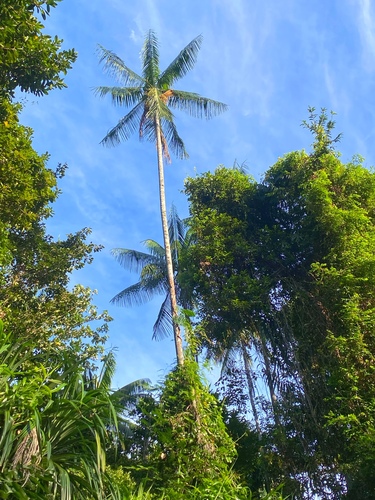
Pinanga sibuyanensis
Becc.
Tibangan
wikimedia· cc0
Wikimedia Commons - National Museum of Natural History
gbif· cc-by-nc
Field Museum of Natural History - Botany Department | NSF/Mellon - GPI
gbif· cc0
President and Fellows of Harvard College
Description
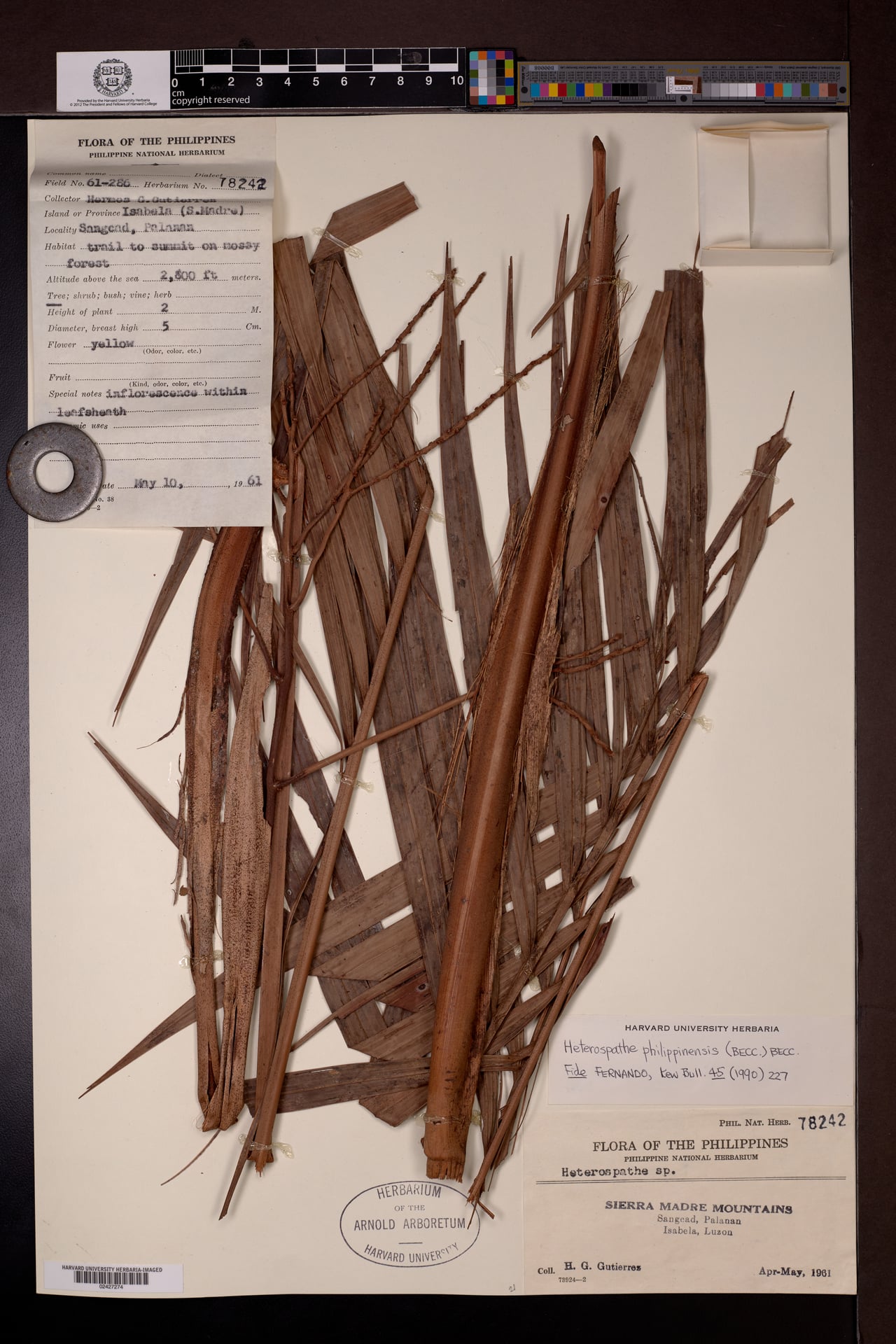
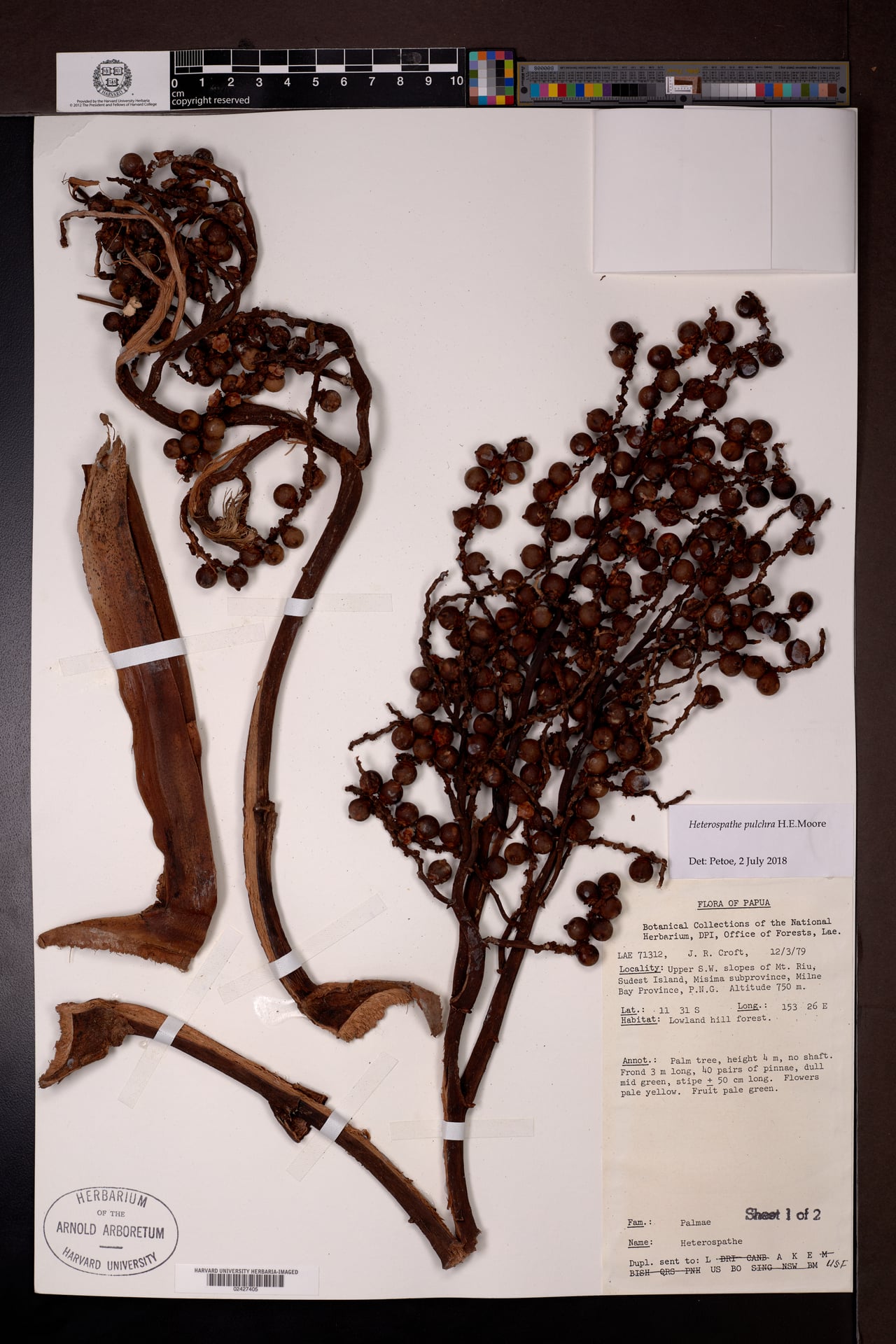
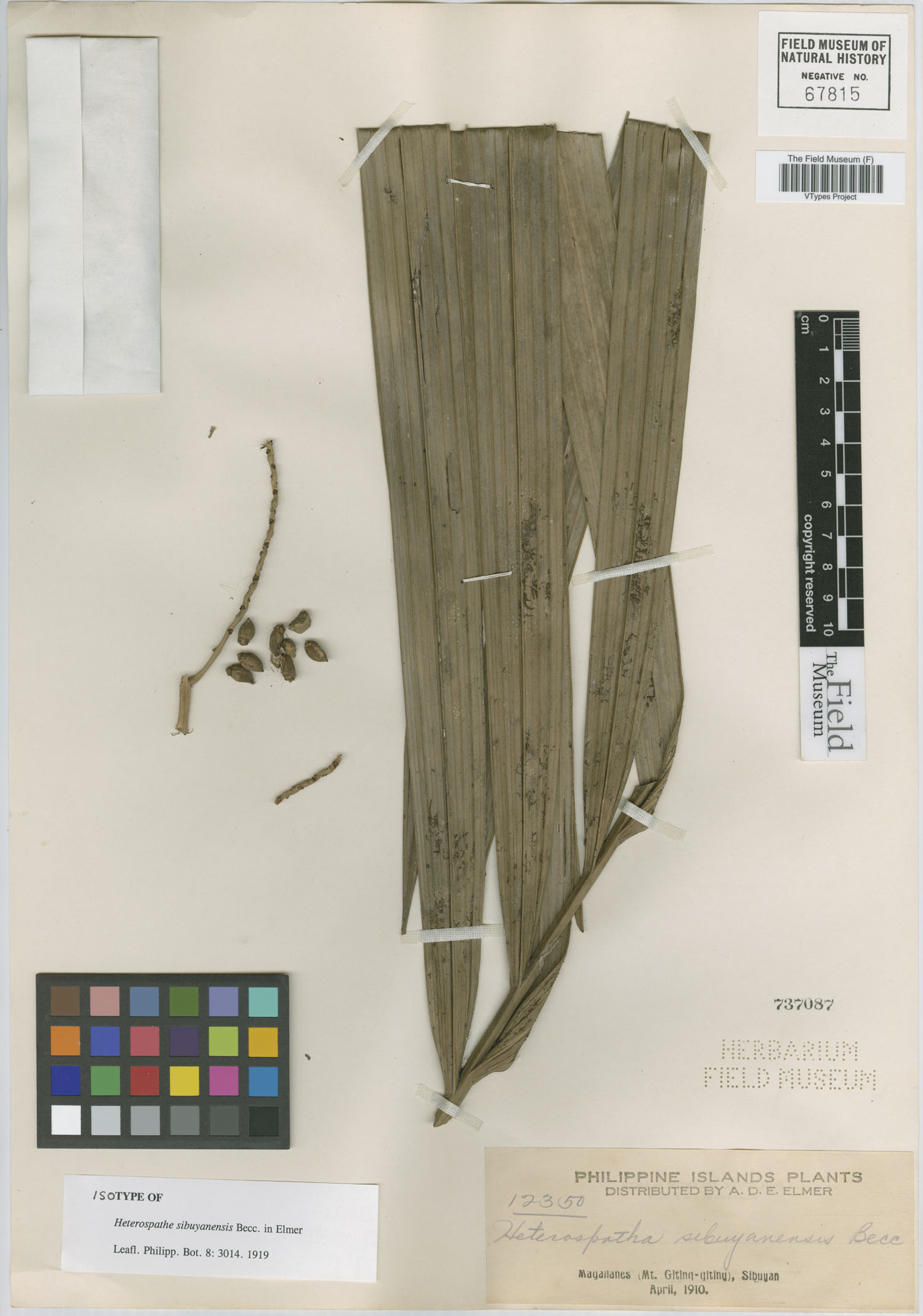
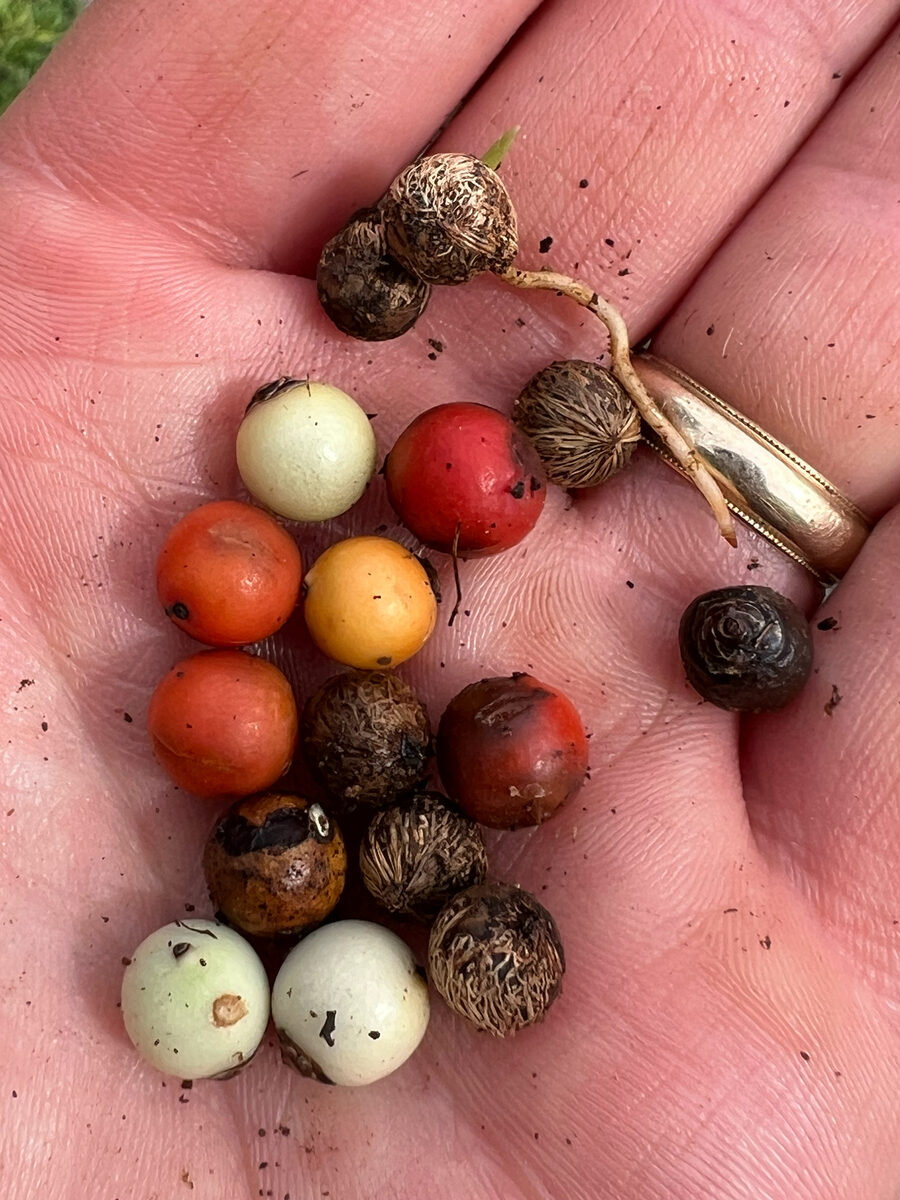
A small slender palm. The trunk is about 9 m tall and 15 cm across. The fronds arch over. The leaf segments are sword shaped and strongly 2-ribbed. The tip is divided into two straight points. The leaflets are dark green on the upper surface and paler underneath. The fruit are rather large and oval with a cone shaped tip. They are 25 to 28 mm by 15 to 17 mm. They are arranged in 3 rows. The seed are broadly oval and rounded on top.
Edible Uses
The palm bud is cooked and eaten. The palm heart (cabbage) is also edible.
Traditional Uses
The bud is cooked and eaten.
This uses section is brief — help expand it
Distribution
A tropical plant. They are found in forests of Sibuyan Islands in the Philippines along streams at altitudes of about 600 m. It suits tropical and subtropical locations.
Where It Grows
Asia, Australia, Pacific, Philippines, SE Asia,
References (3)
- Jones, D.L., 2000, Palms of Australia 3rd edition. Reed/New Holland. p 206
- Monsalud, M.R., Tongacan, A.L., Lopez, F.R., & Lagrimas, M.Q., 1966, Edible Wild Plants in Philippine Forests. Philippine Journal of Science. p 528
- World Checklist of Useful Plant Species 2020. Royal Botanic Gardens, Kew