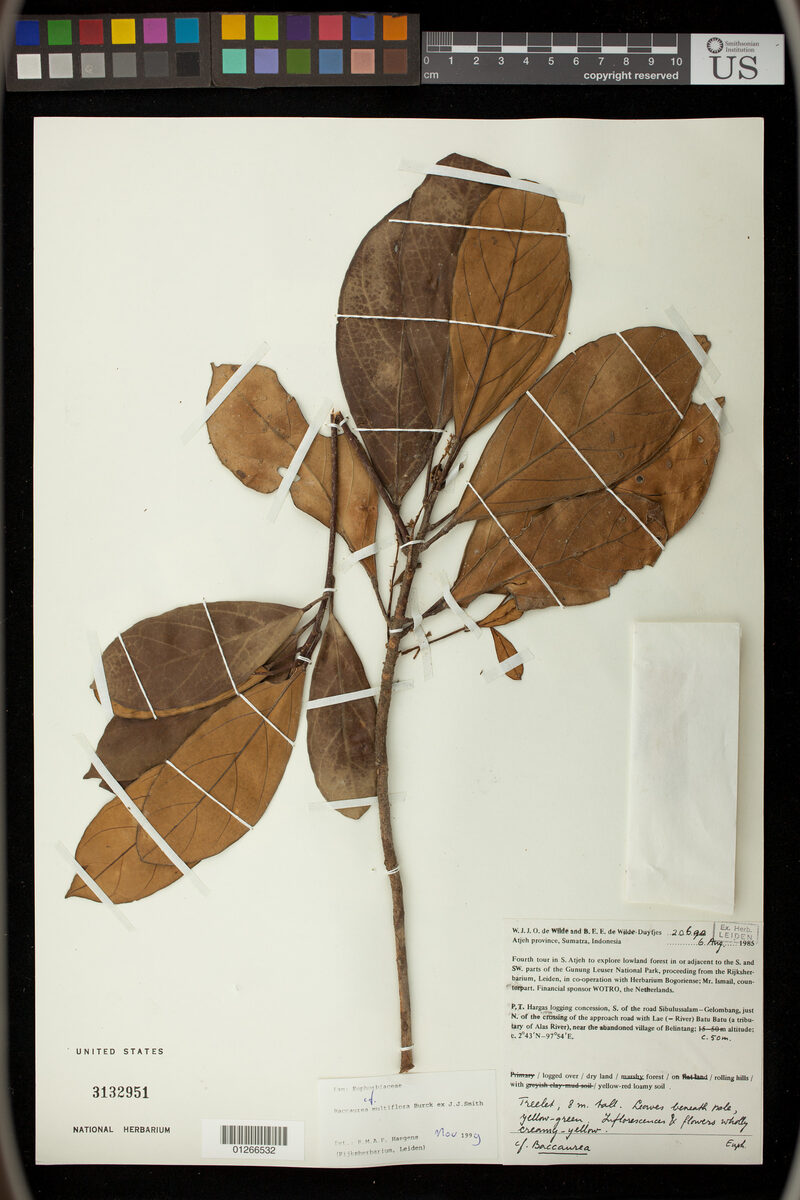
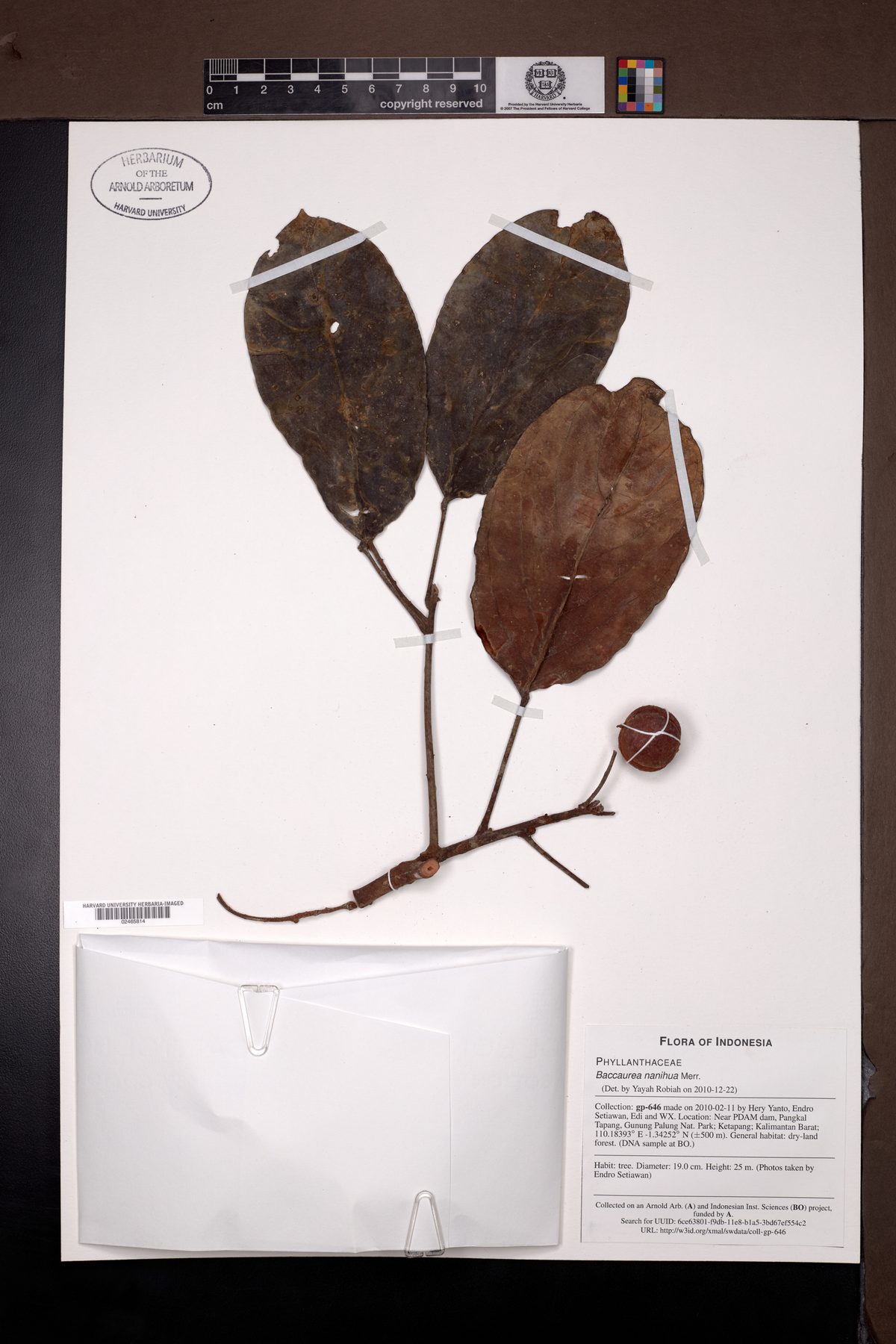
Phyllanthus reticulatus
Poir.
Potato bush
iNaturalist· cc0
no rights reserved, uploaded by 葉子
iNaturalist· cc-by
(c) 閻芸慧, some rights reserved (CC BY), uploaded by 閻芸慧
iNaturalist· cc-by
(c) Wynand Uys, some rights reserved (CC BY), uploaded by Wynand Uys
Summary
Source: WikipediaPhyllanthus reticulatus is a plant species described Jean Louis Marie Poiret; it is included in the family Phyllanthaceae. This is an Asian species of Phyllanthus (but it was also introduced to Jamaica); it has been confused with P. polyspermus. In Vietnamese its name is phèn đen (sometimes diệp hạ châu mạng). It is also found in Northern Australia, where the aborigines of the Moyle River area use the wood for firesticks and call it Mirrinymirriny. It is also found in abundance in the Terai areas of Uttar Pradesh (India) along the banks of ponds, which is called Sikati / Sikti सिकटी/सिक्टी in the local language. Phyllanthus reticulatus is pollinated by several different species of Epicephala in East Asia. The adult moths pollinate the flowers but lay eggs in the P. reticulatus flowers' ovaries, where the emerging larvae consume some of the developing seeds.
Description
A shrub with many branches. Sometimes it is scrambling or a twiggy tree. It can be 2-8 m high and spread 1.5-3 m wide. The branches hang over. The leaves are oval and 2.5 cm long by 1.5 cm wide. They are arranged to look like a compound leaf. The veins under the leaf are red and net-like. The flowers are very small and in the axils of leaves. They are clustered on short slender branches. Male and female flowers occur together in clusters in the axils of leaves. The fruit is berry-like and reddish but black when mature. They are 4-6 mm across. The seeds are reddish.
Edible Uses
The ripe fruit are eaten raw, especially by children, and are used as a famine food, particularly in West Africa.
Traditional Uses
The ripe fruit are eaten raw. It is claimed the fruit are poisonous.
This uses section is brief — help expand it
Medicinal Uses
The plant has a long history of use in traditional medicine. Various parts of the plant has been shown to contain tannins, which are partly responsible for its medicinal and dyeing properties. A number of triterpenoids have been isolated from the stems and leaves, including sitosterol, friedelin and betulinic acid. The stem bark contains pentacosane, 21-α-hydroxyfriedelan-3-one, taraxerol and lupene-24-diol. Petroleumether and ethanol extracts of the leaves have shown hypoglycaemic effects. An ethanolic extract of the stem bark showed in-vitro antiviral properties against polio and measles viruses, and antitumor activity. Extracts of the leaves have shown promising antiplasmodial activity against chloroquine-resistant and -sensitive malaria parasites. Sap from the stem is blown into the eyes to cure soreness. A soup made of the leaves, boiled with palm fruits, is given to women after child-birth. The powdered leaves are combined with cubebs and camphor then made into tablets that can be sucked in order to treat bleeding gums. The powdered leaf is used externally for topical application to sores, including venereal sores, burns, suppurations and skin-chafes. The mashed leaves are rubbed over the body of a malaria patient. The leaves and bark are reputed to be diuretic and cooling. The root is purgative and has a variety of uses. A decoction is used in the treatment of hookworm, whilst water in which the root has been boiled is taken as a male aphrodisiac, to increase fertility, to treat headache, for dysmenorrhoea, for hard abscesses. A decoction of the root, combined with the leaf-sap, is used as an antispastic. The plant is considered a remedy for anaemia and intestinal haemorrhage.
Known Hazards
The fruit and root have been recorded as being used in criminal poisoning. The plant is reported to be toxic to poultry, but the part(s) of the plant is not indicated. Birds in Tanganyika are reported to eat the ripe fruit.
Distribution
A tropical plant. It grows in tropical Africa and Asia. It grows in low altitude forest near rivers. In Nepal it grows up to about 800 m altitude. In tropical Australia it grows from sea level to 950 m altitude. In Pakistan it grows in lowland areas, often near the sea and in areas subject to flooding. In Zimbabwe it grows in hot, dry deciduous woodland between 610-1,370 m above sea level. It can grow in arid places.
Where It Grows
Africa*, Angola, Asia, Australia, Benin, Bhutan, Botswana, Burkina Faso, Cambodia, Cameroon, Central Africa, Central African Republic, CAR, Chad, China, Congo, Côte d'Ivoire, East Africa, East Timor, Eswatini, Gabon, Ghana, Guinea, Guinée, Guinea-Bissau, Himalayas, India, Indochina, Indonesia, Ivory Coast, Kenya, Laos, Malawi, Malaysia, Mali, Mauritania, Mozambique, Myanmar, Namibia, Nepal, Nigeria, Northeastern India, Pakistan, Papua New Guinea, PNG, SE Asia, Philippines, SE Asia, Senegal, Sierra Leone, Somalia, South Africa, Southern Africa, Sri Lanka, Sudan, Swaziland, Tanzania, Thailand, Timor-Leste, Uganda, Vietnam, West Africa, Zambia, Zimbabwe,
Cultivation
Plants are grown from seed. They can also be grown from cuttings of firm young growth.
Other Uses
The stems are used as roof-binders in conical huts. The twigs are used as chew-sticks and toothbrushes. A red or black dye is obtained from the fruit, bark and roots. A black ink is made from the ripe fruits. A decoction of the stem and leaves is used as a mordant and also for dyeing cotton black. Tannins are obtained from the fruits, roots and bark. The plant has been used in trials to remove heavy metals from contaminated soil. Although it was effective, other species such as Pluchea indica performed significantly better. The greyish-white to reddish wood is said to be very hard and tough. It is suitable for local construction and is used to make threshing flails, utensils and other small objects. The wood is suitable for firewood and tinder, and makes a good quality charcoal It is fixed into a fire-drill. The plant has been used in trials to remove heavy metals from contaminated soil. Although it was effective, other species such as Pluchea indica performed significantly better.
Other Information
They are a famine food. The fruit are eaten especially by children. It is occasionally eaten in West Africa.
Notes
There are about 750 Phyllanthus species. They are mostly in the tropics. Also put in the family Euphorbiaceae.
Synonyms
Also Known As
Abiranji, Amluki, Anamsule, Buinowla, Chippulinelli, Chongchong belut, Datwan, Echekerana, Huli balli, Jandaki, Kabonan, Kang pla, Karesuli, Karunelli, Karuppupilnji, Kattu-kilanelli, Kattuniruri, Kayu darah belut, Kilanelli, Krishna-kamboji, Leetsane, Loetsane, Makhi, Makki, Mkasiri, Mkwamba, Nalla pullelika, Nallapuli, Nallapurugundu, Nealbari, Nirnelli, Nirppul, Pandibarranlue, Panjuli, Pavana, Pichrundi, Polan, Perdu madu hitam, Poola, Potato-smell, Pula, Pulisar, Sannajogesoppu, Silari, Tampal besi, Trembilu, Wel kayila, Ye-chin-yar
References (37)
- Abbiw, D.K., 1990, Useful Plants of Ghana. West African uses of wild and cultivated plants. Intermediate Technology Publications and the Royal Botanic Gardens, Kew. p 48
- Ambasta, S.P. (Ed.), 2000, The Useful Plants of India. CSIR India. p 309 (As Kirganelia reticulata)
- Ambe, G., 2001, Les fruits sauvages comestibles des savanes guinéennes de Côte-d’Ivoire : état de la connaissance par une population locale, les Malinké. Biotechnol. Agron. Soc. Environ. 5(1), 43-48
- Arinathan, V., et al, 2007, Wild edibles used by Palliyars of the western Ghats, Tamil Nadu. Indian Journal of Traditional Knowledge. 6(1) pp 163-168
- Ashton, M. S., et al 1997, A Field Guide to the Common Trees and Shrubs of Sri Lanka. WHT Publications Ltd. pdf p 210
Show all 37 references Hide references
- Burkill, H. M., 1985, The useful plants of west tropical Africa, Vol. 2. Kew.
- Chauhan, S. H., et al, 2018, Consumption patterns of wild edibles by the Vasavas: a case study from Gujarat, India. Journal of Ethnobiology and Ethnomedicine (2018) 14:5 (As Kirganelia reticulata)
- Cooper, W. and Cooper, W., 2004, Fruits of the Australian Tropical Rainforest. Nokomis Editions, Victoria, Australia. p 196
- Cowie, I, 2006, A Survey of Flora and vegetation of the proposed Jaco-Tutuala-Lore National Park. Timor-Lests (East Timor) www.territorystories.nt/gov.au p 47
- Dale, I. R. and Greenway, P. J., 1961, Kenya Trees and Shrubs. Nairobi. p 215
- Dalziel, J. M., 1937, The Useful plants of west tropical Africa. Crown Agents for the Colonies London.
- East African Herbarium records, 1981,
- Elliot, W.R., & Jones, D.L., 1997, Encyclopedia of Australian Plants suitable for cultivation. Vol 7. Lothian. p 286
- Encycl. 5:298. 1804
- Fowler, D. G., 2007, Zambian Plants: Their Vernacular Names and Uses. Kew. p 27
- Gallagher, D. E., 2010, Farming beyond the escarpment: Society, Environment, and Mobility in Precolonial Southeastern Burkina Faso. PhD University of Michigan.
- Jardin, C., 1970, List of Foods Used In Africa, FAO Nutrition Information Document Series No 2.p 154
- Jadhav, V. D. et al, 2011, Documentation and ethnobotanical survey of wild edible plants from Kolhapur district. Recent Research in Science and Technology. 3(12): 58-63
- Kannan, M., et al, 2015, Ethnobotanical survey on wild edible plants of Kalrayan Hills, Salem District, Tamil Nadu, India. Global J. Res. Med Plants & Indigen. med. 4(12): 236-246
- Kenneally, K.E., Edinger, D. C., and Willing T., 1996, Broome and Beyond, Plants and People of the Dampier Peninsula, Kimberley, Western Australia. Department of Conservation and Land Management. p 105
- Kuvar, S. D. & Shinde, R. D., 2019, Wild Edible Plants used by Kokni Tribe of Nasik District, Maharashtra. Journal of Global Biosciences. Volume 8, Number 2, 2019, pp. 5936-5945
- Manandhar, N.P., 2002, Plants and People of Nepal. Timber Press. Portland, Oregon. p 360
- McMakin, P.D., 2000, Flowering Plants of Thailand. A Field Guide. White Lotus. p 93
- Paczkowska, G. & Chapman, A.R., 2000, The Western Australian Flora. A Descriptive Catalogue. Western Australian Herbarium. p 246
- Palgrave, K.C., 1996, Trees of Southern Africa. Struik Publishers. p 401
- Pickering, H., & Roe, E., 2009, Wild Flowers of the Victoria Falls Area. Helen Pickering, London. p 93
- Ramachandran, V. S., 2007, Wild edible plants of the Anamalais, Coimbatore district, western Ghats, Tamil Nadu. Indian Journal or Traditional Knowledge. 6(1) pp 173-176 (As Kirganelia reticulata)
- Rasingam, L., 2012, Ethnobotanical studies on the wild edible plants of Irula tribes of Pillur Valley, Coimbatore district, Tamil Nadu, India. Asian Pacific Journal of Tropical Biomedicine. (2012) S1493-S1497
- Reddy, K.R., 1989, Additional Notes on the Wild Edible Plants of India. J. Econ. Tax. Bot. Vol. 13 No. 1 pp 125-127 (As Kirganelia reticulata)
- Roodt, V., 1998, Trees & Shrubs of the Okavango Delta. Medicinal Uses and Nutritional value. The Shell Field Guide Series: Part 1. Shell Botswana. p 49
- Royal Botanic Gardens, Kew (1999). Survey of Economic Plants for Arid and Semi-Arid Lands (SEPASAL) database. Published on the Internet; http://www.rbgkew.org.uk/ceb/sepasal/internet [Accessed 16th April 2011]
- Ruiters-Welcome, A. K., 2019, Food plants of southern Africa. Ph.D. thesis. Univ. of Johannesburg p 86
- Sukarya, D. G., (Ed.) 2013, 3,500 Plant Species of the Botanic Gardens of Indonesia. LIPI p 688
- Swaziland's Flora Database http://www.sntc.org.sz/flora
- Welcome, A. K. & Van Wyk, B.-E., 2019, An inventory and analysis of the food plants of southern Africa. South African Journal of Botany 122 (2019) 136–179
- Wheeler, J.R.(ed.), 1992, Flora of the Kimberley Region. CALM, Western Australian Herbarium, p 622
- World Checklist of Useful Plant Species 2020. Royal Botanic Gardens, Kew