Hypobathrum microcarpum
(Blume) Bakh. f.
Brasswood
wikimedia· cc0
Wikimedia Commons - Koorders, S. H.; Valeton, Theodoric
gbif· cc0
President and Fellows of Harvard College
gbif· cc0
President and Fellows of Harvard College
Description
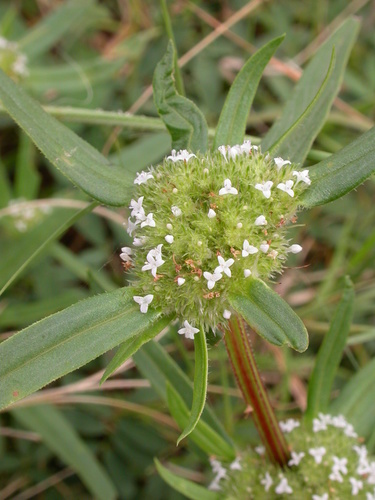
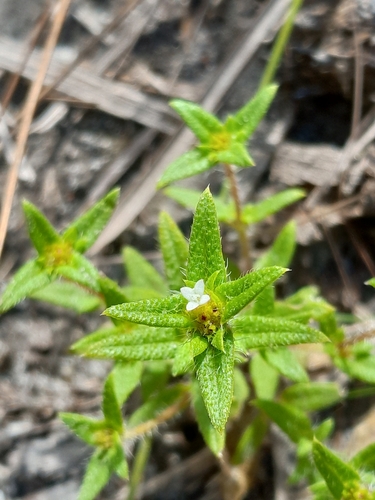
A shrub or small tree. It can grow 2-12 m tall. The trunk is 10-35 cm across. The small branches are 4 sided. They have furrows along them. The leaves are opposite and simple and have short stalks. They vary in shape. They are oval or sword shaped and taper towards both ends. The base is wedge shaped and extends along the leaf stalk. Young leaves are hairy. The leaves are dark green and shiny above and dull green to yellow underneath. They are 5-25 cm long by 2-6 cm wide. The flowers are in spikes in the axils of the leaves. They are small and almost without stalks. There are 1-3 spikes together in the axils of the bracts. There are many flowers. The flowers are 4 mm across. The fruit is stalked and oval. They are berries about 7 mm long.
Edible Uses
The young leaves and stem tips are eaten raw as a vegetable, or steamed and cooked.
Traditional Uses
The young leaves and tips are eaten raw as a vegetable. The young leaves are also steamed and eaten.
This uses section is brief — help expand it
Distribution
A tropical plant. It grows in Indonesia from sea level to 500 m above sea level. It is usually in moist places in forests and near water. It can be along rivers and on hillsides. It can also be on limestone.
Where It Grows
Asia, Indonesia, Malaysia, SE Asia,
Cultivation
Plants can be grown from seeds.
Other Information
Leaves are sold in local markets.
Synonyms
Also Known As
Apit, Babalan, Kayu klayu, Kihapit
References (4)
- Martin, F.W. & Ruberte, R.M., 1979, Edible Leaves of the Tropics. Antillian College Press, Mayaguez, Puerto Rico. p 217 (As Petunga microcarpa)
- Ochse, J. J. et al, 1931, Vegetables of the Dutch East Indies. Asher reprint. p 637 (As Petunga microcarpa)
- Slik, F., www.asianplant.net
- Sukarya, D. G., (Ed.) 2013, 3,500 Plant Species of the Botanic Gardens of Indonesia. LIPI p 647