Persea americana
Mill.
Avocado, West Indian Avocado
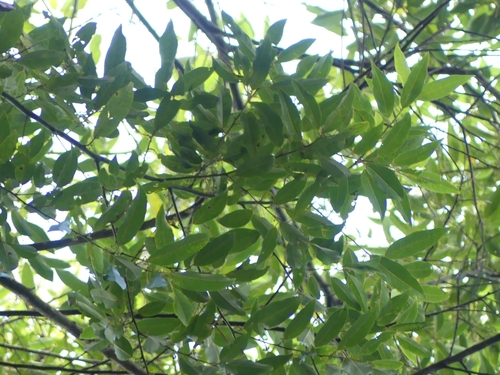
iNaturalist· cc-by-nc
(c) taylorrmp, some rights reserved (CC BY-NC)
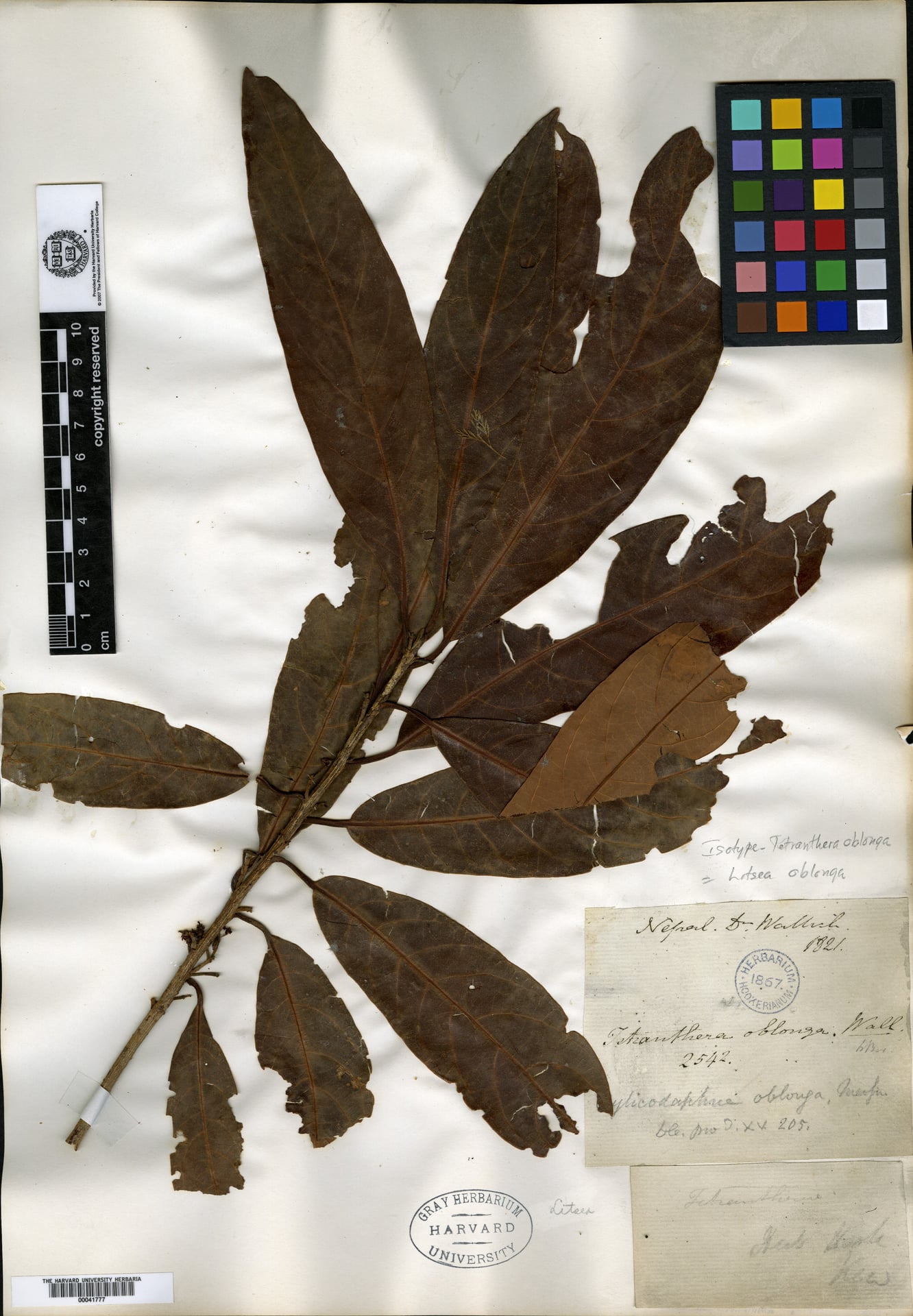
iNaturalist· cc-by-nc
(c) bennable, some rights reserved (CC BY-NC)
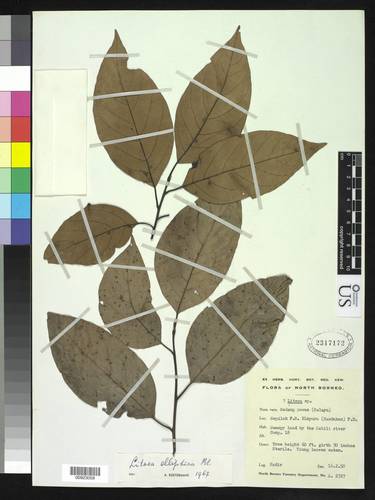
iNaturalist· cc-by-nc
(c) Edward Perry IV, some rights reserved (CC BY-NC), uploaded by Edward Perry IV
Summary
Source: WikipediaFast-growing evergreen tree reaching 15m tall and 25m wide. Produces small flowers pollinated by bees and insects; not self-fertile. Requires full sun and well-drained soil, tolerating mildly acid to very alkaline conditions. Prefers moist soil but handles drought once established. Tolerates strong winds but not coastal salt spray. Hardy to UK zone 10.
Description
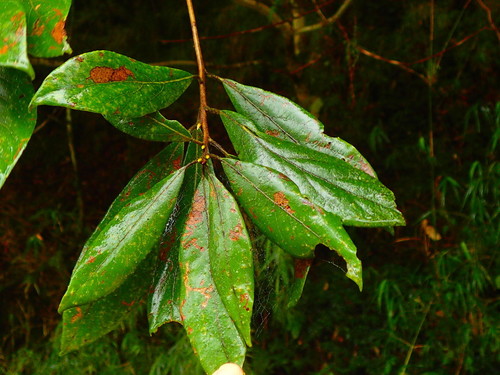
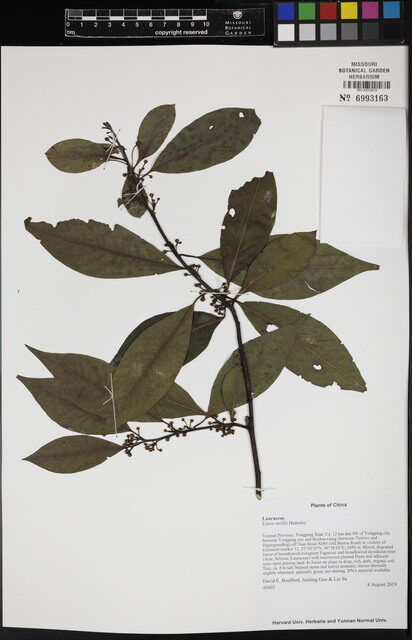
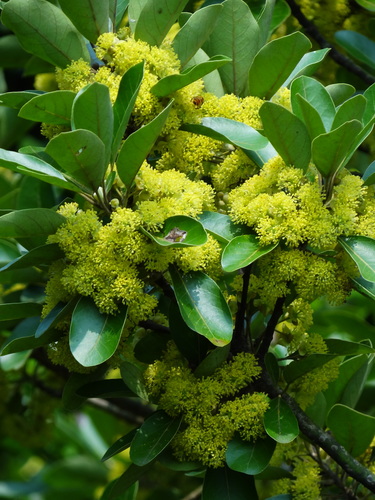
A small to medium sized tree. It grows 8-10 m high. Trees can grow to 25 m high. The leaf stalk is 1.5-5 cm long. Leaves are entire, oval and 5-40 cm long. Flowers are greenish, small and on the ends of branches. Clusters of flowers may contain 200-300 flowers. Normally only 1-3 fruit develop from each cluster. The fruit is pear shaped or round. It can be 7-20 cm long. The fruit are greenish-yellow with some red coloration. The fruit has greenish yellow flesh and a large round seed. There are 3 named races - West Indian, Guatemalan and Mexican.
Edible Uses
The fruit is typically eaten raw. The flesh has a buttery texture and a mild, oily flavour and can also be used as a sandwich spread or in ice creams. The pear-shaped fruit grows up to 12cm long. A non-drying oil from the fruit has a mild, pleasant taste and is used as a salad dressing, particularly with strong-flavoured leaves such as chicory, rocket, and watercress. A tea can be made from the leaves, and toasted leaves are used as a flavouring in stews and bean dishes.
Traditional Uses
The pulp of the fruit is eaten raw or cooked. It is eaten in salads, soups, sandwiches, spreads, ice cream, and also in tortillas and in wine. The fruit are mixed with sugar and water to make a drink. Oil is extracted from the flesh. It is used in salad dressing. The leaves can be used for tea sweetened with sugarcane juice. Toasted leaves are used to season stews and bean dishes. Caution: Some people are allergic.
Medicinal Uses
The avocado has a long history of medicinal use, with most parts of the plant employed in traditional remedies. Research has demonstrated anti-cancerous activity in extracts of the leaves and fresh shoots, as well as antihypertensive activity in leaf extracts. The leaf and seed contain cyanide. Oil from the seeds contains steroids used in pharmaceuticals, and seed extract has an erythroagglutinating property. The fruit contains reductase and transferase enzymes. The leaves are astringent, carminative, antitussive, emmenagogue, and hypotensive. An oral infusion of the leaves treats dysentery, relieves coughs, lowers blood pressure, treats liver obstructions, promotes menstrual flow, and helps clear high uric acid levels that could lead to gout. Combined with Tripogandra serrulata, the leaves are used as a remedy for biliousness. The bark is astringent, carminative, antitussive, and emmenagogue, and is used to treat diarrhoea. The fruit pulp is emollient, carminative, and helps lower blood cholesterol levels. Mashed fruit pulp is considered a nourishing food with aphrodisiac properties. Unripe fruit is used to induce abortion. Applied externally, the pulp is cooling and soothing to the skin, and is applied to suppurating wounds and to the scalp to promote hair growth. The skin of the fruit has anthelmintic properties and is used to expel worms. The ground seed is made into an ointment for treating skin conditions including scabies, purulent wounds, scalp lesions, and dandruff. Oil extracted from the seeds has astringent properties.
Known Hazards
Avocado leaves, bark, skin, or pit are documented to be harmful to animals; cats, dogs, cattle, goats, rabbits, rats, guinea pigs, birds, fish, and horses can be severely harmed or even killed when they consume them. The avocado fruit is poisonous to some birds, and the American Society for the Prevention of Cruelty to Animals (ASPCA) lists it as toxic to horses. Avocado leaves contain a toxic fatty acid derivative, persin, which in sufficient quantity can cause colic in horses and without veterinary treatment, death. The symptoms include gastrointestinal irritation, vomiting, diarrhea, respiratory distress, congestion, fluid accumulation around the tissues of the heart, and even death. Birds also seem to be particularly sensitive to this toxic compound. The leaves of the Guatemalan variety of P. americana are toxic to goats, sheep, and horses.
Distribution
A subtropical plant. Trees grow from sea level up to 2250 m altitude in the tropics. It cannot stand water-logging. Branches are easily damaged by wind. It needs to be in a frost free location or where frosts are rare. West Indian varieties thrive in humid, tropical climates and freeze at or near O°C. Mexican types are native to dry subtropical plateaus and thrive in a Mediterranean climate. They are hardy -4 to -7° C. They are salt sensitive, has the smallest fruits and the thinnest skin. The best daytime temperature is 25-33°C. Guatemalan types are native to cool, high-altitude tropics and are hardy -1° to -3° C. It does best with neutral or slightly acid soil. West Indian avocadoes can stand some salinity. They need a well aerated soil. Growth is disrupted when soil temperatures are below 13°C. It needs high humidity at flowering and fruit set. It can grow in arid places. It grows in Miombo woodland in Africa. In Argentina it grows between 1,500-1,800 m above sea level. It suits hardiness zones 9-11. In Sichuan and Yunnan.
Where It Grows
Africa, Amazon, Angola, Antigua & Barbuda, Argentina, Asia, Australia, Bangladesh, Barbados, Belize, Benin, Bermuda, Bhutan, Bolivia, Botswana, Bougainville, Brazil, British Indian Ocean Terr., BIOT, Burkina Faso, Burundi, Cambodia, Cameroon, Cape Verde, Caribbean, Central Africa, Central African Republic, Central America*, Chad, Chile, China, Colombia, Congo, Congo DR, Cook Islands, Costa Rica, Côte d'Ivoire, Cuba, Djibouti, Dominica, Dominican Republic, East Africa, East Timor, Easter Island, Ecuador, Egypt, Equatorial Guinea, Eswatini, Ethiopia, Europe, Fiji, FSM, France, Gabon, Gambia, Georgia, Ghana, Grenada, Guam, Guatemala, Guiana, Guianas, Guinea, Guinée, Guinea-Bissau, Guyana, Haiti, Hawaii, Himalayas, Hispaniola, Honduras, India, Indochina, Indonesia, Israel, Ivory Coast, Jamaica, Kenya, Laos, Lesotho, Liberia, Madagascar, Malawi, Malaysia, Maldives, Mali, Mariana Islands, Marquesas, Mauritania, Mauritius, Mediterranean, Mexico*, Middle East, Mozambique, Myanmar, Namibia, Nauru, Nepal, New Zealand, Nicaragua, Niger, Nigeria, Niue, North America, Northeastern India, Pacific, Panama, Papua New Guinea, Peru, PNG, Philippines, Pohnpei, Puerto Rico, Rotuma, Rwanda, Sahel, Samoa, Sao Tome and Principe, SE Asia, Seychelles, Sierra Leone, Sikkim, Solomon Islands, Somalia, South Africa, Southern Africa, South America, South Sudan, Spain, Sri Lanka, St Lucia, St. Vincent and Grenadines, Suriname, Swaziland, Tanzania, Tasmania, Thailand, Timor-Leste, Togo, Tonga, Trinidad and Tobago, Turkey, Türkiye, Uganda, USA, Vanuatu, Venezuela, Vietnam, Virgin Islands, West Africa, West Indies, West Papua, West Timor, Zambia, Zimbabwe,
Cultivation
It grows best in areas where annual daytime temperatures are within the range 14 - 40°c, but can tolerate 10 - 45°c. When dormant, the plant can survive temperatures down to about -4°c, but young growth can be severely damaged at -1°c. It prefers a mean annual rainfall in the range 500 - 2,000mm, but tolerates 300 - 2,500mm. Prefers a rich, neutral to alkaline soil and a position in full sun. Succeeds on all kinds of soil. Requires a well-drained soil, the plant is intolerant of water-logging. West Indian rootstocks are fairly tolerant of saline conditions, though other forms are intolerant. Prefers a pH in the range 5 - 5.8, tolerating 4.5 - 7. Requires a position sheltered from strong winds. Seedlings take 6- 8 years to produce fruit, whilst grafts can start fruiting in their second year. Yields of 15 tonnes per hectare have been recorded, but averages are about half that figure. Mature fruit can be left hanging on the tree for weeks without damage. The three main races of Avocado are as follows. There are many named varieties of each race:- Mexican. This is the hardiest form, succeeding in subtropical climates and not well adapted to lowland tropical conditions. It can withstand short periods when temperatures drop as low as -6°c. The optimum temperature for growth is between 14 - 25°c. It has the highest oil content, over 20% and up to 30%. Guatemalan. This form is semitropical. It can withstand short periods when temperatures drop as low as -4?c. The optimum temperature for growth is between 15 - 28°c. It has a medium oil content generally between 10 - 20%. West Indian. This form is wholly tropical and grows well in a lowland tropical climate. It can grow in a temperature range of 12 - 40°c, though the optimum is between 24 - 32?c. It has the lowest oil content, generally below 10%, down to around 3%. Although the flowers are hermaphrodite, the male organ produces pollen when the females are not receptive and so each tree is functionally self-sterile. Therefore at least two different trees are required for pollination. Each avocado flower opens twice. The female part ripens first, then the flower closes to open many hours later in the male stage. In the Mexican form, this gap is more than 24 hours, from morning to the next afternoon, whilst in the Guatemalan it is less than 24 hours. Flowering Time: Mid Spring Late Spring/Early Summer. Bloom Color: Pale Green. Spacing: 20-30 ft. (6-9 m).
Propagation
Sow fresh seed, which can germinate in about a month. Removing the seed coat can reduce germination time to around 17 days. Seedling trees can begin flowering within 5–7 years.
Other Uses
The pulp and seeds contain fatty acids including oleic, lanolic, palmitic, stearic, linoleic, capric, and miristic acid, the last of which constitutes 80% of the fruit's fatty content. Non-drying oil extracted from the seed is used in cosmetic products such as soaps and skin moisturisers. Fresh fruit pulp is massaged into hair and scalp as a vitamin-rich tonic and restorer. A reddish-brown dye obtained from the seed is used for marking clothes. Watery extracts of the leaves contain a yellowish-green essential oil. Ground seed mixed with cheese is used as a rat and mouse poison. The heartwood is light brown and the sapwood whitish; the wood is moderately soft, heavy, brittle, and not durable, and is susceptible to termite attack. It has been used for house building (especially posts), light construction, furniture, cabinetmaking, agricultural implements, carving, sculptures, musical instruments, paddles, pen and brush holders, and novelties, and yields good-quality veneer and plywood.
Production
Seedlings grow quickly and continuously in warm, moist conditions. Seedlings bear after 5-8 years. Grafted trees can fruit in 1-2 years. A good tree produces 400-600 fruit each year. A fruit can weigh 50 g to 1 kg. In the subtropics trees often produce 2 main flushes of fruit per year. From fruit set to maturity can take 6-12 months. Fruit ripen off the tree in 4-14 days. For the Mexican types, the fruit weigh less than 250 g and they ripen 6-8 months after flowering.
Other Information
It is an important fruit tree in many tropical and subtropical countries. It is widely cultivated. The tree and fruit is getting quite wide acceptance at least in the highlands of Papua New Guinea.
Notes
There are about 200 Persea species. Most are in America.
Nutrition
| Part | Moisture | kJ | kcal | Protein | Vit A | Vit C | Iron | Zinc |
|---|---|---|---|---|---|---|---|---|
| Fruit | 74.4 | 805 | 193 | 1.8 | 480 | 11 | 0.7 | 0.4 |
| Leaves dry | 5 | — | — | 18.9 | — | — | — | — |
Synonyms
Also Known As
Abacate, Abacateiro, Abokado, Abuacatl, Adpokat, Adpukat, Advokaat, Aguacate, Aguacatillo, Ahuacate, Alan, Alligator pear, Alpuket, Apakado, Aquejora, Aviota, Avocat, Avocatier, Avocato, Avokaa, Avokad, Awokado, Bata, Bo' le dau, Buah apukado, Butter pear, Butter-thei, Divoka, E li, Evokado, Famphale, Htaw-bat-thi, Htaw-bat-thi-pin, Huiy jahaamuguri, Iniak, Kai, Kuka'ta, Kunalhit, Mokotapeni, Mparachichi, Mukorobea, Mwembe mafuta, Palta, Palta muyu, Pohon alpukat, Sikia, Vakedo, You li, Xane yubini cuota
References (143)
- AAK, 1980, Bertanam Pohon Buah-buahan. Penerbitan Yayasan Kanisius, Jogyakarta. p 7
- Abbiw, D.K., 1990, Useful Plants of Ghana. West African uses of wild and cultivated plants. Intermediate Technology Publications and the Royal Botanic Gardens, Kew. p 42
- Alexander, D.M., Scholefield, P.B., Frodsham, A., 1982, Some tree fruits for tropical Australia. CSIRO, Australia. p 9
- Ambasta, S.P. (Ed.), 2000, The Useful Plants of India. CSIR India. p 442
- Anderson, E. F., 1993, Plants and people of the Golden Triangle. Dioscorides Press. p 217
Show all 143 references Hide references
- Ashton, M. S., et al 1997, A Field Guide to the Common Trees and Shrubs of Sri Lanka. WHT Publications Ltd. pdf p 229
- Barwick, M., 2004, Tropical and Subtropical Trees. A Worldwide Encyclopedic Guide. Thames and Hudson p 316
- Bekele-Tesemma A., Birnie, A., & Tengnas, B., 1993, Useful Trees and Shrubs for Ethiopia. Regional Soil Conservation Unit. Technical Handbook No 5. p 346
- Bennett, B. C., 1990, Useful Plants of Amazonian Ecuador. US Agency for International Development. Fifth Progress Report. New York Botanical Gardens. p 39
- Bergh, B.O., 1979, Avocado, in Simmonds N.W.,(ed), Crop Plant Evolution. Longmans. London. p 148 (Also as Persea americana var. drymifolia)
- Bianchini, F., Corbetta, F., and Pistoia, M., 1975, Fruits of the Earth. Cassell. p 172
- Blench, R., 2004, Fruits and Arboriculture in the Indo-Pacific Region. Indo-Pacific Prehistory Association Bulletin 24. (Taipei Papers Volume 2) p 39
- Bodkin, F., 1991, Encyclopedia Botanica. Cornstalk publishing, p 773
- Bodner, C. C. and Gereau, R. E., 1988, A Contribution to Bontoc Ethnobotany. Economic Botany, 43(2): 307-369
- Bremness, L., 1994, Herbs. Collins Eyewitness Handbooks. Harper Collins. p 72
- Burkill, I.H., 1966, A Dictionary of the Economic Products of the Malay Peninsula. Ministry of Agriculture and Cooperatives, Kuala Lumpur, Malaysia. Vol 2 (I-Z) p 1726
- Bussman, R. W., et al, 2021, Unity in diversity—food plants and fungi of Sakartvelo (Republic of Georgia), Caucasus. Journal of Ethnobiology and Ethnomedicine (2021) 17:72 p 9
- Caballero-Serrano, V., et al, 2019, Traditional ecological knowledge and medicinal plant diversity in Ecuadorian Amazon home gardens. Global Ecology and Conservation 17 (2019) e00524 p 10
- Casas, A., et al, 1996, Plant Management Among the Nahua and the Mixtec in the Balsas River Basin, Mexico: An Ethnobotanical Approach to the Study of Plant Domestication. Human Ecology, Vol. 24, No. 4 pp. 455-478
- Chandrashekara, U. M., 2009, Tree species yielding edible fruit in the coffee-based homegardens of Kerala, India: their diversity, uses and management. Food Sec. 1:361-370 (As Persea gratissima) Cheifetz, A., (ed), 1999, 500 popular vegetables, herbs, fruits and nuts for Australian Gardeners. Random House p 217
- Chin, H.F., & Yong, H.S., 1996, Malaysian Fruits in Colour. Tropical press, Kuala Lumpur p 62
- Cobley, L.S. (rev. Steele, W.M.) 2nd Ed., 1976, An Introduction to the Botany of Tropical Crops. Longmans. p 190
- Coe, F. G. & Anderson, G. J., 1997, Ethnobotany of the Miskitu of Eastern Nicaragua. Journal of Ethnobiology 17(2): 171-214
- Coe, F. G. and Anderson, G. J., 1999, Ethnobotany of the Sumu (Ulwa) of Southeastern Nicaragua and Comparisons with Miskitu Plant Lore. Economic Botany Vol. 53. No. 4. pp. 363-386
- Condit, R., et al, 2011, Trees of Panama and Costa Rica. Princeton Field Guides. p 260
- Cooper, W. and Cooper, W., 2004, Fruits of the Australian Tropical Rainforest. Nokomis Editions, Victoria, Australia. p 265
- Coronel, R.E., 1982, Fruit Collections in the Philippines. IBPGR Newsletter p 8
- Cruz, I. M., et al, 2015, Edible fruits and seeds in the State of Mexico. Revista Mexicana de Ciencias Agricolas. Vol. 6. Num. 2 pp 331-346
- Cull, B.W., 1995, Fruit Growing in Warm Climates. Reed. p 51
- Cundall, P., (ed.), 2004, Gardening Australia: flora: the gardener's bible. ABC Books. p 1012
- D'Ambrosio, U., & Puri, R. K., 2016, Foodways in transition: food plants, diet and local perceptions of change in a Costa Rican Ngäbe community. Journal of Ethnobiology and Ethnomedicine (2016) 12:3 p 26
- Darley, J.J., 1993, Know and Enjoy Tropical Fruit. P & S Publishers. p 5
- Dharani, N., 2002, Field Guide to common Trees & Shrubs of East Africa. Struik. p 143
- Duarte, M. C., et al, 2022, Diversity of Useful Plants in Cabo Verde Islands: A Biogeographic and Conservation Perspective. Plants 2022, 11, 1313 p 13
- Econ. Bot. 31:318. 1977 (As Persea americana var. nubigena)
- Estrada-Castillon, E., et al, 2014, Ethnobotany in Rayones, Nuevo Leon, Mexico. Journal of Ethnobiology and Ethnomedicine, 10:62
- Etherington, K., & Imwold, D., (Eds), 2001, Botanica's Trees & Shrubs. The illustrated A-Z of over 8500 trees and shrubs. Random House, Australia. p 515
- Facciola, S., 1998, Cornucopia 2: a Source Book of Edible Plants. Kampong Publications, p 139
- Farfan, B., et al, 2007, Mazahua Ethnobotany and Subsistence in the Monarch Butterfly Biosphere Reserve, Mexico. Economic Botany 61(2) 2007, pp 173-191
- Flowerdew, B., 2000, Complete Fruit Book. Kyle Cathie Ltd., London. p 149
- Focho, D. A., et al, 2009, Ethnobotanical survey of Trees in Fundong, Northwest Region, Cameroon. Journal of Ethnobiology and Ethnomedicine, 5:17
- Fowler, D. G., 2007, Zambian Plants: Their Vernacular Names and Uses. Kew. p 82
- French, B.R., 1986, Food Plants of Papua New Guinea, A Compendium. Asia Pacific Science Foundation p 216
- French, B.R., 2010, Food Plants of Solomon Islands. A Compendium. Food Plants International Inc. p 216
- Friday, J. B., 2005, Forestry and Agroforestry Trees of East Timor. http://www.ctahr.hawaii.edu/forestry/data/Timor/Timor trees.html
- Giraldi, M. & Hanazaki, N., 2014, Use of Cultivated and Harvested Edible Plants by Caiçaras—What Can Ethnobotany Add to Food Security Discussions? Human Ecology Review, Volume 20, Number 2, 2014
- Goode, P., 1989, Edible Plants of Uganda. FAO p 27
- Grandtner, M. M., 2008, World Dictionary of Trees. Wood and Forest Science Department. Laval University, Quebec, Qc Canada. (Internet database http://www.wdt.qc.ca)
- Hearne, D.A., & Rance, S.J., 1975, Trees for Darwin and Northern Australia. AGPS, Canberra p 93, Pl 29
- Hedrick, U.P., 1919, (Ed.), Sturtevant's edible plants of the world. p 471 (As Persea gratissima)
- Henty, E.E., 1980, Harmful Plants in Papua New Guinea. Botany Bulletin No 12. Division Botany, Lae, Papua New Guinea. p 76,
- Hermandez Bermejo, J.E., and Leon, J. (Eds.), 1994, Neglected Crops. 1492 from a different perspective. FAO Plant Production and Protection Series No 26. FAO, Rome. p15
- http://palaeoworks.anu.edu.au/Nuno_PhD/04.pdf re Timor
- Hu, Shiu-ying, 2005, Food Plants of China. The Chinese University Press. p 402
- Jardin, C., 1970, List of Foods Used In Africa, FAO Nutrition Information Document Series No 2.p 154
- John, L., & Stevenson, V., 1979, The Complete Book of Fruit. Angus & Robertson p 63
- J. Wash. Acad. Sci. 10:15. 1920 (As Persea americana var. drymifolia)
- Kar, A., et al, 2013, Wild Edible Plant Resources used by the Mizos of Mizoram, India. Kathmandu University Journal of Science, Engineering and Technology. Vol. 9, No. 1, July, 2013, 106-126
- Katende, A.B., Birnie, A & Tengnas B., 1995, Useful Trees and Shrubs for Uganda. Identification, Propagation and Management for Agricultural and Pastoral Communities. Technical handbook No 10. Regional Soil Conservation Unit, Nairobi, Kenya. p 486
- Kapelle, M., et al, 2000, Useful plants within a Campesino Community in a Costa Rican Montane Cloud Forest. Mountain Research and Development, 20(2): 162-171
- Kiple, K.F. & Ornelas, K.C., (eds), 2000, The Cambridge World History of Food. CUP p 1725
- Kumar, A., et al, 2012, Ethnobotanical Edible Plant Biodiversity of Lepcha Tribes. Indian Forester, 138 (9):798-803
- Larios, et al., 2013, Plant management and biodiversity conservation in Náhuatl homegardens of the Tehuacán Valley, Mexico. Journal of Ethnobiology and Ethnomedicine 2013 9:74.
- Latham, P., 2004, Useful Plants of Bas-Congo province. Salvation Army & DFID p 210
- Lautenschläger, T., et al, 2018, First large-scale ethnobotanical survey in the province of Uíge, northern Angola. Journal of Ethnobiology and Ethnomedicine (2018) 14:51
- Lazarides, M. & Hince, B., 1993, Handbook of Economic Plants of Australia, CSIRO. p 185
- Lembaga Biologi Nasional, 1977, Buah-Buahan, Balai Pustaka, Jakarta. p 10
- Li Xi-wen, Li Jie, Huang Puhua, van der Werff, H., Lauraceae. Flora of China.
- Llamas, K.A., 2003, Tropical Flowering Plants. Timber Press. p 243
- Long, C., 2005, Swaziland's Flora - siSwati names and Uses http://www.sntc.org.sz/flora/
- Lord, E.E., & Willis, J.H., 1999, Shrubs and Trees for Australian gardens. Lothian. p 63
- Lyle, S., 2006, Discovering fruit and nuts. Land Links. p 316
- Macmillan, H.F. (Revised Barlow, H.S., et al) 1991, Tropical Planting and Gardening. Sixth edition. Malayan Nature Society. Kuala Lumpur. p 288
- Mapes, C. & Basurto, F., 2016, Biodiversity and Edible Plants of Mexico. Chapter 5 in R. Lira, et al. (eds.), Ethnobotany of Mexico, Ethnobiology, Springer. p 102
- Martin, F. W., et al, 1987, Perennial Edible Fruits of the Tropics. USDA Handbook 642 p 31 (Also as Persea leiogyna)
- Mashile, S. P., et al, 2019, Indigenous fruit plants species of the Mapulana of Ehlanzeni district in Mpumalanga province, South Africa. South African Journal of Botany 122 (2019) 180–183
- Mbuya, L.P., Msanga, H.P., Ruffo, C.K., Birnie, A & Tengnas, B., 1994, Useful Trees and Shrubs for Tanzania. Regional Soil Conservation Unit. Technical Handbook No 6. p 384
- Miguel, E., et al, 1989, A checklist of the cultivated plants of Cuba. Kulturpflanze 37. 1989, 211-357
- Miya, M. S. & Gautum, D., 2021, Checklist of floral species at the Institute of Forestry, Pokhara Campus, Pokhara, Nepal. Journal of Institute of Forestry, Nepal 18 (2021) 133-177
- Montani, M. C. & Scarpa, G. F., 2016, Recursos vegetales y prácticas alimentarias entre indígenas tapiete del noreste de la provincia de Salta, Argentina. Darwiniana, nueva serie vol.4 no.1 San Isidro jul. 2016
- Morton, J. F., 1987, Fruits of Warm Climates. Wipf & Stock Publishers p 91
- Mutchnick, P. A. and McCarthy, B. C., 1997, An Ethnobotanical Analysis of the Tree Species Common to the Subtropical Moist Forests of the Peten, Guatemala. Economic Botany, Vol. 51, No. 2, pp. 158-183
- Norrington, L., & Campbell, C., 2001, Tropical Food Gardens. Bloomings Books. p 90
- NYBG herbarium "edible"
- Omawale, 1973, Guyana's edible plants. Guyana University, Georgetown p 33
- Parham, B. E. V., 1972, Plants of Samoa. New Zealand Department of Scientific and Industrial Research. Information Series. No. 85 p 22
- Pascual-Mendoza, S. et al, 2021, Traditional knowledge of edible plants in an indigenous community in the Sierra Norte of Oaxaca, Mexico. Plant Biosystems - An International Journal Dealing with all Aspects of Plant Biology
- Pasha, M. K. & Uddin, S. B., 2019, Minor Edible Fruits of Bangladesh. Bangladesh J. Plant Taxon. 26(2): 299–313
- Paz, F. S., et al, 2021, Edible Fruit Plant Species in the Amazon Forest Rely Mostly on Bees and Beetles as Pollinators. Journal of Economic Entomology, XX(XX), 2021, 1–13
- Peekel, P.G., 1984, (Translation E.E.Henty), Flora of the Bismarck Archipelago for Naturalists, Division of Botany, Lae, PNG. p 186
- Penafield Anchundia, D. D., 2017, Traditional food consumption and its nutritional contribution in Guasaganda, Central Ecuador. PhD Ghent University p 72
- Pham-Hoang Ho, 1999, An Illustrated Flora of Vietnam. Nha Xuat Ban Tre. p 390
- Piedra-Malagón, E. M., et al, 2022, Edible native plants of the Gulf of Mexico Province. Biodiversity Data Journal 10: e80565 p 20
- Plants for a Future database, The Field, Penpol, Lostwithiel, Cornwall, PL22 0NG, UK. http://www.scs.leeds.ac.uk/pfaf/ (As Persea edulis)
- Plants of Haiti Smithsonian Institute http://botany.si.edu/antilles/West Indies
- Priyadi H., et al, 2010, Five hundred plant species in Gunung Halimun Salak National Park, West Java. CIFOR
- PROSEA (Plant Resources of South East Asia) handbook, Volume 2, 1991, Edible fruits and nut. p 251 (Also as Persea americana var. drymifolia and Persea americana var. nubigena)
- Purseglove, J.W., 1968, Tropical Crops Dicotyledons, Longmans. p 192
- Quintana, C. M., 2010, Wild Plants in the Dry Valleys Around Quito Ecuador. An Illustrated Guide. Publicationes del Harbario, QCA p 138
- Recher, P, 2001, Fruit Spirit Botanical Gardens Plant Index. www.nrg.com.au/~recher/ seedlist.html p 3
- Roa, J. A. G. & Boada, D. S. G., 2018, Fundación para el Fortalecimiento de la Fruticultura y Plantas Alimenticias no Convencionales en Colombia.
- Rosero-Toro, et al, 2018, Cultural significance of the flora of a tropical dry forest in the Doche vereda (Villavieja, Huila, Colombia). Journal of Ethnobiology and Ethnomedicine (2018) 14:22 p 12
- Royal Botanic Gardens, Kew (1999). Survey of Economic Plants for Arid and Semi-Arid Lands (SEPASAL) database. Published on the Internet; http://www.rbgkew.org.uk/ceb/sepasal/internet [Accessed 21st April 2011]
- Ruiters-Welcome, A. K., 2019, Food plants of southern Africa. Ph.D. thesis. Univ. of Johannesburg p 72
- Salako, V. K. et al, 2013, Home gardens: an assessment of their biodiversity and potential contribution to conservation of threatened species and crop wild relatives in Benin. Genet Resour Crop Evol
- Schneider, E., 2001, Vegetables from Amaranth to Zucchini: The essential reference. HarperCollins. p 38
- Segura, S., et al, 2018, The edible fruit species in Mexico. Genet Resour Crop Evol (2018) 65:1767–1793 (Also as Persea americana var. drymifolia and others)
- Sharma, B.B., 2005, Growing fruits and vegetables. Publications Division. Ministry of Information and broadcasting. India. p 18 (As Persea americana var. drymifolia)
- Small, E., 2009, Top 100 Food Plants. The world's most important culinary crops. NRC Research Press. p 96
- Smith, A.C., 1981, Flora Vitiensis Nova, Lawaii, Kuai, Hawaii, Volume 2 p 115
- Staples, G.W. and Herbst, D.R., 2005, A tropical Garden Flora. Bishop Museum Press, Honolulu, Hawaii. p 368 (Drawing)
- Sujanapal, P., & Sankaran, K. V., 2016, Common Plants of Maldives. FAO & Kerala FRI, p 201
- Sukarya, D. G., (Ed.) 2013, 3,500 Plant Species of the Botanic Gardens of Indonesia. LIPI p 439
- Tabuti, J. R. S., 2012, Important Woody Plant Species, their Management and Conservation Status in Balawoli Sub-country, Uganda. Ethnobotany Research & Applications 10:269-286
- Tankard, G., 1990, Tropical fruit. An Australian Guide to Growing and using exotic fruit. Viking p 20
- Tate, D., 1999, Tropical Fruit. Archipelago Press. Singapore. p 80
- Termote, C., et al, 2014, Assessing the potential of wild foods to reduce the cost of a nutritionally adequate diet: An example from eastern Baringo District, Kenya. Food and Nutrition Bulletin, vol. 35, no. 4
- Thaman, R.R., 1976, The Tongan Agricultural System, University of the South Pacific, Suva, Fiji. p 416
- Thaman, R. R., et al, 1994, The Flora of Nauru. Atoll Research Bulletin No. 392. Smithsonian Institute p 39
- Timyan, J., 1996, Bwa Yo: Important Trees of Haiti. SE Consortium for International Development. Washington. p 105
- Topp, J. M. W., 1988, An Annotated Check List of the Flora of Diego Garcia, British Ocean Territory. Atoll Research Bulletin No. 313
- Torre, de la, L., et al, 2008, Enciclopedia de las Plantas Útiles del Ecuador. Herbario QCA. Pontificia Universidad Católica del Ecuador. p 399
- Tugume, P. & Nyakoojo, C., 2020, Traditional use of wild edible plants in the communities adjacent to Mabira Central Forest Reserve, Uganda. Ethnobotany Research & Applications 20:15 (2020)
- USDA, ARS, National Genetic Resources Program. Germplasm Resources Information Network - (GRIN). [Online Database] National Germplasm Resources Laboratory, Beltsville, Maryland. Available: www.ars-grin.gov/cgi-bin/npgs/html/econ.pl (10 April 2000)
- Vael, L., 2015, Ethnobotanical study of the plant use in the natural landscape of two mestizo communities in the Ucayali region of the Peruvian Amazon. Universiteit Gent.
- van Roosmalen, M.G.M., 1985, Fruits of the Guianan Flora. Utrecht Univ. & Wageningen Univ. p 160
- van Wyk, B., 2005, Food Plants of the World. An illustrated guide. Timber press. p 285
- Vasquez, R. and Gentry, A. H., 1989, Use and Misuse of Forest-harvested Fruits in the Iquitos Area. Conservation Biology 3(4): 350f
- Vickery, M.L. and Vickery, B., 1979, Plant Products of Tropical Africa, Macmillan. p 38
- Wahyudi, 2017, Non-timber Forest Product (NTFP) Commodities Harvested and Marketed by Local People at the Local Markets in Manokwari - West Papua. Indonesian Journal of Forestry Research Vol. 4, No. 1, 27-35
- Walter, A. & Lebot, V., 2007, Gardens of Oceania. ACIAR Monograph No. 122. p 166
- Welcome, A. K. & Van Wyk, B.-E., 2019, An inventory and analysis of the food plants of southern Africa. South African Journal of Botany 122 (2019) 136–179
- Wiersema, J. H. & Leon, B., 2013, World Economic Plants. A Standard Reference CRC Press. 2nd Ed. p 509
- Williams, C.N., Chew, W.Y., and Rajartnam, J.A., 1989, Tree and Field Crops of the Wetter Regions of the Tropics. Longman, p
- Williamson, J., 2005, Useful Plants of Malawi. 3rd. Edition. Mdadzi Book Trust. p 194
- Wiriadinata, H., 1995, Ethnobotany of Economic Plants in the Baliem Valley, Jayawijaya, Irian Jaya, Indonesian Institute of Science, Bogor, Indonesia
- World Checklist of Useful Plant Species 2020. Royal Botanic Gardens, Kew
- Yuncker, T.G., 1959, Plants of Tonga, Bernice P. Bishop Museum, Hawaii, Bulletin 220. p 118
- Zaldivar, M. E., et al, 2002, Species Diversity of Edible Plants Grown in Homegardens of Chibehan Amerindians from Costa Rica. Human Ecology, Vol. 30, No. 3, pp. 301-316
- Zambrana, P, et al, 2017, Traditional knowledge hiding in plain sight – twenty-first century ethnobotany of the Chácobo in Beni, Bolivia. Journal of Ethnobiology and Ethnomedicine (2017) 13:57
- Zawiah, N. & Othaman, H., 2012, 99 Spesies Buah di FRIM. Institut Penyelidikan Perhutanan Malaysia. p 192
- Zizka, G., 1991, Flowering Plants of Easter Island. Palmarum Hortus Francofurtensis
- Zuchowski W., 2007, Tropical Plants of Costa Rica. A Zona Tropical Publication, Comstock Publishing. p 180