Peripentadenia phelpsii
B. Hyland & Coode
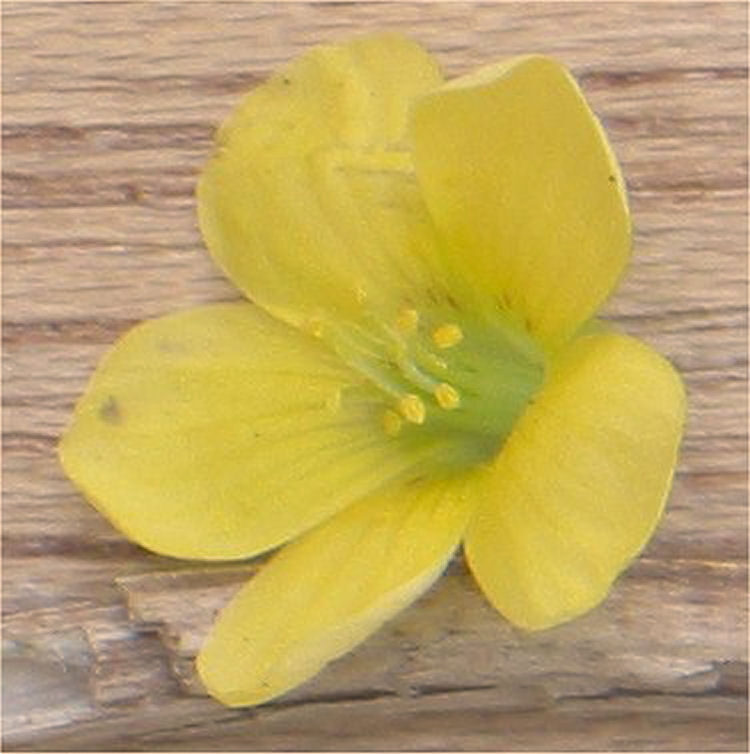
iNaturalist· cc-by
(c) B. Gray, some rights reserved (CC BY)
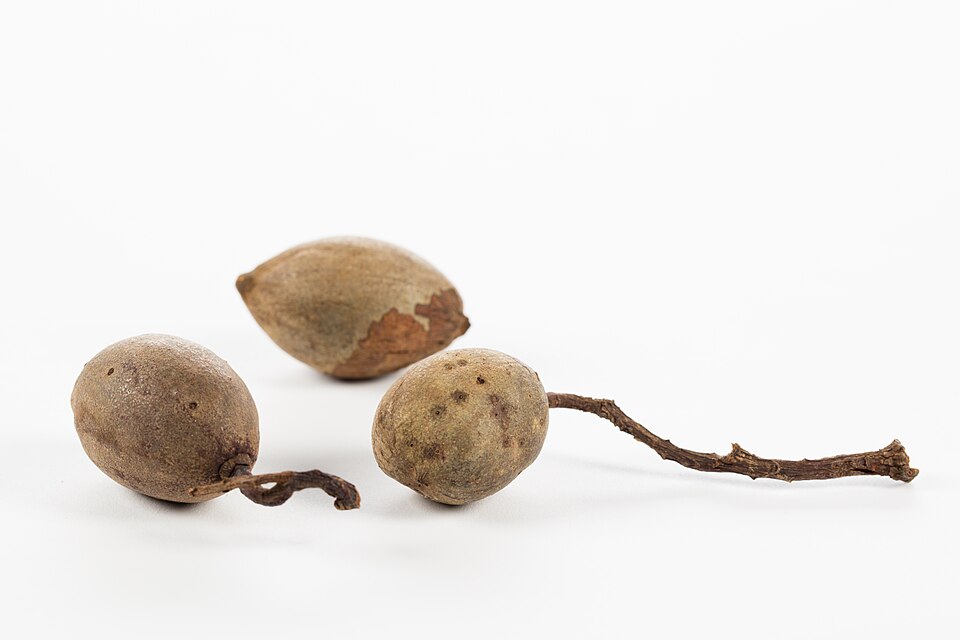
iNaturalist· cc-by-nc
(c) Kaitlyn, some rights reserved (CC BY-NC), uploaded by Kaitlyn
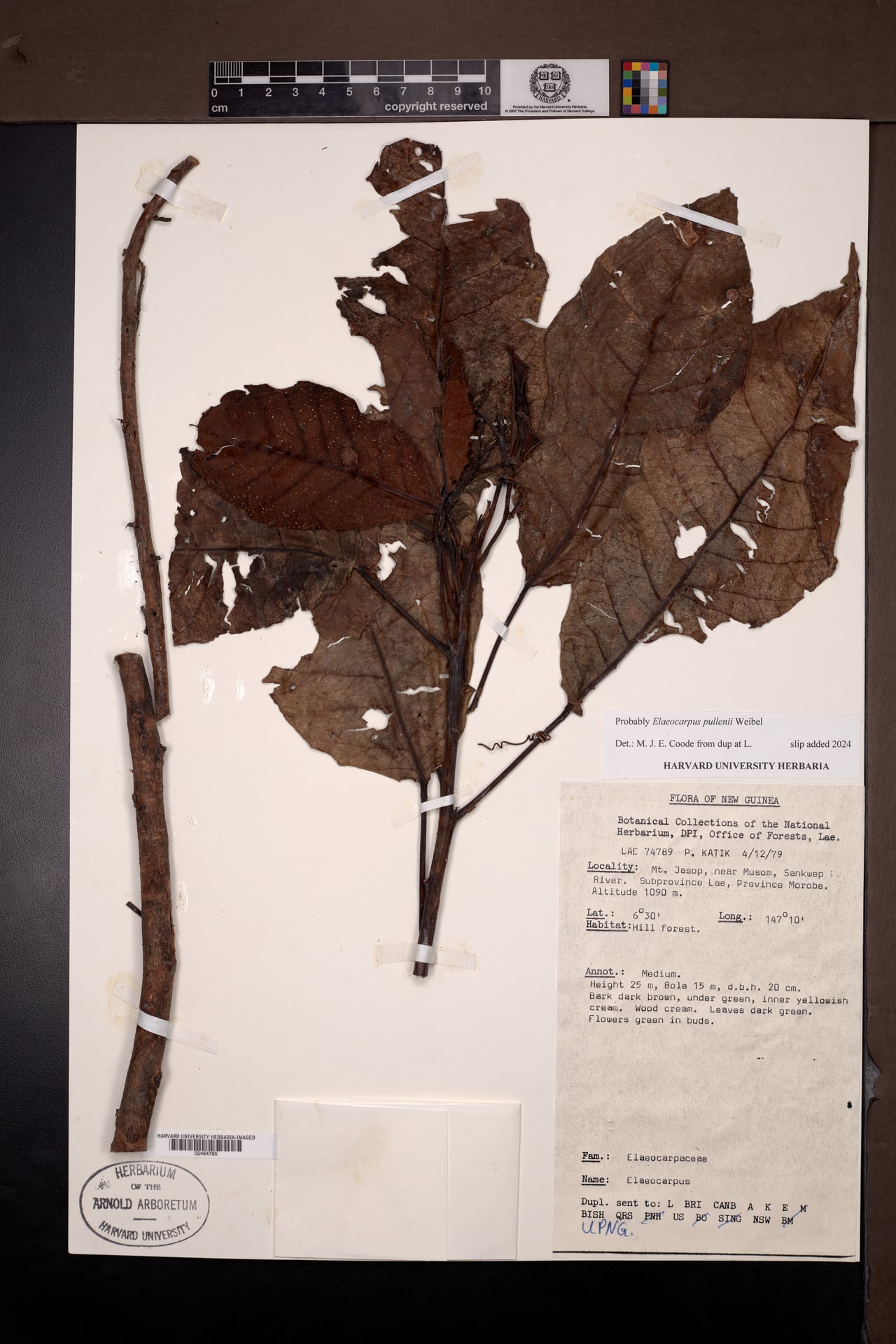
iNaturalist· cc-by
(c) Unknown, some rights reserved (CC BY)
Summary
Source: WikipediaPeripentadenia phelpsii is a plant in the family Elaeocarpaceae which is endemic to a very small part of northeastern Queensland, Australia. It is a large evergreen tree with large buttresses, and was first described in 1982.
Description
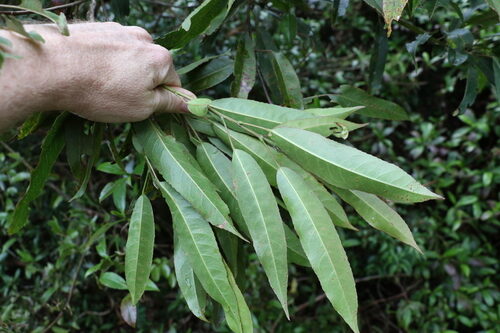
A tree. It grows 8-25 m high and spreads 4-8 m wide. The trunk is usually single and the bark is grey. The leaves are simple and 5-15 cm long. There are 2 glands on the leaf stalk close to where it joins the leaf. The fruit is 35-45 mm long by 35 mm wide. They hang singly or in clusters in the axils of leaves or from old branches. There is one seed inside. The seed is 25 mm long by 16 mm wide. It is enclosed in a red aril. The aril is edible. The kernel is edible in small amounts.
Edible Uses
The red aril surrounding the seed is edible and sweet. The kernel inside the seed is also edible but should be consumed only in small amounts.
Known Hazards
The kernel should only be eaten in small amounts.
Distribution
A tropical plant. It grows in the foothills of the rainforest in NE Queensland in Australia. It grows between 40-400 m altitude. They suit tropical and subtropical regions. Plants are damaged by frost.
Where It Grows
Australia*,
Cultivation
Plants can be grown from fresh seed. Seed are slow to germinate. Plants can be grown from cuttings. They are slow to strike.
References (3)
- Cooper W & Cooper W T, 1994, Fruits of the Rain Forest. RD Press p 218
- Cooper, W. and Cooper, W., 2004, Fruits of the Australian Tropical Rainforest. Nokomis Editions, Victoria, Australia. p 163
- Elliot, W.R., & Jones, D.L., 1997, Encyclopedia of Australian Plants suitable for cultivation. Vol 7. Lothian. p 201