Opuntia dillenii - (Ker
(Ker-Gawl.) Haw
Dillen prickly pear
gbif· cc-by-nc
Regiane de Syllos Hutiel
gbif· cc-by-nc
Regiane de Syllos Hutiel
gbif· cc-by-nc
lucas_rafaelle
Description
Opuntia dillenii is an evergreen Perennial growing to 1 m (3ft 3in) by 1 m (3ft 3in) at a medium rate. See above for USDA hardiness. It is hardy to UK zone 10. The plant is self-fertile. It is noted for attracting wildlife. Suitable for: light (sandy) and medium (loamy) soils, prefers well-drained soil and can grow in nutritionally poor soil. Suitable pH: mildly acid, neutral and basic (mildly alkaline) soils. It cannot grow in the shade. It prefers dry or moist soil and can tolerate drought.
Edible Uses
Edible Portion: Fruit, Flowers, Pads. Fruits are insipid but very juicy, and are eaten raw or made into syrup, jam or jelly. The fruit are peeled then eaten fresh, preserved or made into wine. Young joints are cut into pieces and boiled, or dried in the sun for future use.
Known Hazards
Species in this genus generally have numerous minutely barbed glochids (hairs) that are easily dislodged when the plant is touched and they then become stuck to the skin where they are difficult to see and remove. They can cause considerable discomfort.
Distribution
Origin: Mesoamerica. Native to south-eastern USA (i.e. Alabama, Florida, Georgia, South Carolina and Texas), Mexico, Central America, the Caribbean and parts of northern South America (i.e. Ecuador).
Where It Grows
NORTHERN AMERICA: United States, Florida, Georgia, South Carolina, Texas, Mexico, San Luis Potosí, Tamaulipas, Campeche, Querétaro, Quintana Roo, Tabasco, Veracruz de Ignacio de la Llave, Yucatán, SOUTHERN AMERICA: Anguilla, Netherlands Antilles, Antigua and Barbuda, Bahamas, Bermuda, Barbados, Cuba, Cayman Islands, Dominica, Dominican Republic, Guadeloupe, Grenada, Jamaica, St. Kitts and Nevis, St. Lucia, Montserrat, Martinique, United States, Puerto Rico, Virgin Islands, U.S., Virgin Islands (British), Ecuador,
Cultivation
It grows in sandy, waste places. It needs full sun. It needs a temperature above 13°C. Plants are grown by chopping them into small pieces and drying before planting. Opuntia dillenii plants are relatively sensitive to frost. At an annual mean temperature of 20°C to 30°C they need at least 150 to 250 mm precipitation per annum, but accept also lower temperatures (on average 10°C to 20°C) combined with much rain (about 1000 mm per annum). Carbon Farming Solutions - Cultivation: regional crop (Describes the non-destructive management systems that are used in cultivation). The fruits (tunas) are typically harvested in late summer to autumn, around late summer to early fall, depending on the species and climate. Opuntia species usually flower in late spring to early summer. Opuntia species generally grow moderately fast, with many species capable of producing new pads and fruit within the first year of planting, especially in favorable conditions. Many Opuntia species are self-fertile, though cross-pollination can improve fruit set and quality.
Propagation
Seed - sow early spring in a very well-drained compost in a greenhouse. When they are large enough to handle, prick the seedlings out into individual pots and grow them on in the greenhouse for at least their first two winters. Plant them out into their permanent positions in late spring or early summer, after the last expected frosts. Give the plants some protection from winter wet. Make sure you have some reserve plants in case those outdoors do not overwinter. Cuttings of leaf pads at any time in the growing season. Remove a pad from the plant and then leave it in a dry sunny place for a couple of days to ensure that the base is thoroughly dry and has begun to callous. Pot up into a sandy compost. Very easy, rooting quickly.
Other Uses
Fencing Fodder Agroforestry uses: Prickly pear can be used as a natural fence or barrier, provides habitat for wildlife, and its pads can be used as forage for livestock. Carbon Farming Solutions - Agroforestry Services: living fence (Agroforestry is a land use management system in which trees or shrubs are grown around or among crops or pastureland). Intercropped with other forage species like Mesquite (Prosopis SPP). Fodder: bank, insect.
Synonyms
Also Known As
Chapal, Chhittarthohar, Chorhatalo, Dildo, Eltham indian fig, Hathhathoria, Kalazaung-letwa, Kalazaw, Kyasha, Nagadari, Nagajemudu, Nagathali, Nagophenia, Nagphana, Ni ci ba ga, Pak'an, Palakakkalli, Papaskalli, Prickly Pear, Sappathikalli, Shazaung-letwa, Slipper thorn, Sweet prickly pear, Vot gai. Australian pest pear, common prickly pear, Dillen's prickly pear, Eltham Indian fig, erect prickly pear, Gayndah pear, pipestem prickly pear, prickly pear, sour prickly pear, spiny pest pear, spiny pest-pear, sweet prickly pear, sweet prickly-pear.
More from Cactaceae
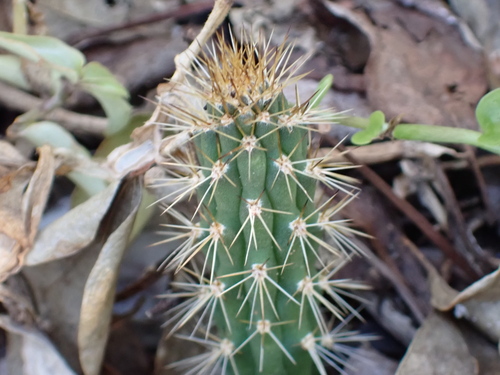
Harrisia fragrans
Caribbean apple cactus, Fragrant prickly-apple
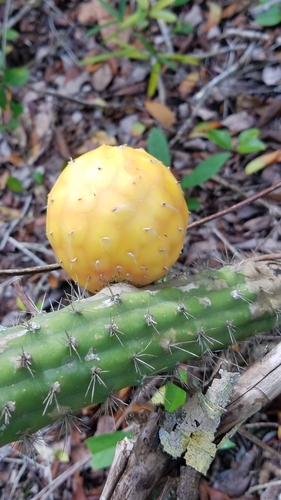
Harrisia simpsonii
Simpson's apple cactus
Helianthocereus atacamensis
Cardon
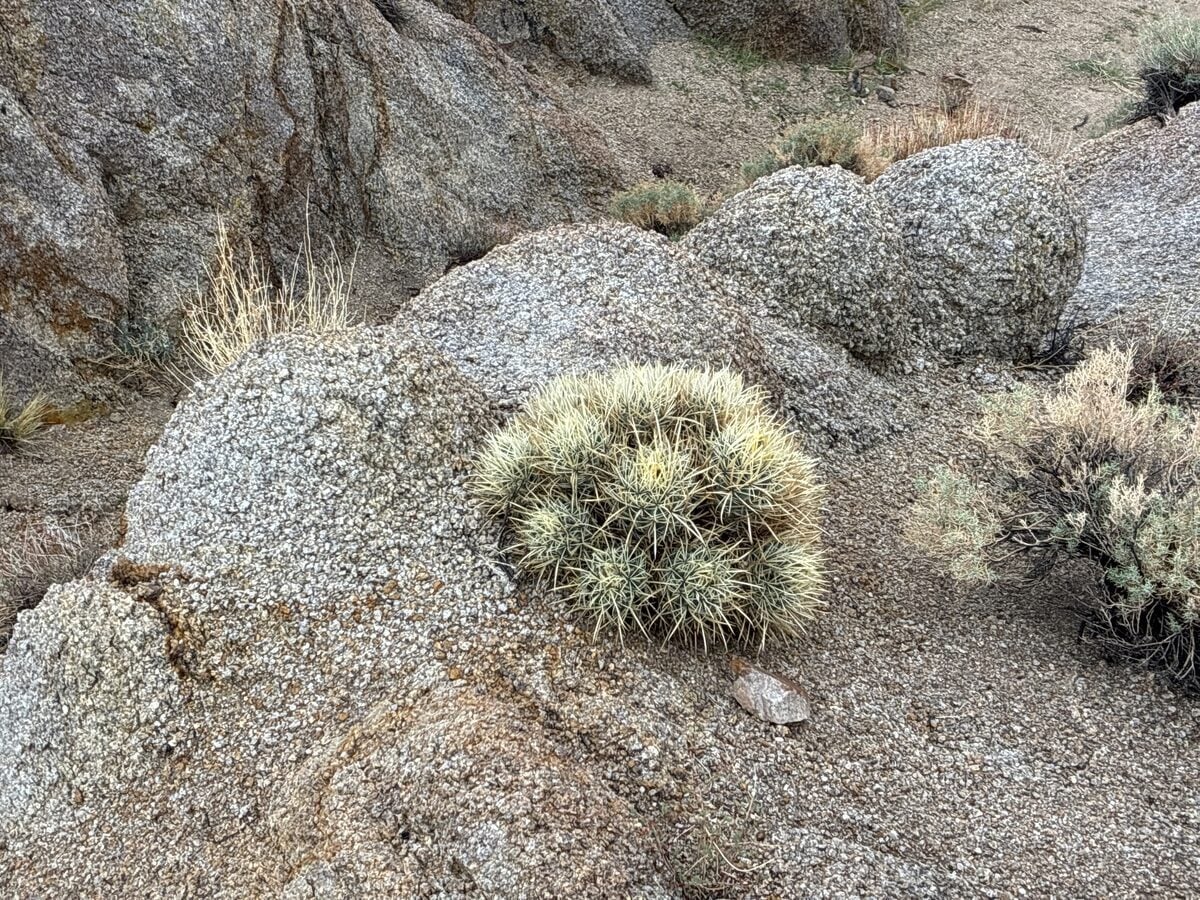
Homalocephala polycephala - (Engelm. & J.M.Bigelow) F.M.Knuth
Triangle Cactus, Cotton-top cactus
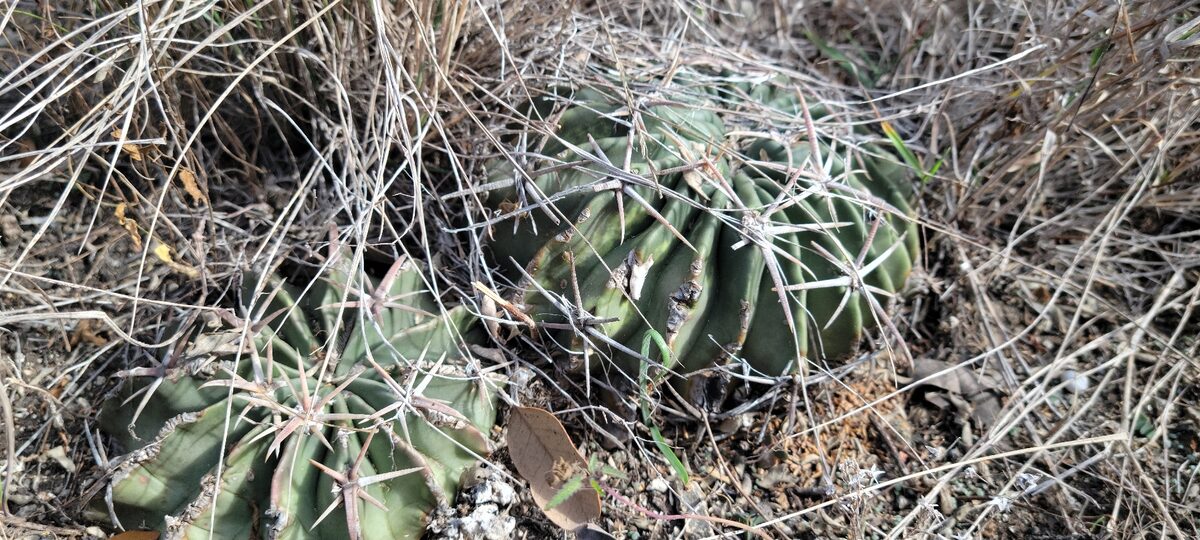
Homalocephala texensis - (Hopffer) Britton & Rose
Horse Crippler or Devil's Head cactus.
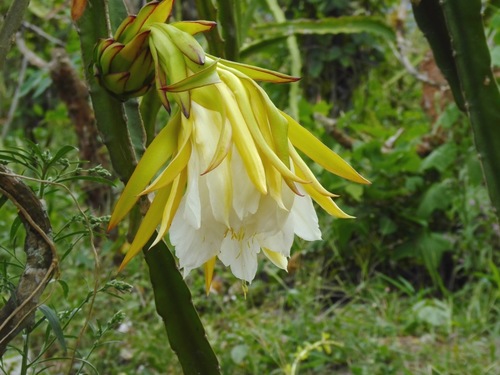
Hylocereus megalanthus
Yellow pitahaya