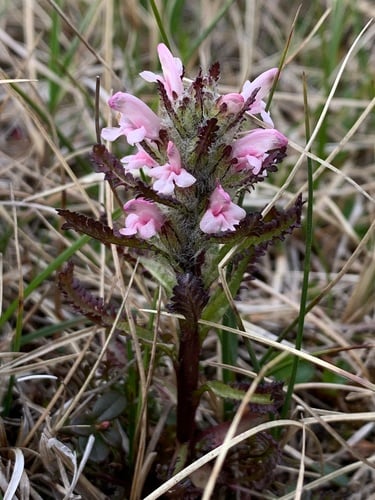
Pedicularis langsdorffii
Fisch. ex Steven
Langsdorf's Lousewort
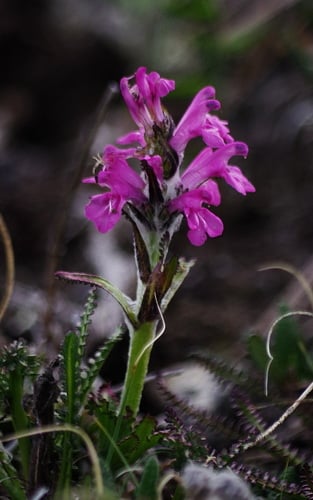
iNaturalist· cc-by-nc
(c) Taylor Justason, some rights reserved (CC BY-NC), uploaded by Taylor Justason
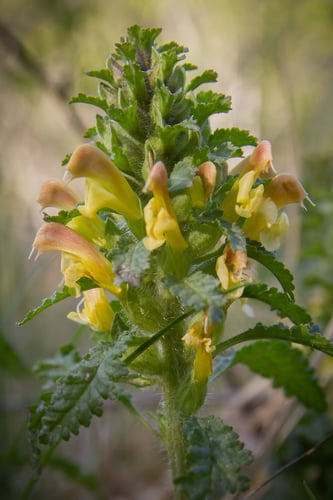
iNaturalist· cc-by-nc
(c) Andy Fyon, some rights reserved (CC BY-NC), uploaded by Andy Fyon
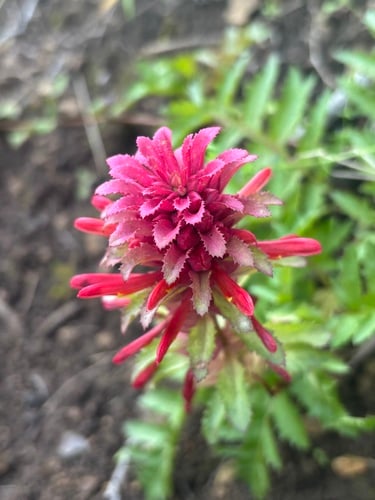
iNaturalist· cc-by-nc
(c) Bev Ramey, some rights reserved (CC BY-NC), uploaded by Bev Ramey
Summary
A perennial herb with hermaphroditic flowers adapted to moist, well-drained soils across a range of pH levels. It thrives in light sandy to medium loamy conditions and tolerates semi-shaded woodland settings. The plant prefers consistently moist soil.
Description
A perennial herb with hermaphroditic flowers adapted to moist, well-drained soils across a range of pH levels. It thrives in light sandy to medium loamy conditions and tolerates semi-shaded woodland settings. The plant prefers consistently moist soil.
Edible Uses
The root is edible when cooked. The leaves can be used as a tea substitute.
Medicinal Uses
None known.
Distribution
It is a temperate plant.
Where It Grows
Arctic, Canada, Europe, Japan, North America, Russia, USA,
Cultivation
We have very little information on this species and do not know if it will succeed in Britain, though judging by its native range it should succeed outdoors in most parts of the country. The following notes are based on the general needs of the genus. A semi-parasitic plant, growing on grass roots. Rather difficult to establish in cultivation, it is best grown in conditions that approximate to its native habitat. It requires a moist peaty soil and the presence of host grasses. Requires a partially shaded to sunny site in a well-drained gritty but moist soil.
Propagation
Sow seed in pots of turf collected from near wild colonies, or sow directly onto the site where plants are to remain. Division of established plants may be possible in spring; establish divisions close to the parent plants.
Other Uses
None known.
Notes
Also put in the family Scrophulariaceae.
Also Known As
Arctic lousewort
References (4)
- Etkin, N.L. (Ed.), 1994, Eating on the Wild Side, Univ. of Arizona. p 69
- Hedrick, U.P., 1919, (Ed.), Sturtevant's edible plants of the world. p 469
- Mem. Soc. Imp. Naturalistes Moscou 6:49, t. 9, fig. 2. 1823
- Plants for a Future database, The Field, Penpol, Lostwithiel, Cornwall, PL22 0NG, UK. http://www.scs.leeds.ac.uk/pfaf/