Pedicularis lanata
Willd. ex Cham. & Schltdl.
Woolly lousewort
iNaturalist· cc0
no rights reserved, uploaded by hitchco
iNaturalist· cc-by-nc-sa
(c) GRID Arendal, some rights reserved (CC BY-NC-SA)
iNaturalist· cc-by-nc
(c) Boris Bolshakov, some rights reserved (CC BY-NC), uploaded by Boris Bolshakov
Summary
Source: WikipediaPedicularis lanata is a species of flowering plant in the family Orobanchaceae. It is native to Canada and Alaska. Its common names include woolly lousewort and bumble-bee flower.
Description
A herb that keeps growing from year to year. It has a thick yellow taproot. The stem has grey white woolly hairs. It grows 15 cm high. The leaves are mostly at the base. They are dark green and 6 cm long. The flowers are pink to red. They are on a woolly spike at the top of the plant. The seed capsules are brown.
Edible Uses
The root is eaten raw, boiled, or roasted (though bitter). The young flower tops are fermented and eaten as a dessert with oil and sugar. The flower stems are boiled and eaten as a potherb.
Traditional Uses
The root is eaten raw and boiled. It can also be roasted. It is bitter. The young flower tops are fermented. They are then eaten with oil and sugar as a dessert. The flower stems are boiled and eaten as a potherb.
Distribution
It is a cold temperate plant. It grows in the tundra on the high mountains in Alaska. It grows in dry rocky places.
Where It Grows
Alaska, Arctic, North America, Russia, Siberia, USA,
Notes
Also put in the family Scrophulariaceae.
Synonyms
Also Known As
Bumblebee plant, Kakykak, Kooklingwuk, Lousewort, Nahzakmeetak, Ugjungnaq, Ulevleruyiit, Woolly fernwed
References (10)
- Ager, T. A. & Ager, L. P., 1980, Ethnobotany of the eskimos of Nelson Island, Alaska. Arctic Anthropology Vol 17. No. 1 pp 26-48 (As Pedicularis kanei)
- Ainana, L. & Zagrebin, I., 2014, Edible Plants Used by the Siberian Yupik Eskimos of Southeastern Chukotka Peninsula, Russia, (English translation). p 64
- Heller, C. A., 1962, Wild Edible and Poisonous Plants of Alaska. Univ. of Alaska Extension Service. p 59
- Jernigan, K. (Ed.), 2012, A Guide to the Ethnobotany of the Yukon-Kuskokwim Region. Draft. (As Pedicularis kanei)
- Jones, A., 2010, Plants that we eat. University of Alaska Press. p 69
Show all 10 references Hide references
- Lim, T. K., 2015, Edible Medicinal and Non Medicinal Plants. Volume 9, Modified Stems, Roots, Bulbs. Springer p 63
- Moerman, D. F., 2010, Native American Ethnobotany. Timber Press. p 380
- Mullory, C. & Aitken, S., 2012, Common Plants of Nunavut. Inhabit Media p 174
- Plants for a Future database, The Field, Penpol, Lostwithiel, Cornwall, PL22 0NG, UK. http://www.scs.leeds.ac.uk/pfaf/ (Pedicularis kanei)
- Porsild, A.E., 1953, Edible Plants of the Arctic, Arctic 6:15-34, page 23
More from Orobanchaceae
Orobanche uniflora
One flowered Cancer root
Pedicularis acmodonta
Pedicularis arctica
Arctic Lousewort, Woolly lousewort, Alpine lousewort
Pedicularis canadensis
Common lousewort, Canadian lousewort, Wood betony
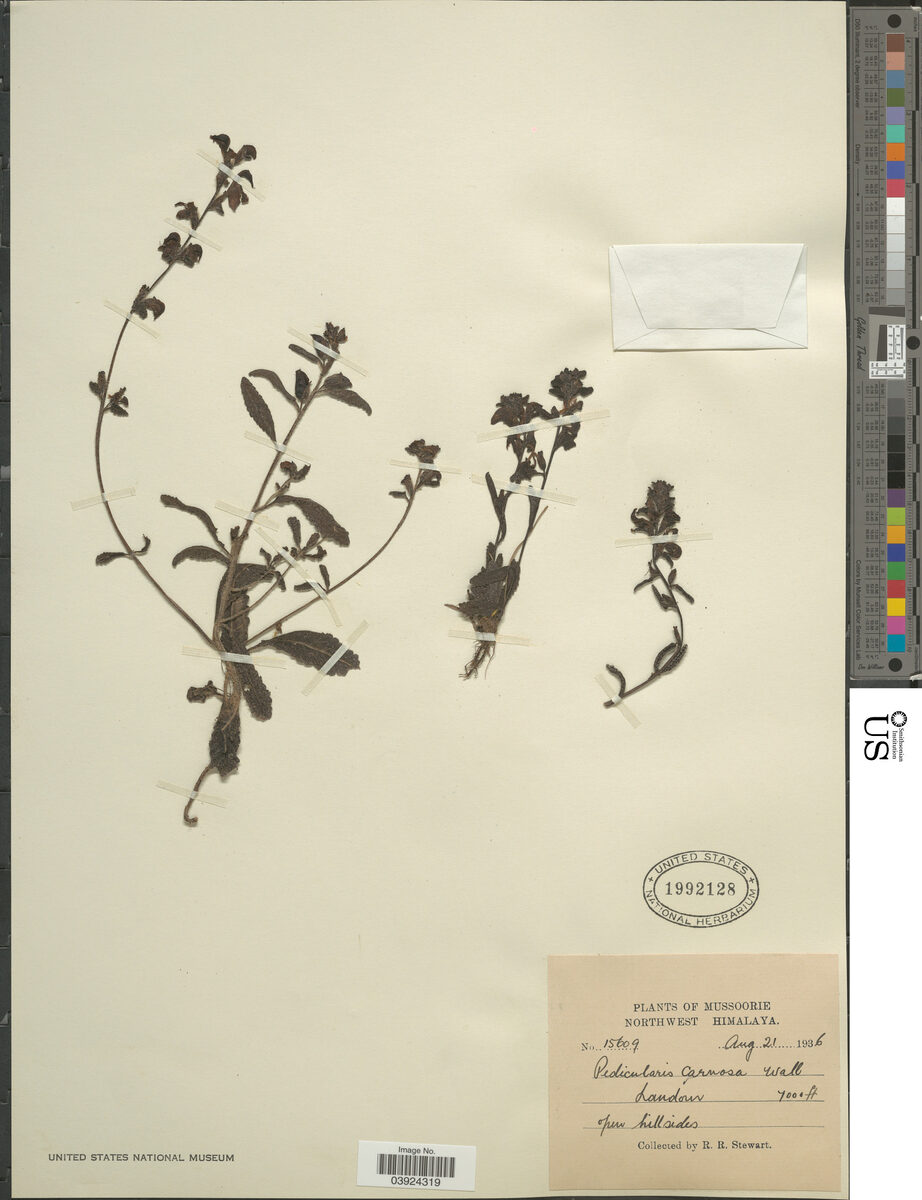
Pedicularis carnosa
Entire leaf lousewort
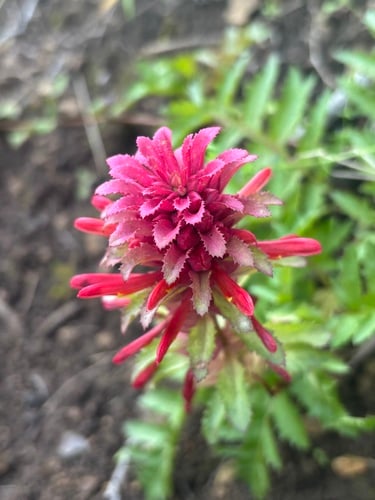
Pedicularis densiflora
Indian warrior, Warrior's plume