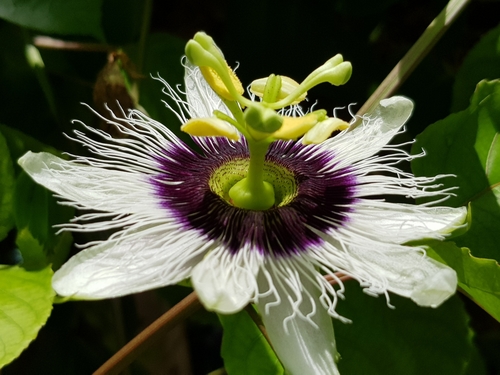
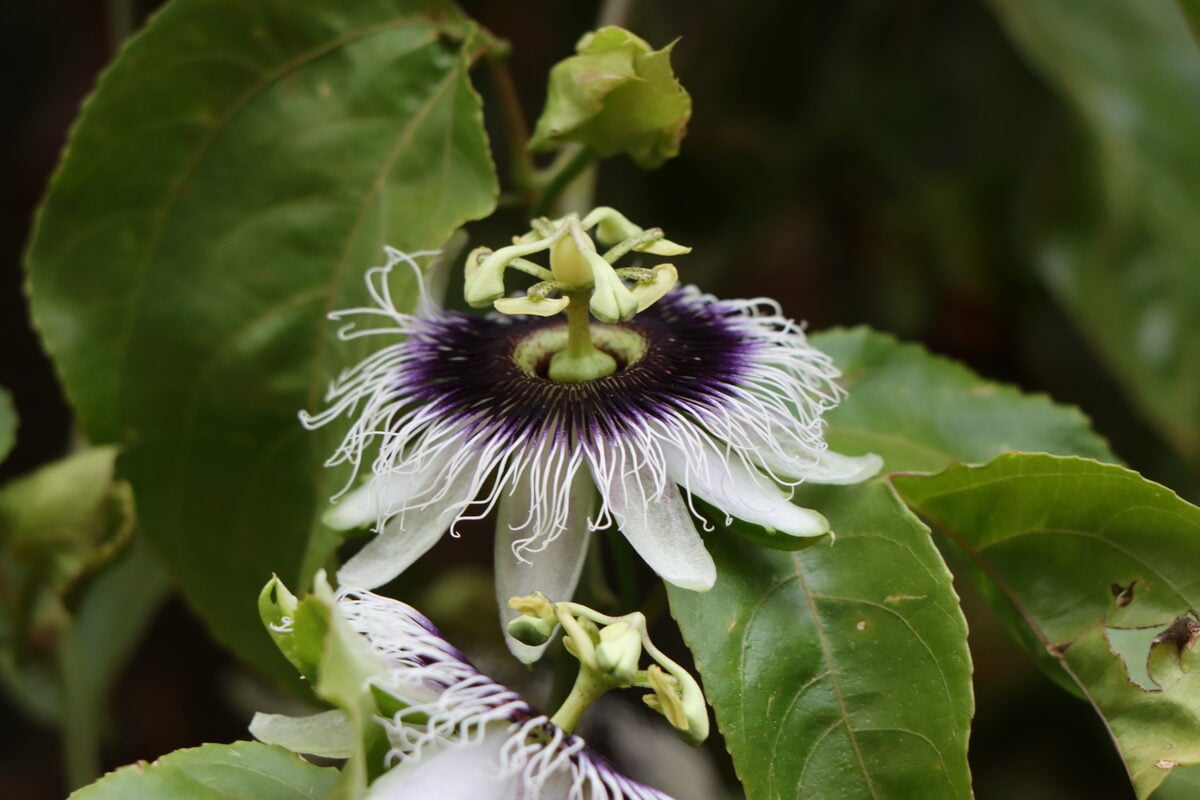
Passiflora x exoniensis
(R. T. Veitch ex Mast.) hort. ex L. H. Bailey
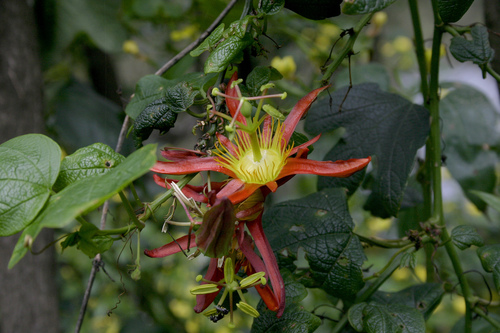
iNaturalist· cc-by-nc
(c) embrenhar, some rights reserved (CC BY-NC)
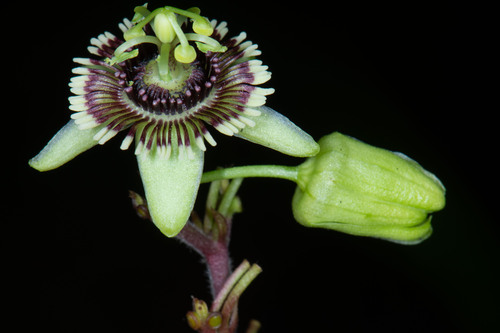
iNaturalist· cc-by-nc
(c) emiliology, some rights reserved (CC BY-NC)
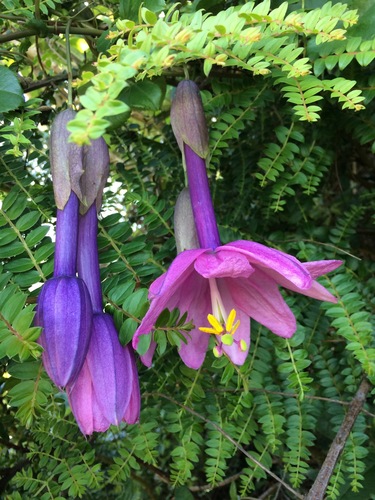
iNaturalist· cc-by-nc
(c) lasjournee, some rights reserved (CC BY-NC)
Summary
Source: WikipediaEvergreen climbing vine reaching 5 m tall and wide with fast growth. Flowers appear from June to September, with seeds ripening September to November. Thrives in full sun on light, medium, or heavy soils that are well-drained and moist. Tolerates mildly acidic to mildly alkaline pH. Hardy to UK zone 10; frost tender. Self-fertile with bee pollination.
Description
A climbing shrub. The stems can be 5 m long. The tendrils are coiling. The flowers are large and red. The fruit are banana shaped and 75-90 cm long. It is a hybrid of garden origin between P. antioquiensis x P. mollissima
Edible Uses
The fruit can be eaten raw or cooked and is noted for being especially well-flavoured.
Medicinal Uses
None known
Distribution
A tropical plant.
Propagation
Pre-soak seed for 12 hours in warm water, then sow in late winter or early spring in a warm greenhouse. Seed sown in January and grown on quickly can flower and fruit in its first year. Germination takes 1–12 months at 20°C. Prick seedlings out into individual pots when large enough to handle. If growing outdoors, keep plants in the greenhouse for their first winter and plant out in late spring or early summer after the last expected frosts. Mulch roots well in late autumn for cold protection. Note that this is a hybrid and will not breed true from seed. Take cuttings of young shoots (15cm with a heel) in spring — these root best in a neutral to slightly acid compost, though 100% sharp sand also gives good results. Leaf bud cuttings can be taken in spring. Cuttings of fully mature wood taken in early summer take about 3 months and root at a high percentage.
Other Uses
None known
Notes
There are about 400 Passiflora species.
Synonyms
References (2)
- Plants for a Future database, The Field, Penpol, Lostwithiel, Cornwall, PL22 0NG, UK. http://www.scs.leeds.ac.uk/pfaf/
- Stand. cycl. hort. 5:2485. 1916