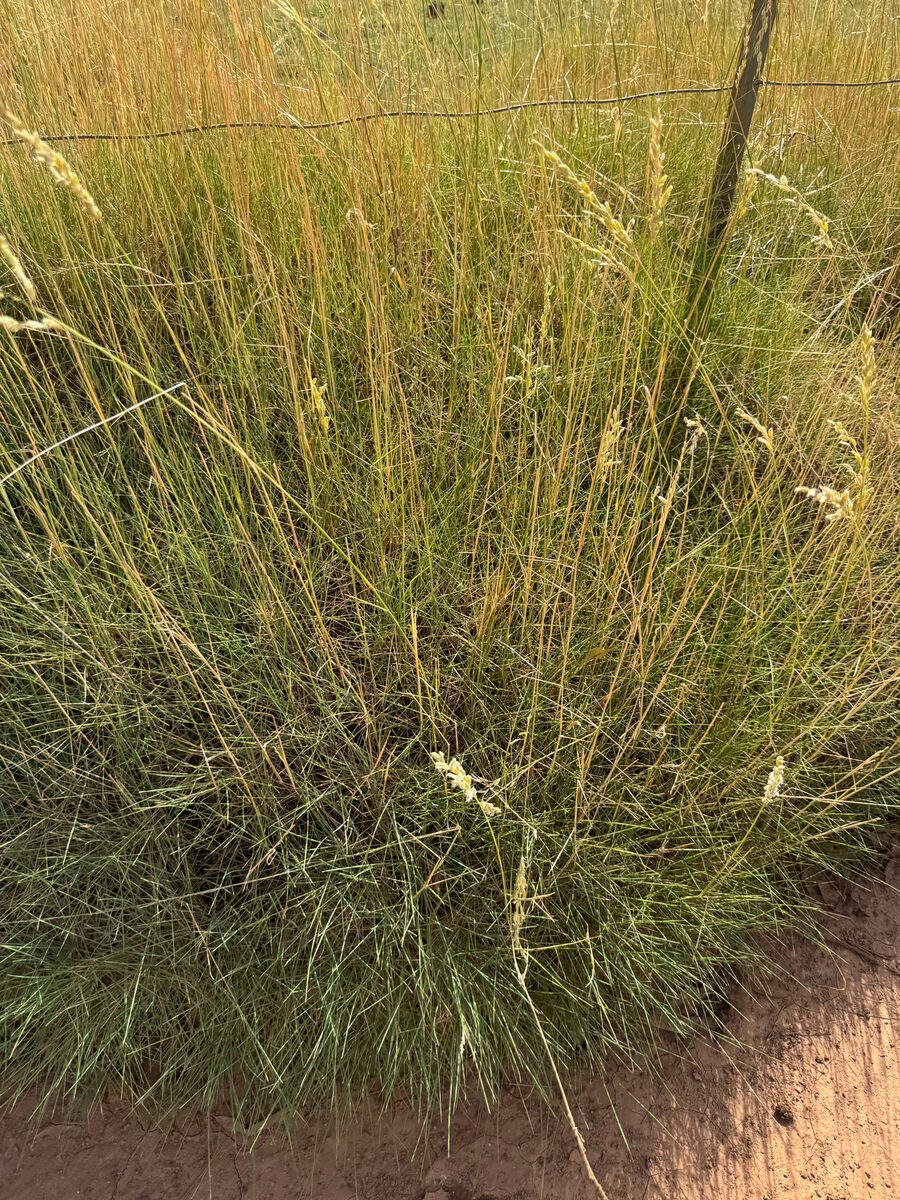
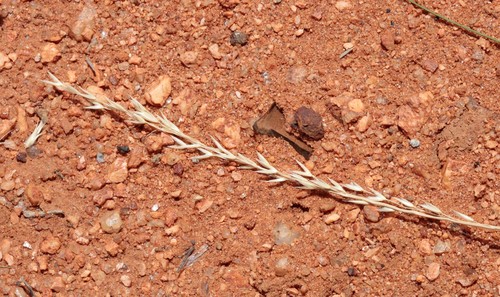
Paspalidium rarum
(R. Br.) Hughes
Rare Paspalidium
Poaceae Edible: Seeds, Cereal
iNaturalist· cc-by
(c) Kym Nicolson, some rights reserved (CC BY)
iNaturalist· cc-by-nc
(c) Alan Bedggood, some rights reserved (CC BY-NC)
iNaturalist· cc-by-nc
(c) Alan Bedggood, some rights reserved (CC BY-NC)
Description
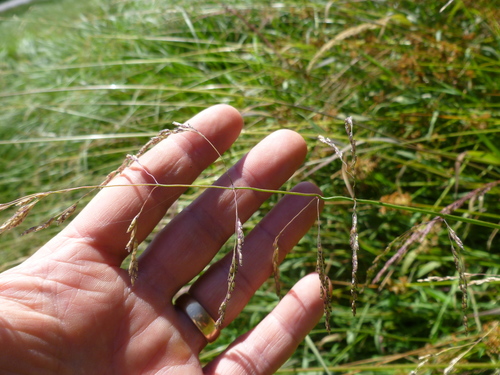
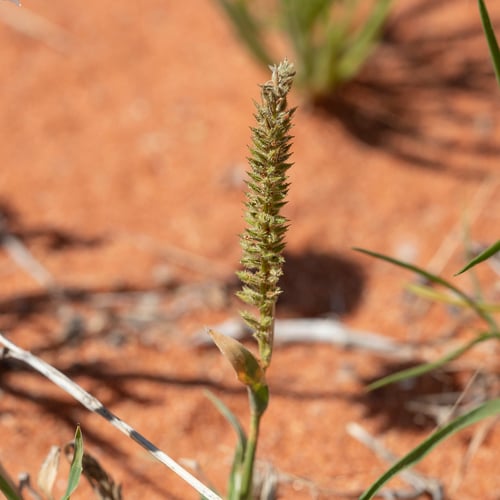
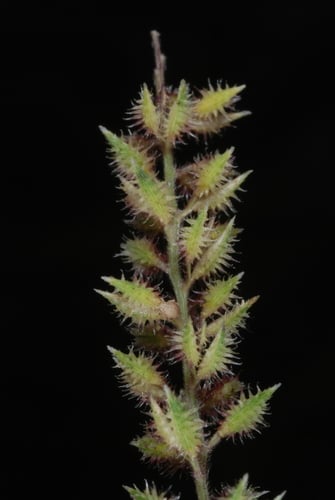
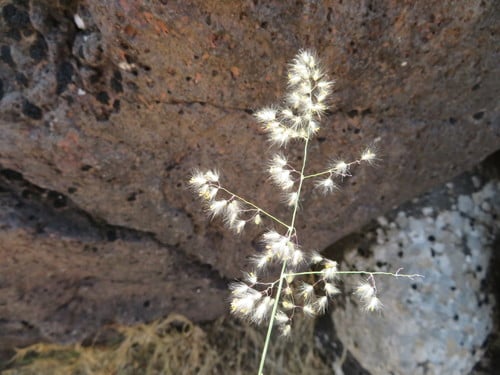
An annual grass. It is slender and forms loose tufts. It grows 15-30 cm high. The stems spread from the base. The leaf sheaths and blades are soft. The flowering stalk is narrow and spike like. It is 5-10 cm long.
Edible Uses
The seeds are harvested and used as cereal.
Distribution
It is best on alluvial and more fertile soils. It grows in tropical and subtropical places. It can grow in arid places.
Where It Grows
Australia*,
Notes
There are about 40 Paspalidium species. They are tropical.
Synonyms
Panicum rarum R. Br.Setaria rara (R. Br.) R. D. Webster
References (7)
- Cancilla, D., 2018, Ethnobotanical and Ethnozoological Values Desktop Assessment - Eliwana Project. p 14
- Cherikoff V. & Isaacs, J., The Bush Food Handbook. How to gather, grow, process and cook Australian Wild Foods. Ti Tree Press, Australia p 190
- Kenneally, K.E., Edinger, D. C., and Willing T., 1996, Broome and Beyond, Plants and People of the Dampier Peninsula, Kimberley, Western Australia. Department of Conservation and Land Management. p 222
- Latz, P.K., 1996, Bushfires and Bushtucker: Aboriginal plant use in Central Australia. IAD Press Alice Springs p 243
- Lazarides, M. & Hince, B., 1993, Handbook of Economic Plants of Australia, CSIRO. p 182
Show all 7 references Hide references
- Paczkowska, G. & Chapman, A.R., 2000, The Western Australian Flora. A Descriptive Catalogue. Western Australian Herbarium. p 112
- Petheram, R.J. and Kok, B., 2003, Plants of the Kimberley Region of Western Australia. UWA Press p 185